
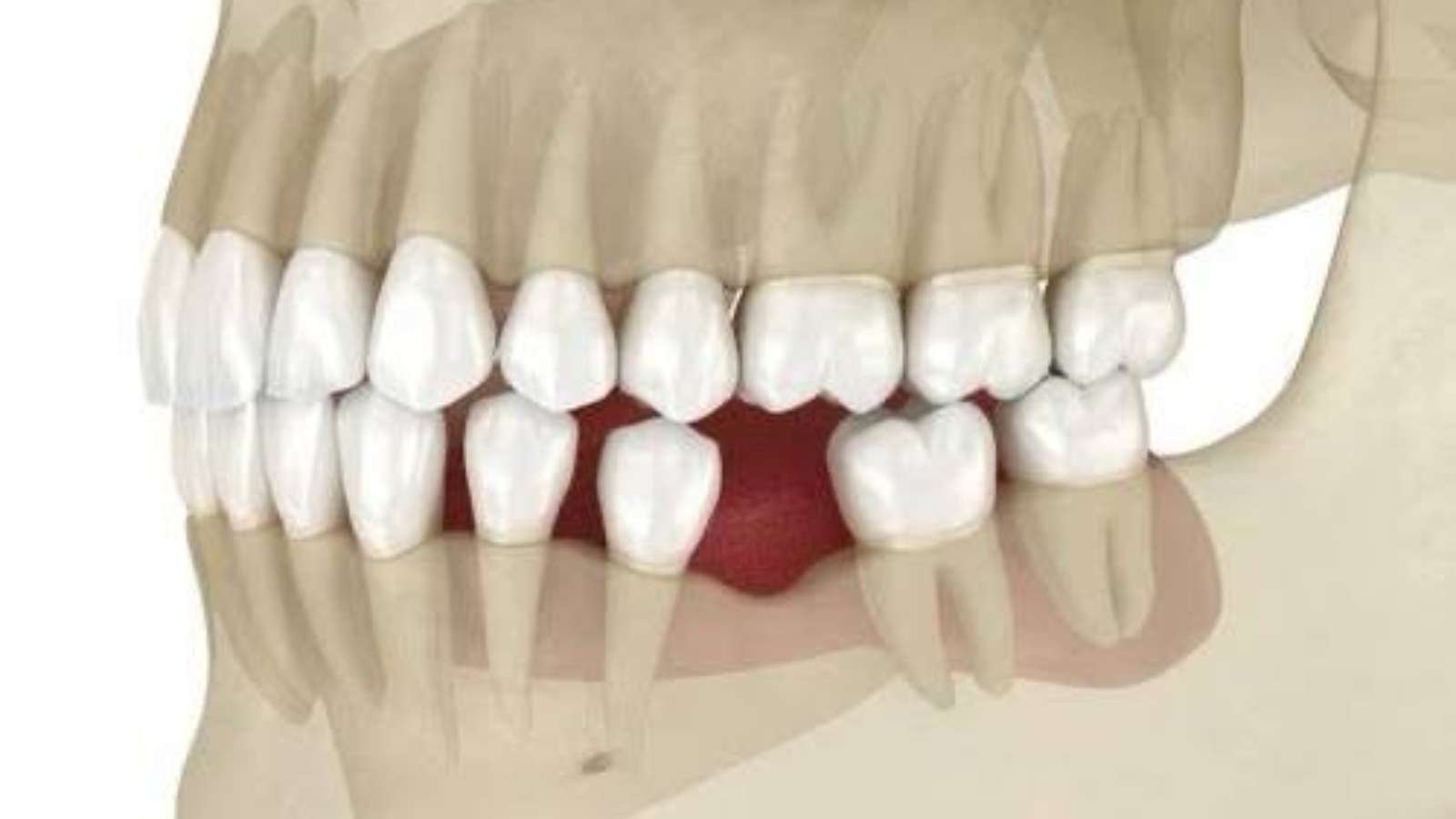
The absence of one or more teeth is far more than an aesthetic concern. It represents a complex functional condition that gradually affects the entire dentofacial system. Over time, masticatory forces become unevenly distributed, occlusal relationships change, bone volume decreases, and the remaining teeth are subjected to increasing functional overload. Professor Alexander von Breuer sees this not as an isolated defect within the dental arch but as a comprehensive clinical condition requiring restoration of the natural biomechanical balance of the oral cavity. At DentalClinic24, we approach the treatment of adentia as a structured process of functional rehabilitation aimed not only at replacing missing teeth but also at preserving the long term stability of the entire dentofacial system.
Every missing tooth alters the function of the surrounding anatomical structures. Adjacent teeth gradually drift toward the edentulous space, opposing teeth lose their physiological support, and masticatory forces become concentrated within a limited number of contact areas. These changes may lead to periodontal overload, occlusal disturbances, accelerated enamel wear, excessive stress on the temporomandibular joints, and chronic hyperactivity of the masticatory muscles. The longer teeth remain absent, the more pronounced these functional alterations become, making subsequent rehabilitation increasingly complex and requiring a far more comprehensive clinical approach to restore proper oral function.
Successful rehabilitation begins with comprehensive diagnostics that evaluate not only the extent of tooth loss but also the biological and functional changes that have developed following the loss of teeth. Clinicians assess bone quality and volume, the position of adjacent teeth, occlusal relationships, distribution of functional loading, temporomandibular joint function, and the activity of the masticatory muscles. Advanced digital diagnostics, cone beam computed tomography, and three dimensional treatment planning provide an exceptionally accurate understanding of the patient’s condition before therapy begins. At DentalClinic24, we integrate every diagnostic finding into a unified clinical analysis, allowing us to determine the optimal rehabilitation strategy based on each patient’s biological characteristics and long term functional prognosis.
Modern rehabilitation techniques make it possible to develop individualized treatment solutions for virtually every clinical situation. The choice between implant therapy, prosthetic rehabilitation, or combined treatment protocols depends on bone availability, the condition of adjacent teeth, occlusal characteristics, patient age, and overall systemic health. The primary objective extends far beyond replacing a missing tooth. It focuses on restoring physiological load distribution, optimizing joint function, and reestablishing harmonious interaction among all components of the dentofacial system. This comprehensive approach provides greater long term stability for restorations while significantly reducing the likelihood of secondary biomechanical complications.
Interdisciplinary treatment planning plays a decisive role in managing patients with adentia because successful rehabilitation frequently requires collaboration between several dental specialties. At DentalClinic24, every clinical case is evaluated collectively by oral surgeons, prosthodontists, orthodontists, periodontists, and specialists in functional diagnostics. This collaborative approach allows clinicians to determine the optimal sequence of treatment, restore physiological occlusal biomechanics, and ensure that future restorations integrate naturally into the function of the entire dentofacial system. Careful coordination between specialists substantially improves both functional predictability and long term treatment success.
Following completion of active treatment, continuous clinical monitoring becomes an essential component of maintaining successful outcomes. Regular professional examinations allow clinicians to evaluate implants, prosthetic restorations, surrounding soft and hard tissues, occlusal contacts, and overall masticatory function. This systematic follow up makes it possible to identify even minor functional changes at an early stage, preserve treatment stability for many years, prevent excessive loading, and maintain the long term health of the entire oral cavity.
At Dental Clinic24, we consider the treatment of adentia to be a comprehensive process of functional rehabilitation that combines advanced digital technologies, high precision diagnostics, individualized treatment planning, and long term clinical supervision. This integrated philosophy allows us not only to restore the aesthetics of the smile but also to reestablish efficient masticatory function, achieve proper distribution of functional forces, and create a stable biological foundation for the long term health of the entire dentofacial system.
Previously, we wrote about Devital Amputation in Endodontics: How Partial Pulp Removal Helps Control Inflammation and Preserve Tooth Functionality