
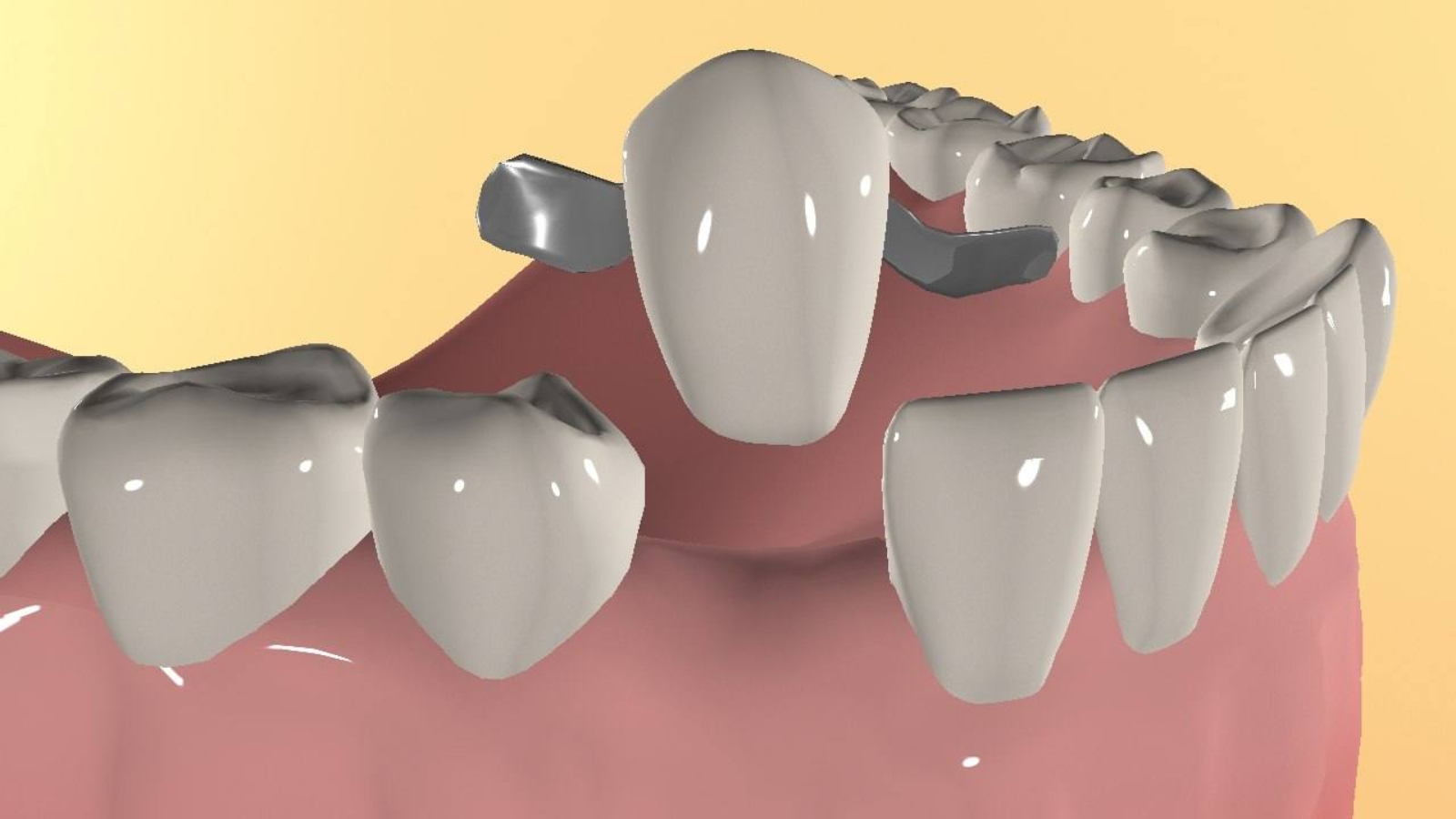
Adhesive prosthetics in modern dentistry are regarded as one of the most conservative approaches to restoring lost tooth structure. Professor Alexander von Breuer says that the true value of this method lies not in technology alone, but in the ability to preserve the biological resource of the tooth without compromising long-term prognosis. At DentalClinic24, adhesive prosthetics are used strictly according to indications and are always considered within a comprehensive clinical strategy.
The essence of the adhesive approach is the fixation of an orthopaedic structure through chemical and micromechanical bonding to enamel and dentin, rather than through aggressive tooth preparation. This makes it possible to minimise the loss of hard tissues and preserve natural tooth anatomy. At DentalClinic24, this method is selected in situations where maintaining the maximum amount of natural structure is a priority and overtreatment must be avoided.
Primary indications include limited coronal defects, replacement of a single missing tooth with intact adjacent teeth, and cases where conventional prosthetics would require unjustified tissue removal. Adhesive constructions may be used as either temporary or long-term solutions, provided that functional conditions allow stable fixation. At DentalClinic24, the decision is always preceded by an assessment of the remaining structural “strength reserve” of the teeth and the nature of occlusal load.
A key determinant of success is the condition of the enamel. Enamel provides the most reliable adhesion, making its preservation critically important. In cases of significant enamel loss, marginal cracking, or altered surface structure, the predictability of the method decreases. At DentalClinic24, these limitations are evaluated in advance to avoid clinically unstable outcomes.
Biomechanical conditions are equally important. Adhesive constructions are sensitive to overload, particularly in areas exposed to high masticatory forces. Bite disorders, bruxism, or asymmetric contacts may result in debonding or premature wear of the restoration. For this reason, at DentalClinic24 adhesive prosthetics are never performed without prior functional analysis.
Method limitations also include its unsuitability for extensive defects, significant loss of supporting tissues, or cases requiring redistribution of load across larger segments of the dental arch. In such situations, preference is given to prosthetic solutions with greater mechanical stability. At DentalClinic24, adhesive techniques are not used at the expense of long-term reliability.
One additional advantage of adhesive prosthetics is reversibility. If necessary, the construction can be replaced or modified without substantial damage to the teeth. This feature makes the method especially valuable in staged treatment plans and in younger patients. At DentalClinic24, reversibility is viewed as part of a broader strategy for lifelong tissue preservation.
In summary, adhesive prosthetics represent a highly precise and biologically oriented method that requires strict clinical selection. Its effectiveness is determined not only by materials, but by accurate assessment of anatomy, functional load, and biomechanical conditions. At Dental Clinic24, this approach is chosen only when minimal invasiveness is genuinely compatible with long-term clinical stability.
Previously, we wrote about Tooth chipping in the clinical practice of DentalClinic24 – how the extent of damage is determined and the restoration strategy is selected