
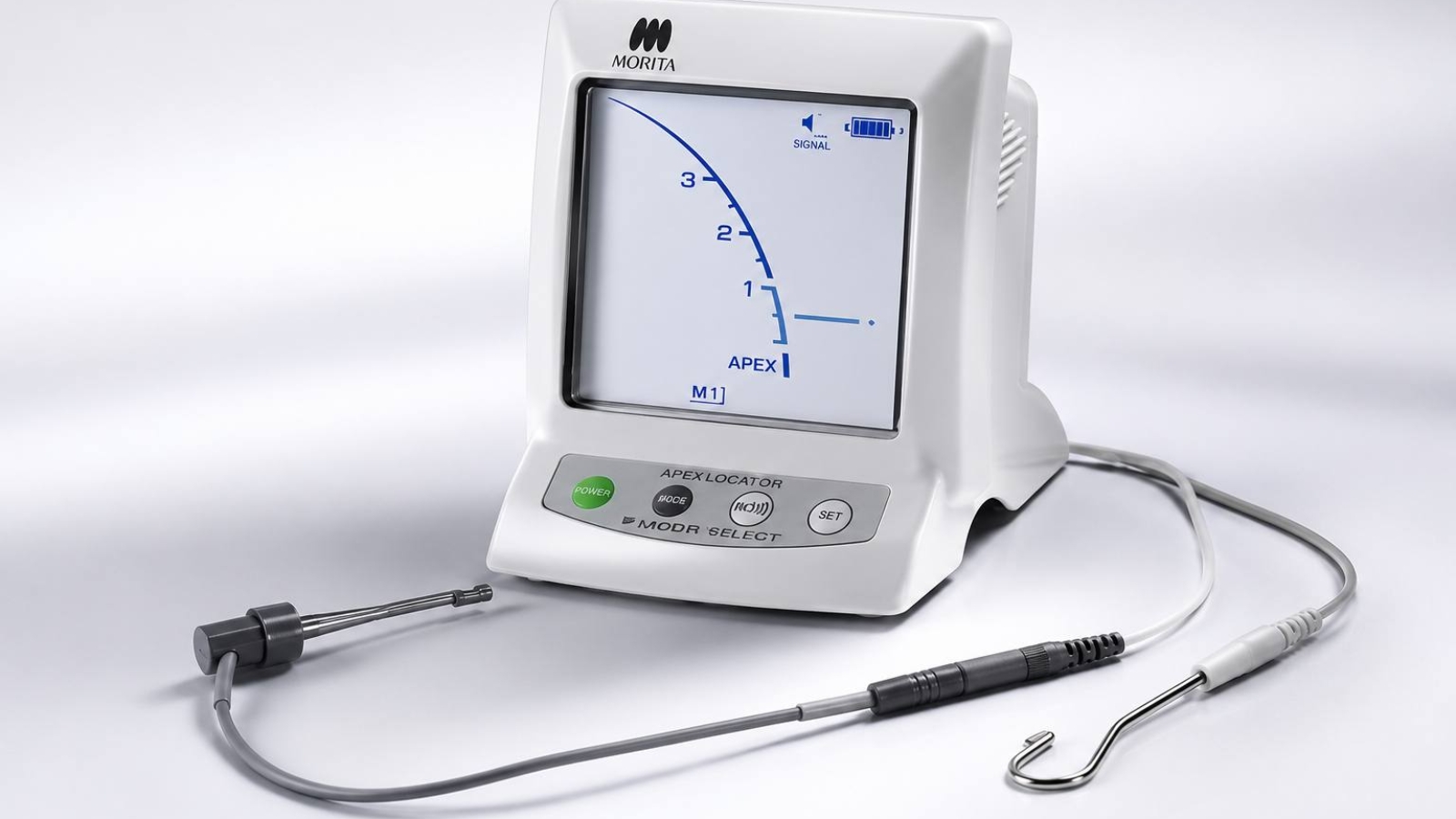
The success of endodontic treatment largely depends on the precision with which every stage of the procedure is performed within the root canal system. Even minor deviations can influence the quality of canal cleaning, the effectiveness of disinfection, and the long term stability of the outcome. Professor Alexander Von Breuer emphasizes that determining the working length of the root canal is one of the most critical tasks in modern endodontics because this parameter serves as the foundation for all subsequent treatment procedures. At DentalClinic24, electronic measurement methods are regarded as an important tool for increasing treatment accuracy, allowing clinicians to significantly improve the prognosis of tooth preservation even in complex clinical situations.
The root canal system is a highly complex anatomical structure that rarely follows standard patterns. Canals may contain curvatures, accessory branches, variations in diameter, and numerous individual anatomical characteristics. The primary objective of endodontic treatment is the complete removal of infected tissues and microorganisms while preserving healthy structures beyond the root canal system. Achieving this goal requires precise determination of the treatment boundary corresponding to the physiological termination of the canal. If instrumentation is performed to an insufficient depth, infected tissues may remain within the system. If instruments extend beyond the anatomical limits, the risk of damage to surrounding tissues and the development of complications increases.
For many years, radiographic imaging served as the primary method for determining canal length. Although highly valuable diagnostically, radiographs provide a two dimensional representation of a complex three dimensional anatomy and have certain limitations in clinical interpretation. The introduction of electronic apex locators significantly transformed the approach to endodontic diagnosis. Modern devices can identify the position of the physiological apex by analyzing the electrical characteristics of tissues within the root canal. This method provides additional information during treatment and substantially improves measurement accuracy. At DentalClinic24, apex locators are utilized as part of a comprehensive diagnostic protocol designed to achieve the highest possible level of treatment predictability.
The clinical significance of electronic length determination extends far beyond technical convenience. Precise measurement allows for more effective mechanical and chemical canal preparation, improved disinfection, and the creation of optimal conditions for subsequent hermetic obturation. Every millimeter is important in endodontics because microorganisms capable of maintaining chronic inflammation of surrounding tissues are most commonly found within the apical region. At DentalClinic24, special attention is devoted to controlling every treatment parameter because the long term prognosis directly depends on the accuracy with which even the smallest clinical steps are performed.
The development of electronic technologies has also expanded treatment possibilities in anatomically complex cases. Canals with severe curvatures, altered anatomy following previous treatment, or inflammatory changes require particularly precise control. The use of apex locators allows clinicians to obtain objective data even in situations where traditional diagnostic methods may have limitations. At Dental Clinic24, advanced technologies are viewed as a means of enhancing clinical precision rather than replacing professional expertise because the interpretation of acquired information remains one of the most important components of successful treatment.
Modern endodontics is based on the principle of maximum precision, where every stage influences the long term preservation of the tooth. The apex locator has become one of the most significant instruments for controlling treatment quality at a level that was previously unattainable. The combination of electronic measurement methods, contemporary treatment protocols, and clinical experience creates the conditions necessary for reliable infection control, preservation of surrounding tissues, and improved long term prognosis of endodontic therapy.
Previously we wrote about Fewer Visits and Greater Precision How Modern Technologies Are Changing the Patient Journey in Dentistry