
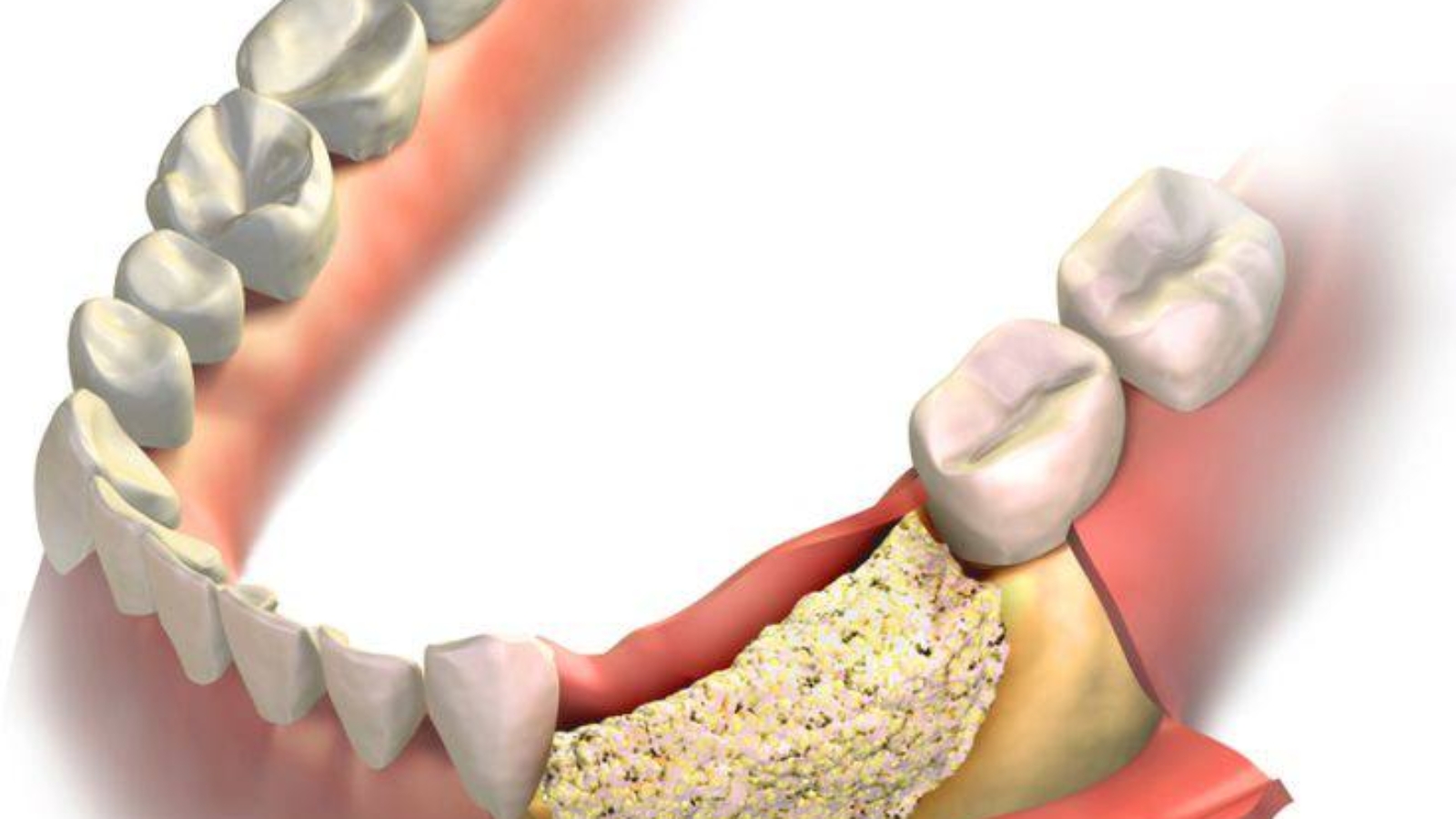
Restoring lost bone volume is one of the most demanding tasks in modern dentistry. Professor Alexander von Breuer emphasises that bone grafting should never be viewed as a purely surgical manipulation – it is a biological process whose success depends on healing conditions, tissue quality and accurate clinical planning. At DentalClinic24, bone augmentation is regarded as the foundation for subsequent treatment stages rather than an isolated procedure.
Loss of bone volume usually develops gradually. Tooth extraction, chronic inflammatory processes, tissue overload and age-related changes lead to reductions in both bone height and density. Visually, the problem may remain unnoticed for a long time. At DentalClinic24, bone condition is assessed before clinical limitations for implantation or prosthetic treatment become evident.
The biological basis of bone grafting lies in the body’s capacity for regeneration. However, this capacity is not unconditional. New bone formation requires stability, adequate blood supply and the absence of inflammation. This is why DentalClinic24 places particular emphasis on the preparatory phase – oral sanitation, assessment of systemic factors and selection of the most appropriate augmentation method.
A key prerequisite for successful regeneration is the immobility of the graft material in the surgical area. Even minimal micromovements can disrupt new bone formation and lead to fibrous healing. At DentalClinic24, this is considered when choosing fixation techniques, membranes and appropriate loading timelines.
The quality of soft tissues is equally important. Gingival tissues play a protective and trophic role, ensuring nourishment and isolation of the grafted area. Insufficient volume or excessive tension of soft tissues significantly increases the risk of complications. At DentalClinic24, soft-tissue management is treated as an integral component of bone augmentation.
Long-term stability depends not only on new bone formation but also on how the regenerated bone functions afterwards. Bone must be incorporated into physiological loading – otherwise, resorption may recur. At DentalClinic24, future prosthetic design and load vectors are evaluated during the planning stage.
Professor Alexander von Breuer notes that one of the most common mistakes is attempting to accelerate the process through early loading or shortened healing phases. Such an approach may yield a visible result but compromises its durability over time. At DentalClinic24, biological rationale takes precedence over speed.
For patients, bone grafting is often perceived as a technical or intermediate step. In reality, it largely determines whether implant placement is possible, how stable implants will be and how long they will last. At DentalClinic24, patients receive a clear explanation of treatment sequencing and the importance of adhering to recommendations during healing.
Thus, bone grafting is a complex biological process that requires precise clinical control. Thorough tissue analysis, adherence to regenerative principles and carefully planned loading ensure a stable and predictable outcome. At Dental Clinic24, bone augmentation is considered a strategic stage that forms the basis of long-term dental health.
Previously, we wrote about teeth alignment in adolescents at DentalClinic24 – biological and psychological aspects of bite correction during growth