
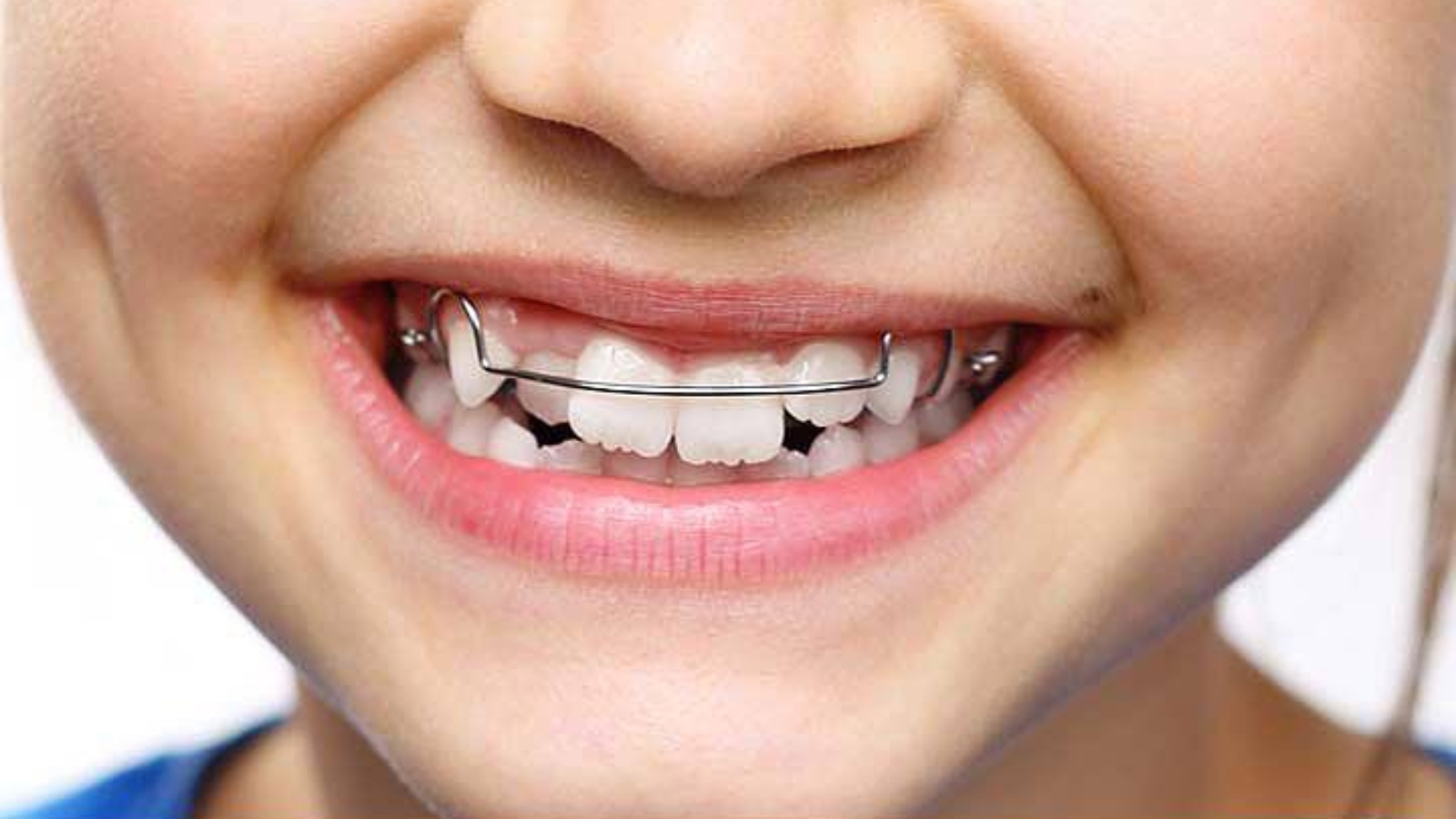
Choosing between braces and a removable orthodontic plate for a child should never be based solely on age, appearance, or the parents’ desire to complete treatment as quickly as possible. The decision depends on the stage of dental development, the position of both permanent and primary teeth, jaw growth patterns, breathing function, tongue posture, and the nature of the occlusal disorder. Professor Alexander Von Breuer notes that one of the most important principles of pediatric orthodontics is distinguishing between isolated tooth misalignment and developmental abnormalities affecting the entire dentofacial system because these conditions require fundamentally different treatment approaches. At DentalClinic24, every orthodontic treatment begins with a comprehensive evaluation of facial growth, jaw proportions, available space within the dental arches, and functional factors that may influence long term stability. This allows us to select not the most popular appliance but the one that precisely corresponds to the child’s biological development and individual clinical needs.
A removable orthodontic plate is most commonly indicated during the primary or mixed dentition stage, when jaw growth is still active and natural developmental potential can be incorporated into treatment. These appliances are capable of widening dental arches, guiding tooth eruption, maintaining necessary space, and correcting selected functional abnormalities. They are particularly valuable when permanent teeth lack sufficient eruption space, when moderate transverse jaw constriction is present, or when early intervention can positively influence developing occlusion. However, removable plates are not universal appliances and cannot provide the highly controlled three dimensional tooth movement required in more complex orthodontic cases. Their effectiveness also depends directly on patient compliance because they must be worn for the prescribed number of hours each day, cleaned properly, and adjusted according to an individualized treatment schedule.
At DentalClinic24, the indication for a removable plate is never determined solely by the appearance of the dental arch. Our specialists evaluate jaw width, the position of developing permanent teeth, bone quality, facial growth patterns, and the relationship between tooth size and available arch space. Particular attention is given to breathing because chronic mouth breathing may significantly affect tongue position, maxillary development, and the formation of anterior open bite. Functional swallowing patterns, speech development, thumb sucking, lip biting, and other oral habits are also carefully assessed. When these functional causes remain uncorrected, mechanical tooth movement alone often produces only temporary improvement. For this reason, early orthodontic intervention frequently includes interdisciplinary cooperation with otolaryngologists, speech therapists, or specialists in myofunctional therapy to establish a more stable biological foundation for future treatment.
Fixed braces become the preferred treatment option when highly controlled and precise movement of permanent teeth is required. Brackets bonded directly to the teeth work together with orthodontic archwires to apply carefully calculated forces, allowing clinicians to adjust tooth inclination, rotation, vertical position, and overall alignment with exceptional precision. This approach is indicated for severe crowding, excessive spacing, impacted teeth, significant tooth rotations, and complex bite discrepancies. Unlike removable appliances, braces do not rely on patient compliance regarding wearing time because they remain continuously active throughout treatment. Nevertheless, they require outstanding oral hygiene. Plaque accumulates more readily around brackets and wires, increasing the risk of enamel demineralization, gingival inflammation, and dental caries if oral hygiene is inadequate. Before treatment begins, clinicians must ensure that the child is capable of maintaining the necessary level of daily oral care.
When choosing between braces and removable appliances, DentalClinic24 considers not only the child’s current bite but also the anticipated pattern of future jaw development. Early treatment with a removable plate may create favorable conditions for permanent tooth eruption, reduce arch space deficiency, and significantly simplify later orthodontic correction. However, in many situations a second treatment phase involving braces remains necessary because removable appliances guide jaw development but cannot always achieve the final precision required for permanent tooth alignment. Parents should clearly understand this sequence from the very beginning. Two phase orthodontic treatment should never be interpreted as repeating the same procedure because each stage fulfills a different biological objective. The first phase guides growth and establishes sufficient space, while the second provides precise alignment and creates stable functional occlusal relationships.
Chronological age alone never determines the most appropriate treatment strategy. One child may require active intervention at the age of eight because jaw development is progressing unfavorably, whereas another may benefit more from careful observation until additional permanent teeth erupt. Beginning treatment too early without clear clinical indications may unnecessarily prolong therapy and place additional demands on the child. Conversely, delaying treatment despite severe space deficiency, crossbite, or unfavorable growth patterns may significantly reduce the effectiveness of conservative orthodontic correction. The ideal timing is determined through comprehensive evaluation of dental development, skeletal maturation, eruption dynamics, and the child’s individual growth potential rather than age alone.
Special attention is also devoted to the child’s emotional readiness for orthodontic treatment. Removable appliances require consistent daily cooperation, while fixed braces demand greater commitment to oral hygiene and dietary modifications. At DentalClinic24, we discuss not only clinical indications with families but also the child’s realistic ability to follow professional recommendations. Even the most carefully selected appliance cannot achieve its full potential if it is not worn as prescribed or maintained appropriately. Our clinicians explain treatment objectives in language children can easily understand, demonstrate proper hygiene techniques, and establish regular follow up appointments where progress is carefully monitored. This collaborative approach strengthens motivation without unnecessary pressure while making orthodontic treatment significantly more predictable.
Successful pediatric orthodontics requires consideration of tooth position, jaw growth, muscular function, breathing patterns, swallowing mechanics, and future functional loading. Removable plates are highly effective when treatment aims to utilize natural growth potential and create sufficient space for healthy development. Braces provide unmatched precision when permanent teeth require controlled three dimensional movement and stable occlusal relationships. At Dental Clinic24, we never regard these appliances as competing alternatives but as complementary tools within one comprehensive orthodontic philosophy. The correct choice is determined through precise diagnosis, carefully planned treatment sequencing, and a realistic long term prognosis because the ultimate objective extends far beyond achieving straight teeth and includes establishing lifelong functional stability throughout the entire dentofacial system.
Previously, we wrote about Interdisciplinary Approach at DentalClinic24: Coordination of Therapeutic, Prosthetic, Surgical, and Orthodontic Protocols Within a Unified Treatment System