
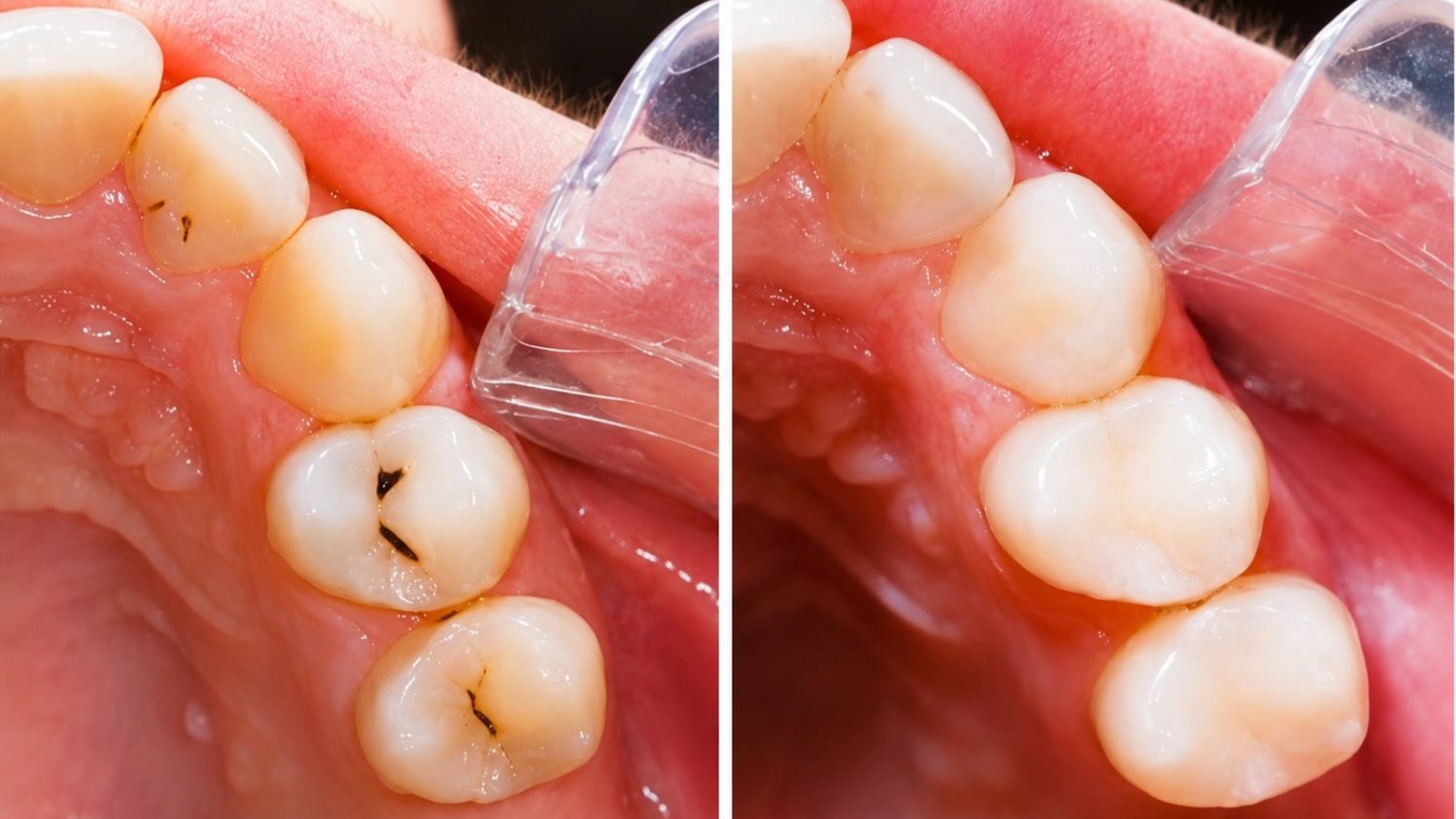
Caries remains one of the most widespread chronic diseases of the oral cavity, yet its development cannot be explained solely by poor hygiene or excessive sugar consumption. It is a multifactorial biological process involving microbial activity, the chemical composition of saliva, the mineral structure of enamel, and the patient’s functional habits simultaneously. Professor Alexander Von Breuer notes that caries is always the result of disruption in the delicate balance between demineralization and the natural remineralization of hard dental tissues. At DentalClinic24, we view the carious process as a complex dynamic model in which no single factor acts independently, since clinical, biochemical, and age related characteristics all contribute to disease progression.
The foundation of caries development is bacterial load. Microorganisms within dental plaque metabolize carbohydrates and release organic acids during their life cycle, lowering the pH level in the oral cavity. Once acidity reaches a critical threshold, hydroxyapatite crystals within enamel begin to dissolve. If these acidic episodes occur regularly and tissues do not have enough time to recover, a stable zone of demineralization develops. In children, this process progresses faster because the enamel of newly erupted teeth has a lower degree of mineralization and higher permeability. In adults, caries is more often associated with chronic biofilm accumulation, hidden interproximal lesions, gingival recession, and root exposure, where tissues are significantly less resistant to acid attacks. At DentalClinic24, we place particular emphasis on early diagnosis of initial lesions, when tissue destruction can still be stopped without invasive intervention.
Nutrition plays a critical role in shaping caries risk, yet the key factor is not only the amount of sugar consumed but also the frequency of intake. Frequent snacking, sweet beverages, sticky carbohydrate rich foods, and constant exposure to fermentable sugars maintain an acidic environment for prolonged periods. This creates conditions in which enamel has almost no opportunity to recover. Nighttime eating habits in children and consumption of sweet drinks before sleep are especially harmful because physiological saliva secretion decreases during sleep. In adults, additional risk factors include coffee with syrups, energy drinks, and hidden sugars in processed foods. At DentalClinic24, we emphasize that dietary assessment is an essential part of clinical analysis because nutritional habits directly influence the speed of tissue destruction.
Equally important are the individual characteristics of enamel. Enamel thickness, mineralization level, the presence of microcracks, hypoplasia, or structural defects significantly affect tooth resistance to acidic exposure. Some patients demonstrate completely different susceptibility to caries despite similar hygiene routines precisely because of biological differences in tissue structure. Saliva composition and volume also play a major role. Saliva performs a buffering function, neutralizes acids, and delivers calcium and phosphate ions needed for remineralization. When saliva flow decreases due to stress, medication, hormonal changes, or systemic diseases, caries risk rises dramatically. At DentalClinic24, evaluation of the oral cavity’s natural protective mechanisms allows us to predict each patient’s individual risk profile more accurately.
Age also creates different clinical scenarios of disease progression. In children, caries tends to progress faster and penetrate deeper because of immature tissues and specific dietary patterns. In adults, the clinical picture becomes more complex due to accumulated restorations, secondary caries, occlusal overload, and age related periodontal changes. In elderly patients, root caries frequently develops and requires an entirely different treatment strategy. At DentalClinic24, we consider it essential not to treat caries using a universal template because the pathogenesis in every patient is unique and requires a personalized clinical approach.
Modern caries prevention is built on understanding the causes rather than simply eliminating the consequences. Regular professional diagnostics, biofilm control, dietary correction, remineralization therapy, and early detection of hidden lesions can significantly improve long term prognosis. For Dental Clinic24, effective treatment begins with a deep understanding of why tissues lost their resistance in the first place. Only this approach makes it possible not merely to restore a carious cavity but to rebuild the biological balance that forms the foundation of long term dental health.
Previously we wrote about Hidden Caries in Modern Dentistry: How Digital Diagnostics Detect Tissue Destruction at an Early Stage