
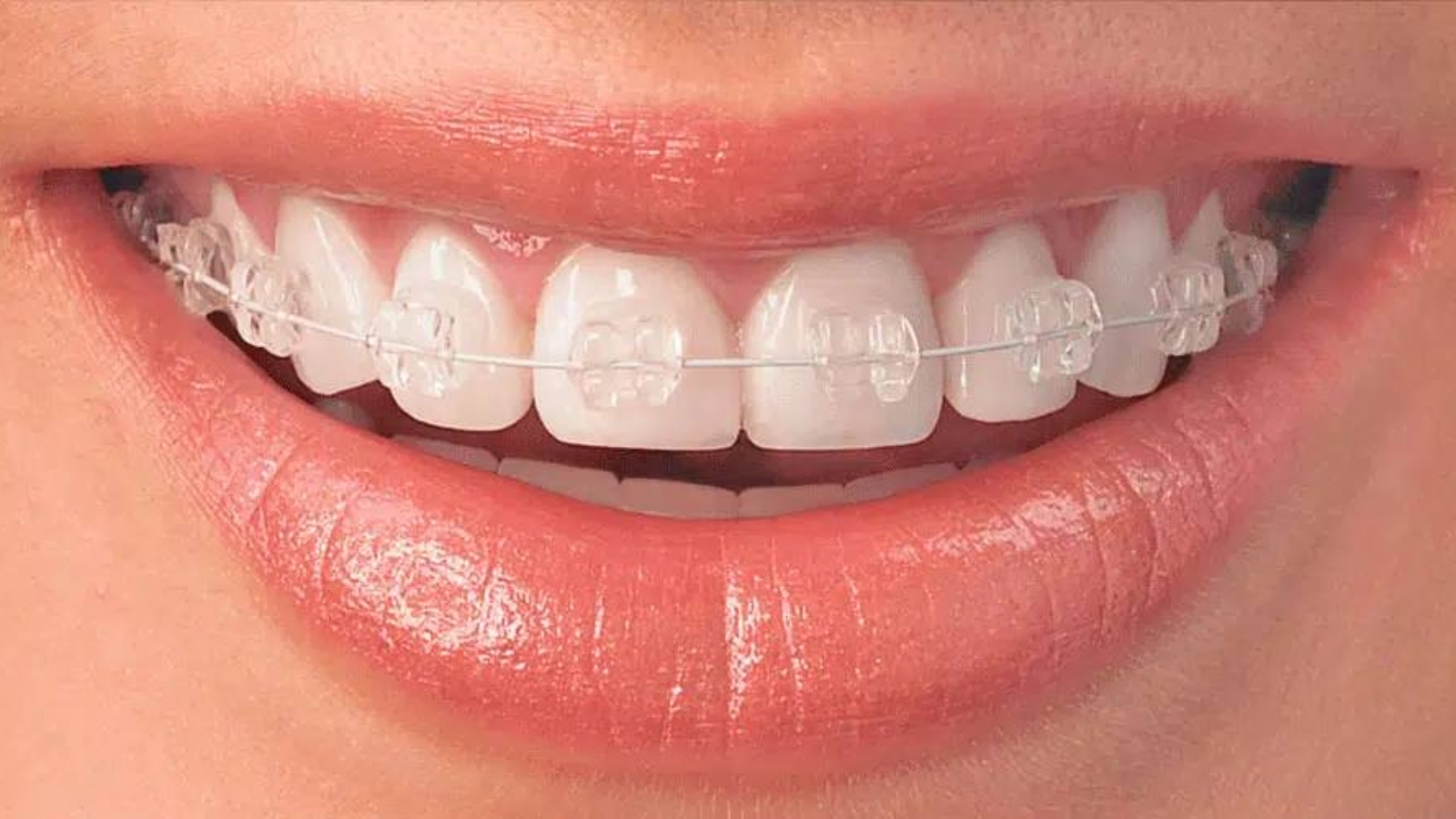
The choice of an orthodontic system today is increasingly determined not only by clinical indications but also by a patient’s aesthetic expectations. Professor Alexander von Breuer notes that the effectiveness of orthodontic treatment primarily depends on the precision of force control, while the appearance of the appliance plays a secondary – though psychologically important – role. At DentalClinic24, ceramic braces systems are regarded as a full-fledged clinical tool that combines aesthetics with controlled biomechanics.
Ceramic braces are manufactured from high-strength materials that closely match the natural colour of enamel. This makes them less noticeable in everyday communication and increases patient adherence to treatment. However, aesthetics is never the sole criterion for selection. At DentalClinic24, such systems are used only when they allow the planned orthodontic mechanics to be implemented without compromising the final outcome.
From a biomechanical perspective, ceramic braces have specific characteristics. The surface properties of the material differ from those of metal counterparts, which affects friction between the archwire and the bracket slot. This requires more precise selection of orthodontic wires and a carefully designed sequence of treatment stages. At DentalClinic24, these parameters are considered during the planning phase to ensure predictable tooth movement.
Particular attention is paid to force control. Ceramic systems are less tolerant of overloads, meaning excessive pressure may lead not only to discomfort but also to reduced precision of tooth movement. For this reason, bite correction using ceramic braces at DentalClinic24 is based on gradual activation and regular assessment of tissue response.
Ceramic braces are especially popular among adolescents and adult patients for whom appearance plays an important role in social and professional settings. However, age itself is not an indication. At DentalClinic24, system selection takes into account bone density, the nature of the malocclusion, the degree of crowding, and the expected duration of treatment.
Oral hygiene is another critical aspect. Ceramic components require meticulous care, as aesthetic properties may deteriorate with plaque accumulation. At DentalClinic24, patients receive personalised hygiene recommendations, and professional monitoring is carried out regularly throughout orthodontic treatment.
In terms of tissue adaptation, ceramic braces systems are not inferior to conventional appliances when an appropriate clinical strategy is applied. The adaptation period is usually smooth, and the level of discomfort is comparable to other types of braces. At DentalClinic24, monitoring of adaptation is an integral part of orthodontic follow-up.
Professor Alexander von Breuer emphasises that an orthodontic system should be chosen not for its appearance, but for its ability to deliver the planned biomechanics. Ceramic braces are effective when the clinician fully controls force magnitude, direction of movement, and the response of the dentofacial system.
For patients, ceramic braces systems mean the opportunity to undergo orthodontic treatment with minimal impact on appearance without compromising treatment quality. At DentalClinic24, this approach makes it possible to combine medical validity with comfort at every stage of bite correction.
Thus, ceramic braces systems at Dental Clinic24 represent a deliberate clinical choice rather than a compromise. Their use requires precise planning, a clear understanding of biomechanics, and continuous monitoring – all of which ensure a stable and aesthetically harmonious treatment outcome.
Previously, we wrote about Dental treatment of patients with arterial hypertension at DentalClinic24 – clinical risks, safety protocols, and individualised control