
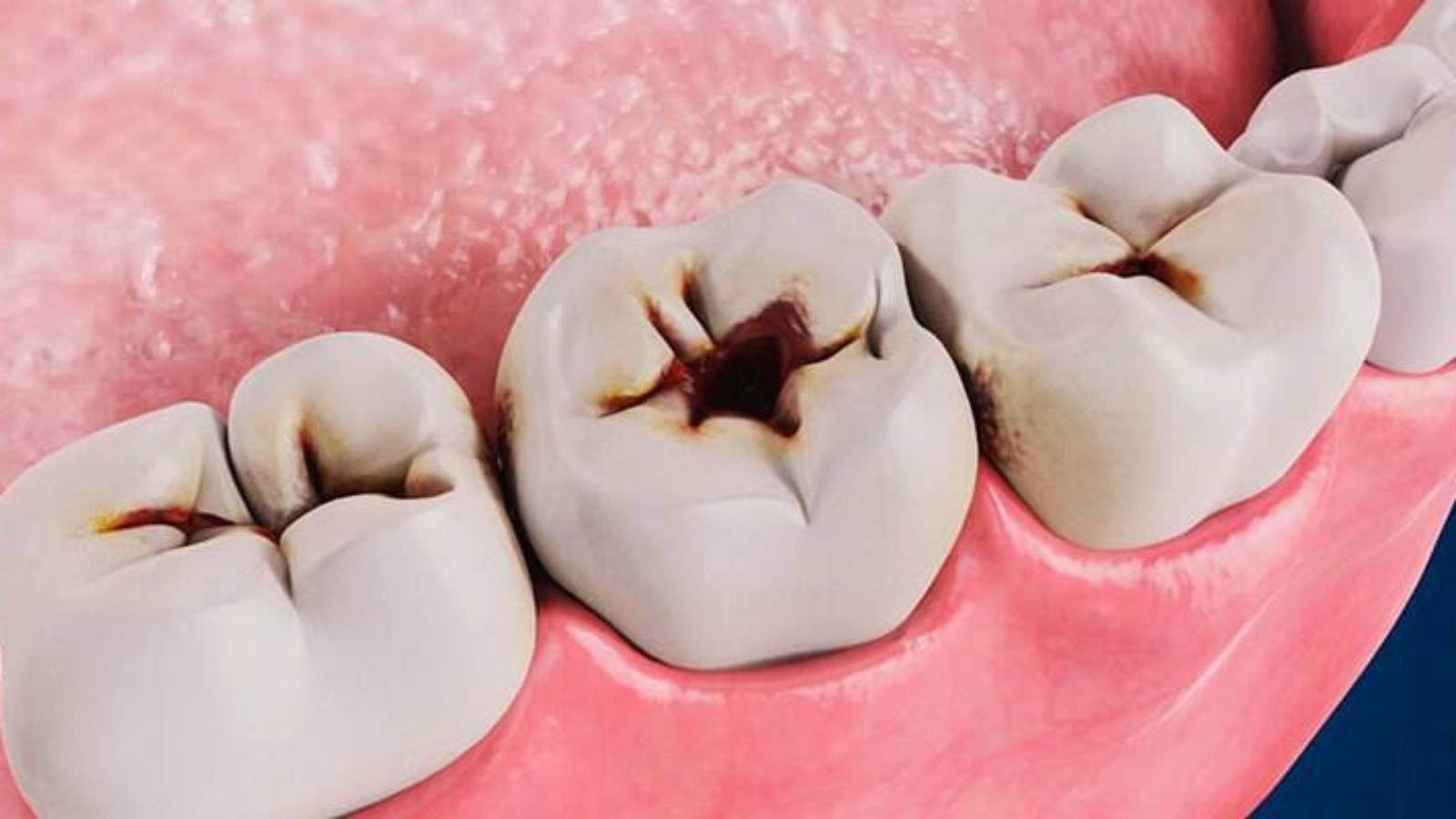
Circular caries belongs to those forms of hard-tissue damage that rarely remain a local problem of a single tooth. Professor Alexander von Breuer emphasises that this type of destruction almost always reflects systemic disturbances – in oral hygiene, enamel mineralisation, occlusal balance or the overall profile of risk factors. At DentalClinic24, circular caries is regarded not as an isolated disease, but as a clinical signal indicating deeper changes within the dentofacial system.
The defining feature of circular caries is the uniform involvement of the tooth along its perimeter, most often in the cervical region. This localisation makes the process particularly dangerous – the defect may remain unnoticed by the patient for a long time, while significantly reducing the mechanical stability of the crown. At DentalClinic24, early diagnostics are aimed at identifying such changes before chipping or tooth mobility develops.
The development of circular caries is rarely accidental. It is frequently associated with chronic plaque accumulation, alterations in saliva composition, disturbances of the acid–base balance and reduced enamel quality. Biomechanics also plays an important role – excessive stress in the cervical area accelerates tissue demineralisation. At DentalClinic24, clinical analysis always includes an assessment of occlusion and load distribution.
Diagnosing circular caries requires a comprehensive approach. Visual examination is supplemented by probing, magnification, radiographic analysis and evaluation of the gingival condition. In many cases, the lesion is masked as a non-carious defect or hypersensitivity. At DentalClinic24, particular attention is paid to differential diagnosis to ensure that the correct treatment strategy is selected.
Treatment of circular caries differs from standard restorative protocols. Simply placing a filling is insufficient – it is essential to achieve circumferential sealing and to stabilise the cervical zone of the tooth. At DentalClinic24, treatment methods are chosen to preserve the maximum amount of natural tissue while restoring its protective function.
Management of the surrounding soft tissues is equally important. Gingival inflammation and recession aggravate the course of circular caries and create conditions for recurrence. At DentalClinic24, therapy often includes hygiene correction, anti-inflammatory measures and periodontal control as integral components of the overall strategy.
Professor Alexander von Breuer highlights that prevention of circular caries must always be systemic. It includes not only professional cleaning, but also analysis of habits, individual selection of home-care products and, where indicated, correction of occlusion. At DentalClinic24, prevention is viewed as a continuation of treatment rather than a generic recommendation “for the future”.
For patients, circular caries is particularly dangerous because it may lead to sudden tooth fracture without pronounced pain. This is why DentalClinic24 places strong emphasis on regular check-ups and dynamic monitoring, allowing early detection of the process.
Thus, circular caries reflects systemic imbalances rather than a purely local enamel defect. Successful management is possible only through comprehensive clinical analysis and elimination of underlying causes. At Dental Clinic24, this approach makes it possible not only to restore the tooth, but also to prevent recurrent destruction in the long term.
Previously, we wrote about pain when biting as a diagnostic symptom and how DentalClinic24 identifies the source of tooth overload