
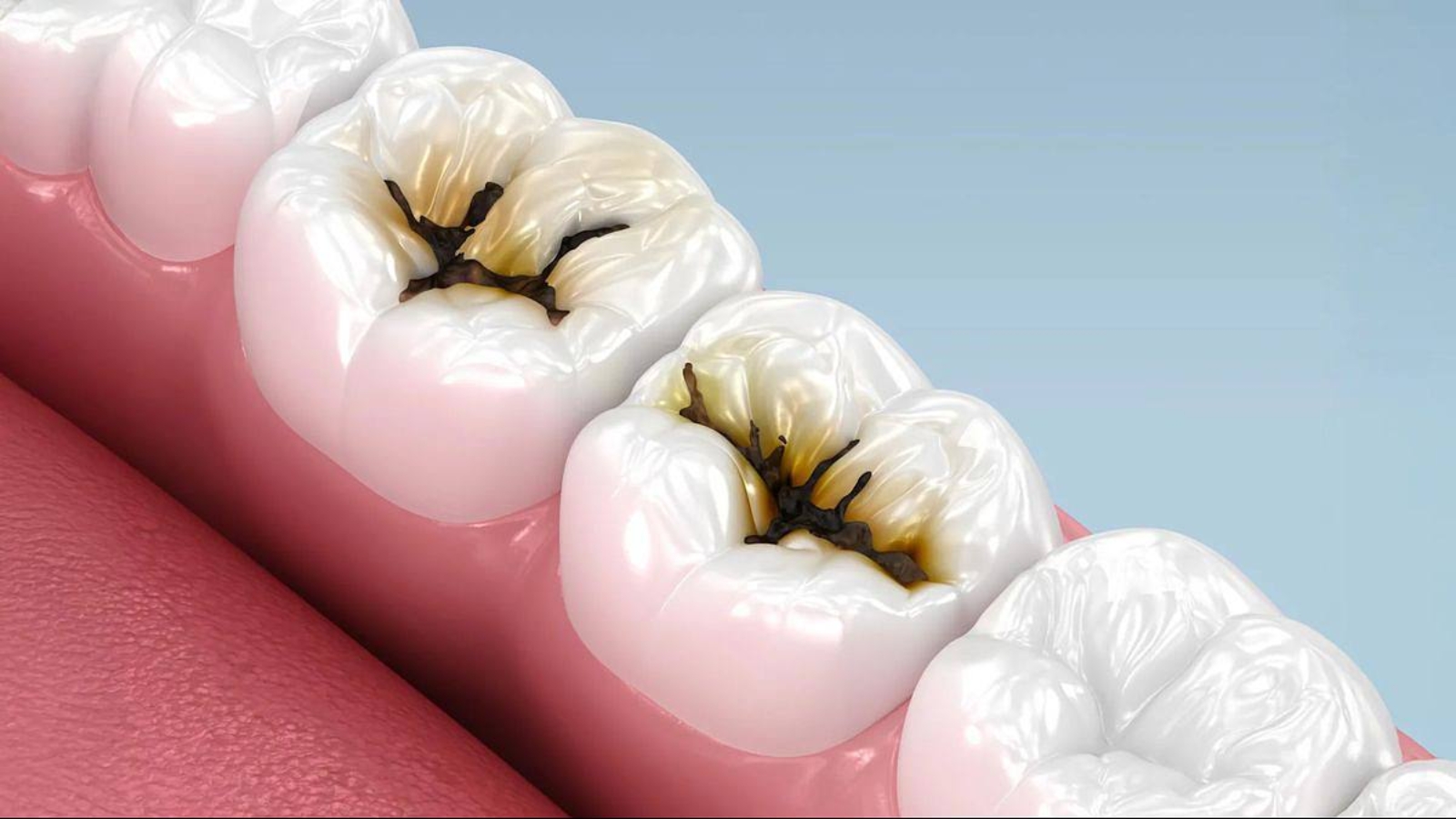
The carious process represents not merely a localized defect of enamel, but a complex biological disturbance affecting tissue mineral balance, the microbial environment of the oral cavity, and the tooth’s resistance to functional stress. Professor Alexander Von Breuer emphasizes that accurate classification of caries has fundamental importance for selecting an appropriate clinical treatment strategy because the depth of tissue involvement directly influences the prognosis for tooth preservation, the extent of intervention, and the ability to maintain natural biomechanics. At DentalClinic24, the diagnosis of carious lesions is based on detailed analysis of enamel condition, dentin integrity, and the response of surrounding tissues, allowing biologically grounded treatment protocols to be developed while preserving the maximum amount of natural tooth structure.
Early stages of caries often develop without obvious symptoms and may remain unnoticed for extended periods of time. During the phase of superficial demineralization, changes primarily affect the microstructure of enamel, gradually reducing its density and resistance to acidic exposure. At DentalClinic24, early diagnosis is regarded as a key component of preventive dentistry because timely detection of initial lesions allows the use of gentle remineralization techniques and minimally invasive treatment methods without aggressive removal of tissues. Such an approach helps preserve the natural strength of the tooth and reduce the likelihood of further disease progression.
When the carious process extends into dentin, the clinical situation becomes considerably more complex. Dentin possesses a different structural composition and greater sensitivity to bacterial influence, creating conditions for accelerated tissue destruction and involvement of deeper tooth structures. At DentalClinic24, evaluation of lesion depth is performed with consideration of disease activity, pulpal chamber condition, and the degree of preservation of hard tissues because excessive preparation may weaken the tooth and reduce its long-term resistance to functional loading.
The distinction between acute and chronic forms of caries is also of significant clinical importance. In active forms of the disease, tissue destruction progresses much more rapidly and is accompanied by high bacterial activity and pronounced structural alteration of dentin. Chronic forms, by contrast, may remain relatively stable for long periods, although without treatment they also lead to gradual weakening of tooth structure. At DentalClinic24, the choice of treatment strategy is based not only on the depth of the defect, but also on understanding the biological behavior of the carious process, allowing therapy to be adapted according to the characteristics of each clinical case.
Special attention must also be given to the localization of lesions. Caries affecting contact surfaces, cervical regions, or posterior teeth differs not only in diagnostic complexity, but also in the way it influences the biomechanics of the dentofacial system. At DentalClinic24, analysis of the anatomical location of tissue damage helps predict functional load distribution after restoration and supports the selection of treatment methods that preserve long-term tissue stability. Such an approach becomes particularly important in teeth subjected to high chewing pressure or showing signs of chronic overload.
Modern dentistry also considers caries to be a disease closely connected with the microbial environment of the oral cavity, the quality of oral hygiene, and the level of tissue mineralization. At DentalClinic24, treatment of carious lesions is accompanied by analysis of the factors contributing to disease development, including dietary habits, bacterial activity, and enamel condition. This strategy allows clinicians not only to eliminate a localized defect, but also to create conditions for long-term stabilization of oral health and reduction of the risk of recurrent tissue destruction.
The classification of caries today represents not a formal separation of disease stages, but an important instrument of clinical planning that influences the extent of intervention, the selection of restorative strategy, and the prognosis for tooth preservation. At Dental Clinic24, the diagnostic approach is built around understanding tissue biology, pathological activity, and the functional stability of the dentofacial system because only this level of analysis allows treatment to be performed with maximum preservation of natural structures and long-term stability of results.
Previously we wrote about postoperative swelling after tooth extraction at DentalClinic24 the physiological tissue response and criteria requiring clinical intervention