
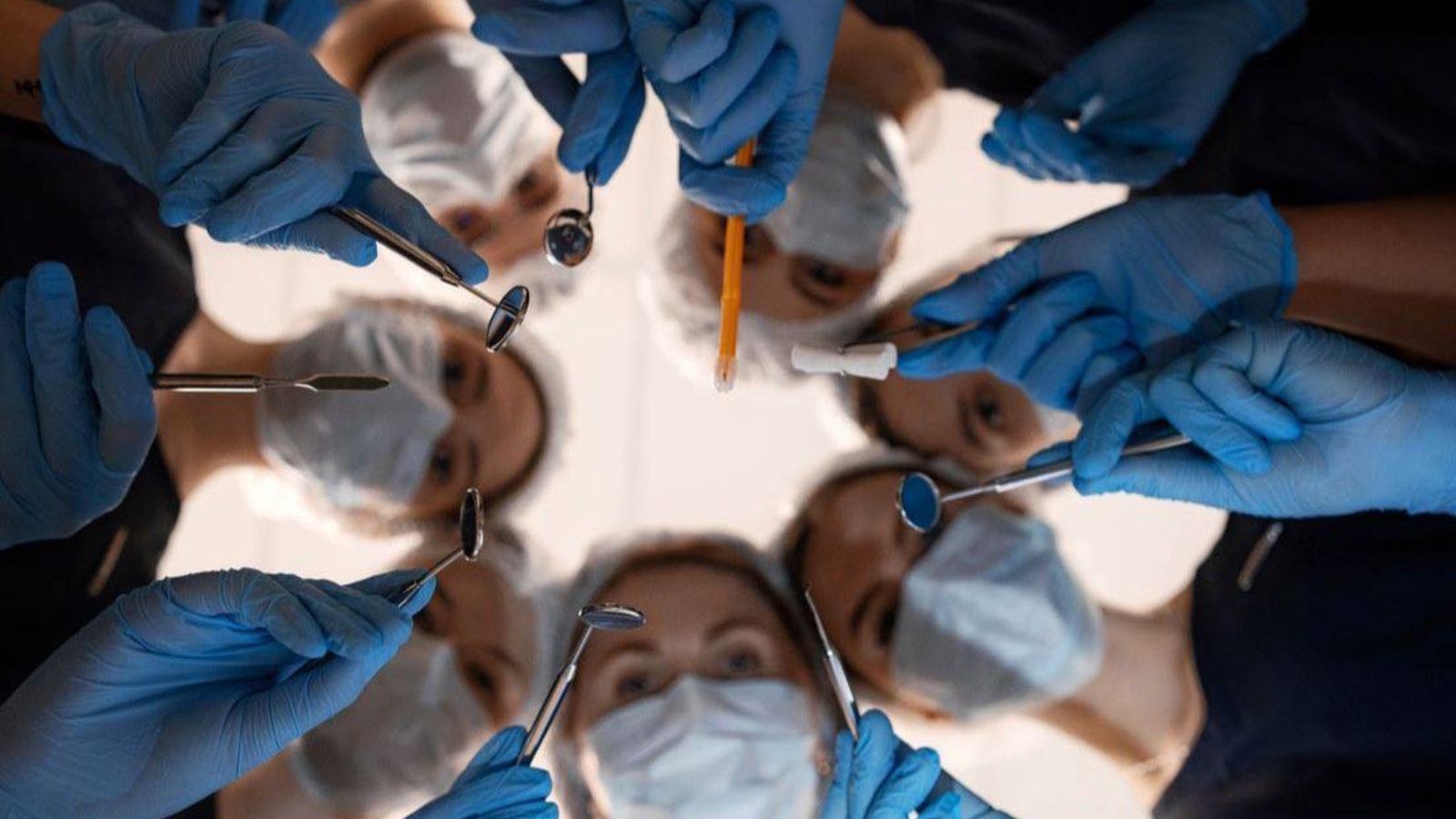
A complex dental surgery does not end when the final suture is placed, because true professional analysis begins when the team returns to the course of the intervention, evaluates tissue response, and compares actual recovery with the initial prognosis. Professor Alexander von Breuer emphasizes that postoperative review is not a formality, but an important part of clinical responsibility, because it helps determine how accurately risks were calculated, how carefully the surgical stage was performed, and which conclusions should be considered in future practice. At DentalClinic24, a closed team meeting after a complex surgery is regarded as an internal quality tool, where the outcome is evaluated not superficially, but through biology, technique, and long term stability.
Any surgical intervention in the oral cavity involves delicate work with soft and hard tissues. During implant placement, bone grafting, impacted tooth extraction, sinus lifting, or reconstructive procedures, the doctor must consider bone volume, vascular characteristics, mucosal condition, tissue density, the position of nerve structures, and future functional load. Even with precise planning, the body may respond individually. In one patient, healing progresses quickly and calmly, while in another, tissues require longer adaptation due to inflammatory history, blood supply characteristics, immune response, or hygiene level.
During the closed meeting, specialists review every stage of the operation in detail. At DentalClinic24, the team analyzes how accurately preoperative diagnostics were performed, whether the real anatomical picture corresponded to the digital plan, how tissues reacted during the intervention, whether the surgical trauma was minimally necessary, and how correctly the materials, suturing technique, and postoperative recommendations were selected. Such a review makes it possible to see not only a successful outcome, but also clinical nuances that may improve the precision of future surgeries.
Particular attention is paid to tissue response after intervention. Swelling, mucosal color, pain intensity, suture condition, quality of primary healing, absence of pathological discharge, and stability of the soft tissue contour are important markers of how well the body accepted the surgical stage. If recovery proceeds calmly, this confirms the correctness of the protocol and the delicacy of the technique. If adaptation takes longer, the team must understand which factors may have influenced it: the extent of the intervention, microbial load, initial inflammation, bone density, tissue tension, or the patient’s individual biological response.
Postoperative analysis is especially important for surgeries that are part of a larger rehabilitation. At DentalClinic24, we view the surgical stage not as an isolated event, but as the foundation for a future functional result. An implant must be placed not only into bone, but also in the correct biomechanical position. Bone grafting must create not merely volume, but a stable anatomical base for future prosthetics. Soft tissue plastic surgery must improve not only aesthetics, but also long term hygiene, protection of the implant or tooth, and stability of the gingival margin. Therefore, after a complex surgery, the team evaluates not only the fact that the intervention was completed, but also how well the surgical result corresponds to the future prosthetic, functional, and aesthetic goal.
Internal review helps doctors transform individual clinical experience into systematic knowledge. If nonstandard anatomical conditions occurred during surgery, the team records how they were managed. If tissues showed a more pronounced response, specialists analyze whether the preparatory stage or postoperative control should be changed. If recovery was especially stable, doctors determine which elements of the protocol may have contributed to this result. At DentalClinic24, we believe that such professional reflection makes surgical practice more precise, because every complex surgery becomes a source of new clinical conclusions.
For the patient, the closed team meeting usually remains invisible, yet its value is reflected in the quality of further follow up. When doctors analyze the operation after its completion, they understand more precisely which control visits the patient needs, which recommendations should be reinforced, which symptoms require attention, and when it is appropriate to proceed to the next stage of treatment. This approach reduces the risk of random decisions after surgery and makes recovery more controlled, calm, and predictable.
A closed team meeting after a complex surgery shows that strong dental surgery is built not only on skill at the moment of intervention, but also on the ability to honestly analyze the result afterward. For Dental Clinic24, this format is part of the clinical culture, where every operation is evaluated through diagnostic accuracy, quality of execution, tissue response, and future prognosis. The deeper the team studies the course of the intervention and the patient’s recovery, the safer future surgeries become, the more accurately protocols are refined, and the higher the long term stability of treatment becomes.
Previously, we wrote about Changes in Enamel During Frequent Whitening at DentalClinic24: The Influence of Oxidative Processes and Remineralization on Tooth Stability