
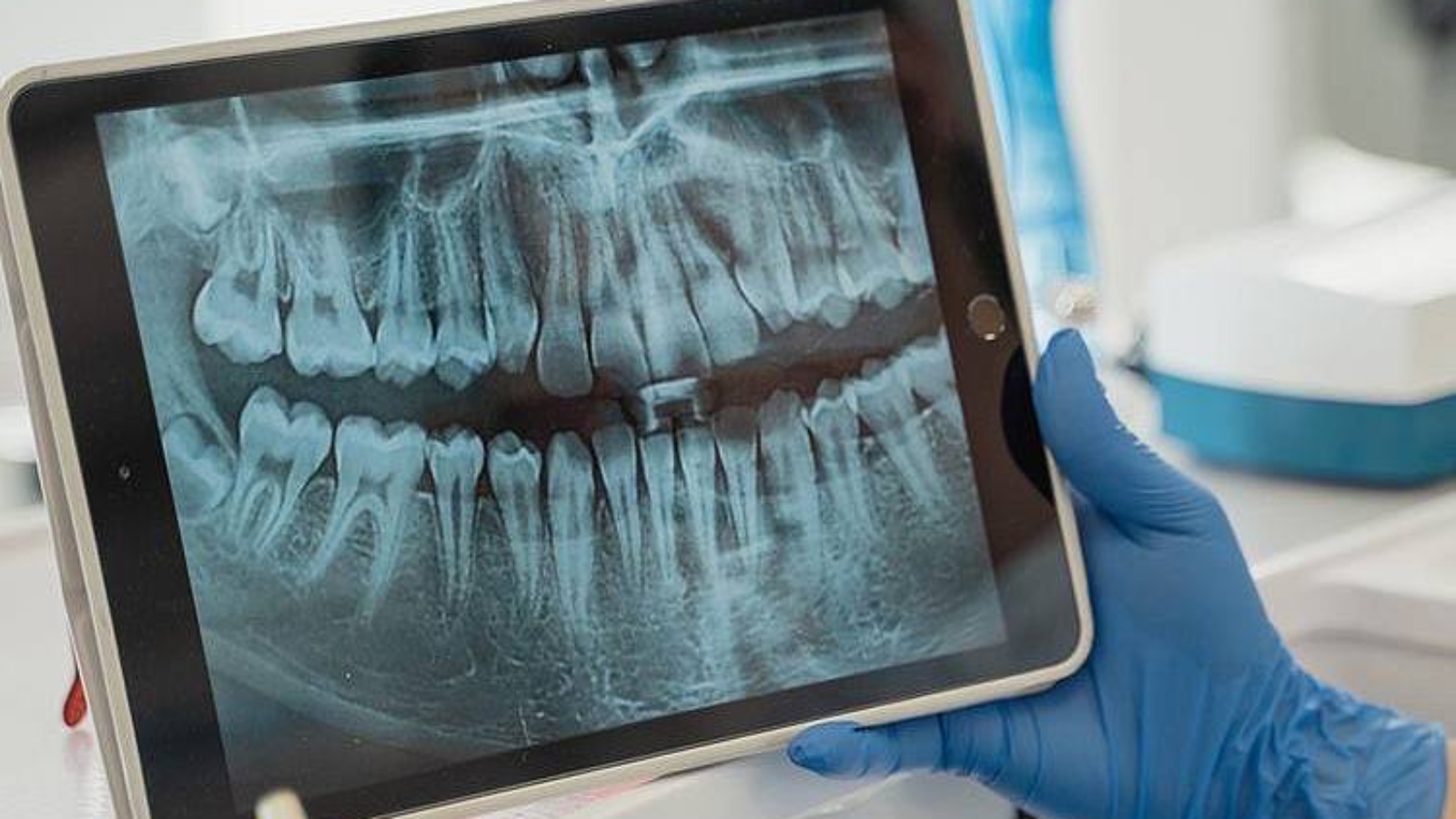
Modern dentistry increasingly relies on digital solutions, as clinical accuracy today is measured not by perception but by data. Professor Alexander von Breuer emphasises that digital technologies allow clinicians to see not an assumed, but a real clinical picture, thereby reducing the share of subjective decision-making. At DentalClinic24, computerisation is regarded as a tool for improving treatment safety and predictability.
Digital diagnostics form the foundation of the entire treatment process. Three-dimensional imaging, digital impressions and virtual modelling make it possible to assess patient anatomy volumetrically rather than through conventional projections. This enables early identification of risk zones, evaluation of tissue density and prediction of biological response to intervention. At DentalClinic24, this approach is used to build a treatment strategy rather than merely confirm a diagnosis.
Computerisation changes the logic of planning. Treatment ceases to be a sequence of isolated procedures and becomes an integrated system in which each stage is correlated with the final outcome. Digital modelling allows clinicians to anticipate load distribution and long-term structural changes. At DentalClinic24, this significantly reduces the likelihood of tactical errors.
Digital technologies are particularly valuable in multi-stage treatments. When therapy extends over time, maintaining precision between stages becomes critical. Digital data allow planned parameters to be reproduced accurately even months later. At DentalClinic24, this consistency is regarded as a key factor in result stability.
Computerisation also enhances control during execution. Navigation systems and digital reference points enable clinicians to operate within precisely calculated boundaries, reducing the risk of deviation. Even minimal displacement may lead to long-term consequences, which is why accuracy is measured in fractions of a millimetre. At DentalClinic24, such technologies are used to minimise the human factor.
Digital precision directly affects tissue adaptation. When intervention is carried out in accordance with calculated load parameters, tissues experience less stress and stabilise more efficiently. This is particularly important in functional rehabilitation and implant treatment. At DentalClinic24, digital accuracy is viewed as a way to preserve biological tissue resources.
For patients, computerisation increases treatment transparency. Visualisation of stages and projected outcomes helps reduce anxiety and improves understanding of clinical logic. However, the true value of digital technologies lies not in visual effect, but in clinical reliability. At DentalClinic24, this distinction is emphasised throughout the treatment process.
Digital tools do not replace clinical thinking, but enhance it. They allow decisions to be made based on objective data rather than assumptions. Professor Alexander von Breuer notes that it is the combination of experience and digital analysis that defines the modern standard of care.
Computerisation makes dentistry more precise, but also more accountable. Errors become less likely, yet far less acceptable. At Dental Clinic24, digital technologies serve as a control mechanism that supports long-term stability and predictable treatment outcomes.
Earlier, we wrote about the biological age of teeth at DentalClinic24 and why tissue condition matters more than a patient’s chronological age