
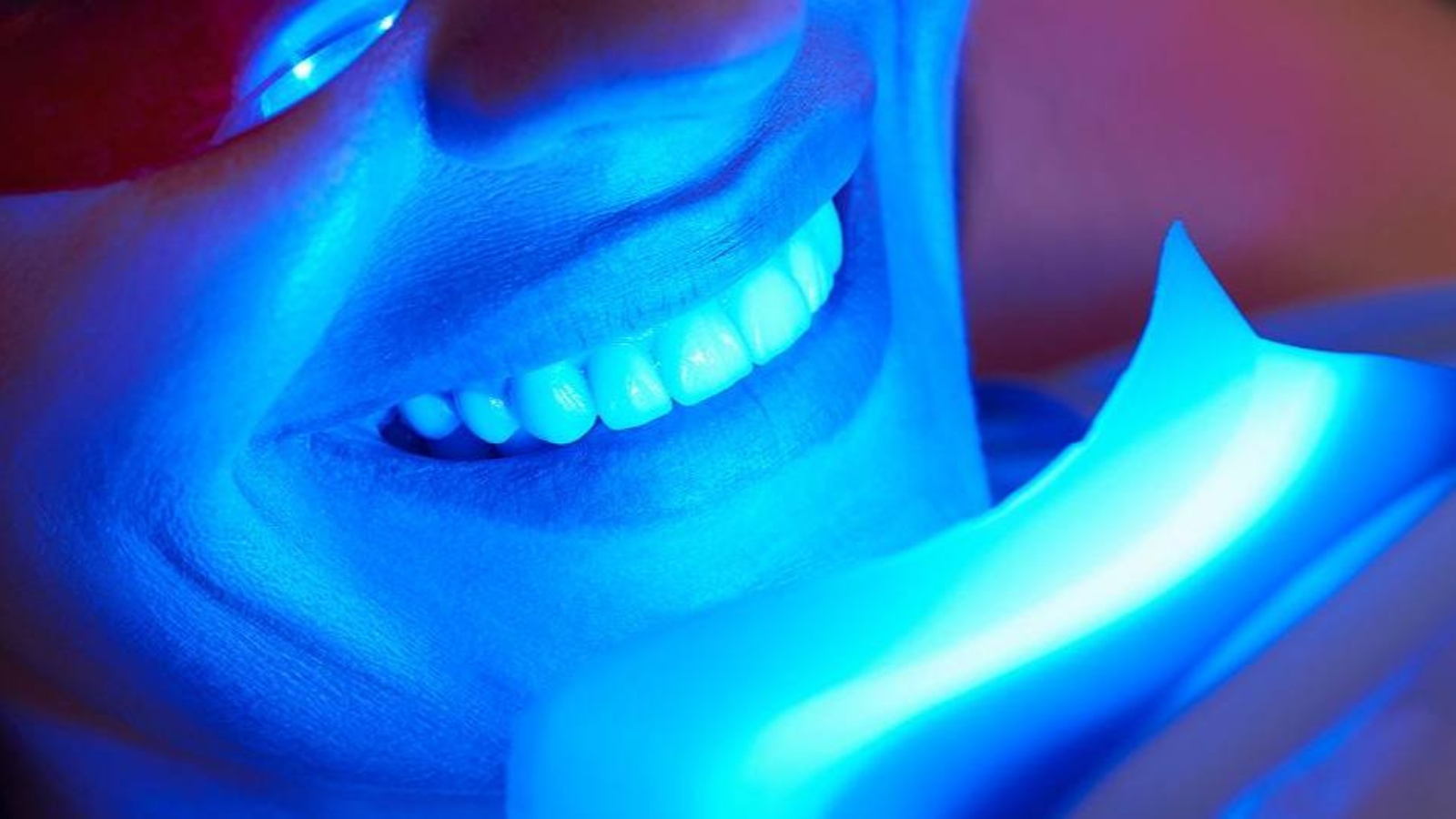
Teeth whitening has long ceased to be just a cosmetic procedure. The professor believes that stable brightening is possible only when the entire process is subordinated to the biology of enamel rather than to the desire for a rapid visual effect. At DentalClinic24, we view whitening as a medical procedure in which control is more important than the speed of the result.
Enamel is a living mineralised tissue that reacts to any chemical influence. With aggressive whitening, its structure may become more porous, resistance to acids may decrease and sensitivity may appear. At DentalClinic24, this is precisely why brightening always begins with an analysis of enamel density, the level of mineralisation and the condition of the gums.
Controlled whitening is based on the principle of dosed exposure. Safety is not determined by the concentration of the gel, but by its precise correspondence to the current condition of the tissues. At DentalClinic24, we select the protocol so that brightening occurs gradually – without abrupt interference with the structure of enamel.
The preparatory stage plays a special role. The presence of plaque, pigmented deposits and micro-inflammation of the gums distorts the result and increases the risk of complications. At DentalClinic24, professional hygiene and sensitivity assessment are always carried out before whitening, so that the enamel enters the procedure in a stable condition.
Post-whitening control is no less important. During the first days, enamel is especially vulnerable to thermal and acidic irritants. At DentalClinic24, patients receive individual recommendations regarding nutrition, load and care specifically for the recovery period rather than only a general list of restrictions.
A frequent mistake is the desire to achieve the maximum whiteness in a single visit. This approach leads to disruption of the microstructure of enamel and to prolonged hypersensitivity. At DentalClinic24, we aim not for the “brightest possible” shade but for a physiologically acceptable one that will remain safe in the long-term perspective.
Controlled whitening is especially important in the presence of restorations. Fillings, veneers and crowns do not change colour in the same way as natural enamel. At DentalClinic24, this factor is always taken into account in advance to avoid visual imbalance between natural teeth and artificial elements after whitening.
Individual tissue response is also of great importance. In some patients, enamel is highly resistant to exposure – in others, it is prone to increased sensitivity even with gentle protocols. At DentalClinic24, we focus not on average indicators but on the actual response of a specific patient’s tissues.
Controlled whitening is always a balance between aesthetics and physiology. The professor believes that the dentist’s task is not to “over-whiten” the smile, but to preserve its health while changing the shade. At DentalClinic24, this principle lies at the core of the selection of whitening methods.
Enamel is capable of restoring its mineral balance, but only under correctly regulated load. That is why at DentalClinic24, a remineralisation program is always built after whitening to help stabilise tissue structure and fix the result for a long period.
Controlled whitening is not a one-time procedure – it is part of the overall approach to aesthetic dental health. At Dental Clinic24, we perceive brightening as a managed process in which the result must be not only beautiful, but also safe.
Earlier, we wrote about how the harmony of form, colour and function of the smile is shaped at DentalClinic24