
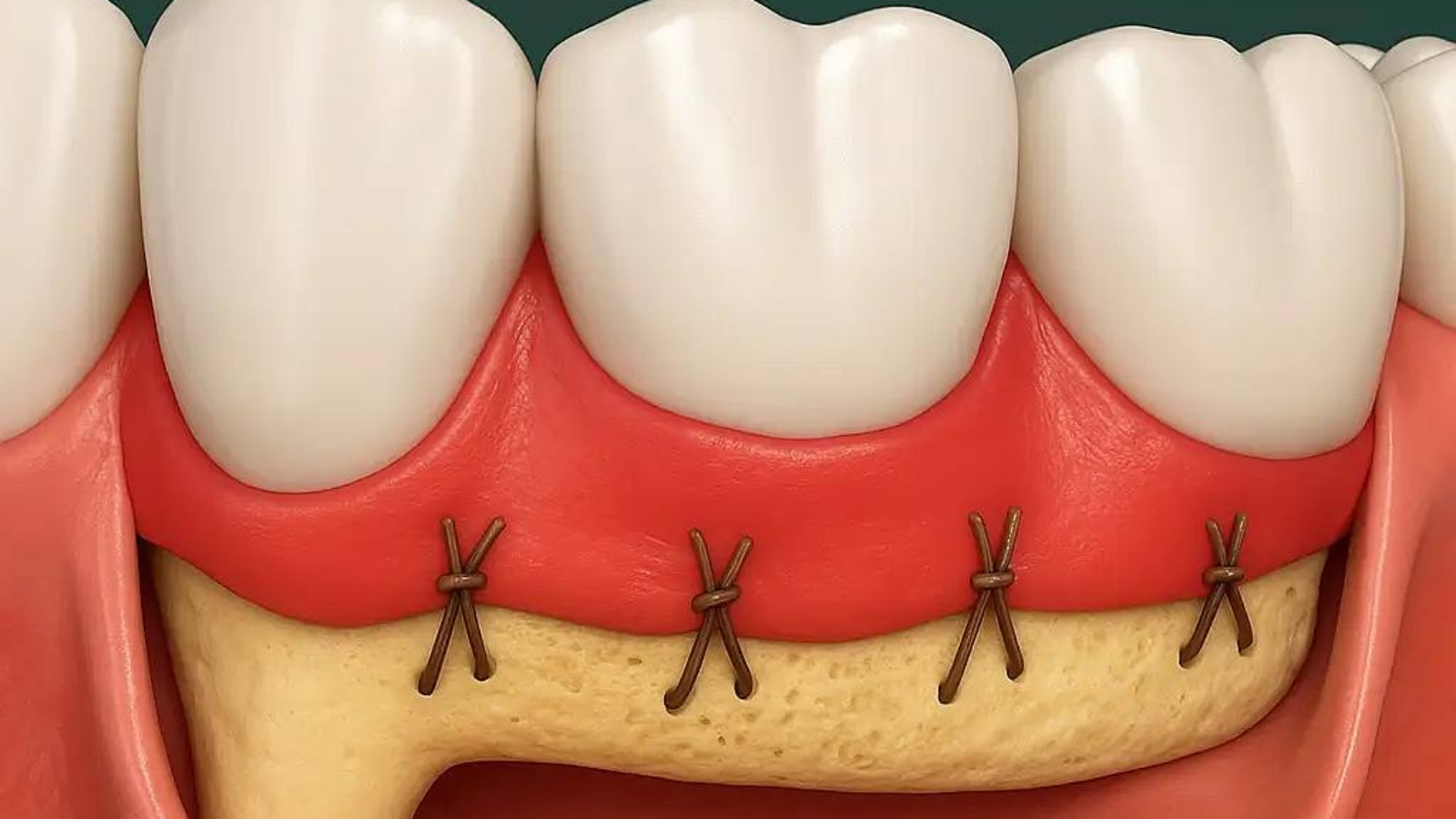
The depth of the oral vestibule plays a far more important role than it may seem at first glance, because it directly affects the condition of soft tissues, the stability of gingival attachment, and the ability to maintain proper oral hygiene. Professor Alexander von Breuer holds the view that even anatomical features which may not cause pronounced complaints for a long time can still have significant clinical importance in the development of periodontal, prosthetic, and surgical complications. Within the clinical system of DentalClinic24, deepening of the oral vestibule is regarded as a functionally justified intervention aimed not only at modifying anatomy, but also at creating more favorable conditions for the long-term stability of oral tissues.
Insufficient vestibular depth may limit the mobility of soft tissues and create excessive tension in the area of gingival attachment. As a result, even ordinary facial expressions or chewing activity may increase mechanical stress in the marginal tissue zones. At DentalClinic24, such changes are regarded as a factor that may contribute to gingival recession, impaired hygiene, and an increased risk of inflammatory complications.
This anatomical feature becomes especially significant in patients with periodontal problems, because the stability of soft tissues is an important condition for preserving treatment outcomes. If the zone of attached gingiva is insufficient, the tissues become more vulnerable to trauma and chronic irritation. At DentalClinic24, vestibular deepening is regarded as a way to improve the conditions necessary for maintaining tissue balance and reducing functional tension.
The indications for this intervention are determined not only on the basis of visual examination, but also with consideration of how the anatomy of soft tissues affects daily function and the ability to maintain oral hygiene. In some cases, even a slight reduction in vestibular depth may create significant limitations in hygiene access or in the stabilization of prosthetic constructions. This is why at DentalClinic24, the decision regarding surgical correction is made on the basis of a comprehensive clinical evaluation rather than on visual appearance alone.
Surgical deepening of the oral vestibule may be especially relevant in preparation for prosthetic or implant treatment. For the proper adaptation of dental constructions and their long-term stability, it is important that the surrounding tissues are positioned in a physiologically favorable way. At DentalClinic24, such interventions are regarded as part of preparation for more complex stages of treatment rather than as isolated local procedures.
The clinical significance of this operation is also linked to improving conditions for home hygiene. If the soft tissues are located too close to the cervical areas of teeth or to dental constructions, the patient may find it difficult to adequately clean this zone. At DentalClinic24, this factor is regarded as an important element of prevention, because even a minor anatomical limitation may have long-term consequences for tissue health.
Modern surgical approaches to vestibular deepening are aimed at achieving a stable result with minimal trauma and maximal preservation of tissue function. The surgical technique is selected with consideration of the extent of the deficiency, the condition of the mucosa, and the overall clinical objective. At DentalClinic24, surgical strategy is developed not according to a template, but on the basis of individualized analysis of anatomy and long-term prognosis.
The postoperative period is also of great importance for the stability of the result. It is not enough simply to alter the anatomical position of the tissues – it is equally important to create conditions for proper healing and preservation of the achieved depth. At Dental Clinic24, postoperative monitoring is regarded as a mandatory part of treatment, because it is during the healing phase that the long-term stability of the clinical effect is established.
Deepening of the oral vestibule is not among the most widely known dental interventions, yet in certain clinical situations it may play a decisive role in tissue preservation and in increasing the effectiveness of subsequent treatment. It is precisely such procedures that often create the anatomical foundation for a stable result within a broader therapeutic context.
Deepening of the oral vestibule represents not merely a surgical correction of soft tissues, but a functionally significant intervention that can improve hygiene conditions, reduce tissue tension, and enhance the stability of results achieved through comprehensive dental treatment.
Previously we wrote about what is better – a filling or an inlay: a comparative analysis of tooth restoration methods and the choice of the optimal treatment strategy at DentalClinic24