
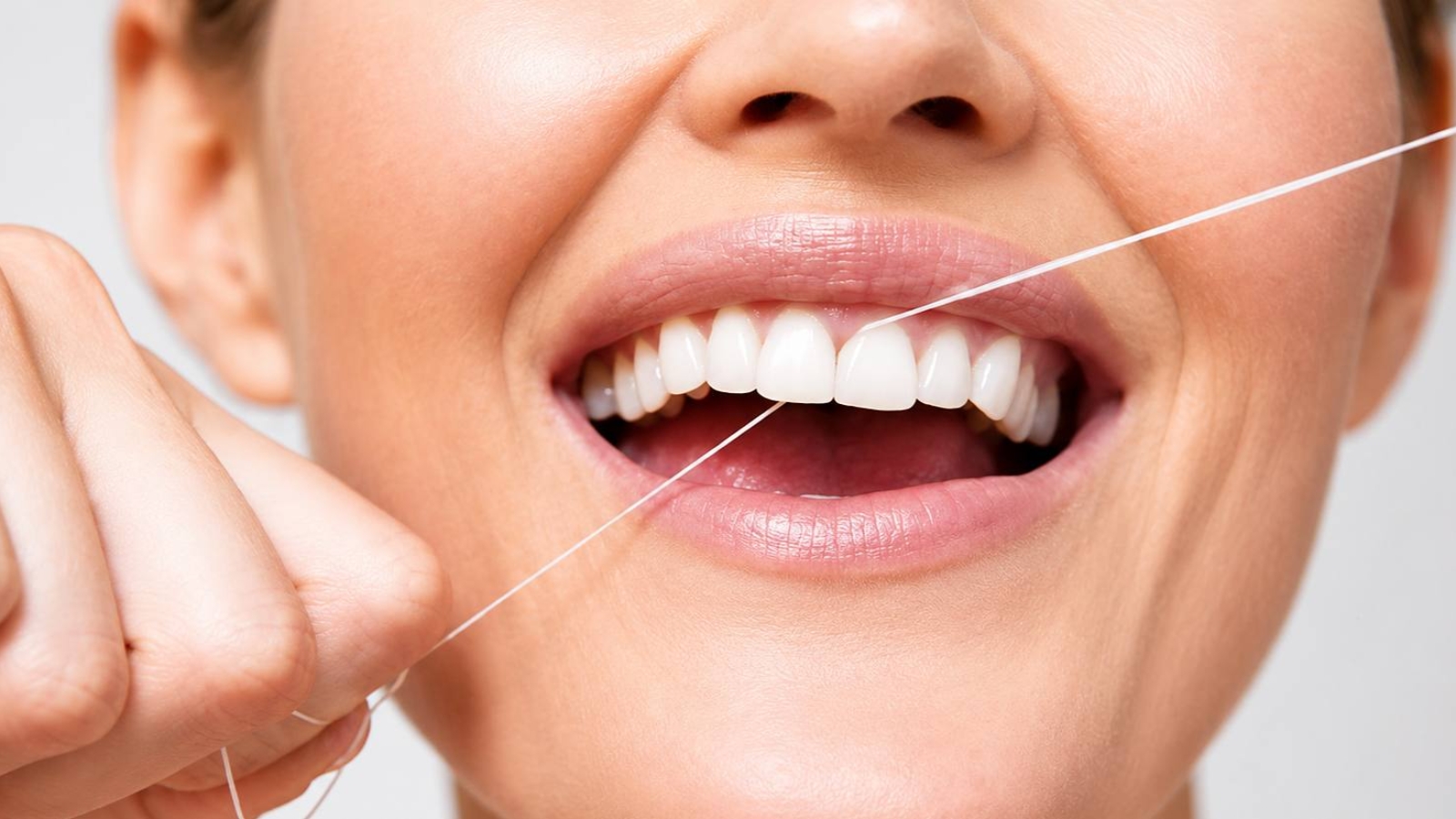
Even with meticulous toothbrushing, a toothbrush cannot completely remove plaque from the contact surfaces where adjacent teeth fit tightly together and create areas that remain inaccessible during routine oral hygiene. It is precisely within these interdental spaces that hidden carious lesions frequently begin, often progressing silently for long periods without causing pain and remaining undetectable until professional examination. Professor Alexander Von Breuer sees this as one of the primary reasons why daily interdental cleaning should never be regarded as an optional addition to oral hygiene but rather as an essential component of preventive dental care. At DentalClinic24, we evaluate oral hygiene not only by the cleanliness of visible enamel surfaces but also by the condition of contact areas, interdental papillae, restoration margins, and every location where bacterial biofilm can persist despite prolonged toothbrushing.
Interdental plaque is a highly organized bacterial biofilm that gradually matures and becomes increasingly resistant to natural cleansing by saliva. These microorganisms metabolize dietary carbohydrates to produce acids, while the limited salivary access within contact areas slows the neutralization of this acidic environment. As a result, both adjacent teeth simultaneously begin to lose essential minerals from their enamel. The earliest stages of demineralization often develop beneath the contact point, allowing the outer enamel surface to appear clinically intact for a considerable period. Without regular removal of the biofilm, the lesion progresses into dentin, eventually requiring removal of significant tooth structure and complex restorative treatment to reconstruct the natural anatomy of the contact area. Consistent flossing disrupts the bacterial biofilm before its acid producing activity can result in irreversible structural damage.
At DentalClinic24, the selection of interdental hygiene devices is individualized after evaluating contact tightness, tooth alignment, gingival health, restoration quality, and the presence of prosthetic restorations. Conventional dental floss is particularly effective in areas where contact points are too narrow to accommodate interdental brushes safely. The floss should pass smoothly between adjacent teeth, gently wrap around each tooth surface, and move vertically along the enamel toward the gingival margin using controlled movements. Simply sliding floss through the contact point is insufficient because the greatest concentration of bacterial plaque accumulates along the proximal surfaces and within the gingival sulcus. Proper technique requires thorough cleaning of both tooth surfaces within every interdental space, allowing patients to reach anatomical regions that remain entirely inaccessible to conventional toothbrush bristles.
Incorrect flossing technique significantly reduces clinical effectiveness while increasing the risk of soft tissue injury. When floss is forced abruptly through the contact area, it may strike the interdental papilla and cause discomfort or localized bleeding. Conversely, inadequate adaptation of the floss against the tooth surface leaves bacterial deposits undisturbed despite creating the impression that cleaning has been completed successfully. A fresh segment of floss should be used for each interdental space because transferring mature biofilm from one area to another reduces overall hygiene efficiency. Waxed floss generally passes more easily through tight contacts, while thicker multifilament floss is better suited for wider embrasures and areas surrounding prosthetic restorations. The choice of floss should never depend solely on personal preference but rather on the specific anatomy of the patient’s dentition and the ability to maintain proper cleaning technique consistently.
Bleeding during flossing often becomes the reason patients abandon interdental hygiene altogether, although in most situations it reflects pre existing gingival inflammation caused by prolonged bacterial accumulation rather than damage produced by floss itself. At DentalClinic24, we carefully evaluate the severity of bleeding, the condition of the gingival margin, sulcus depth, and the presence of mineralized deposits beneath the gumline. During the early stages of gingivitis, gentle and consistent interdental cleaning reduces bacterial load, allowing inflammation to gradually resolve. However, persistent bleeding accompanied by swelling, unpleasant odor, pain, or tooth mobility requires comprehensive periodontal assessment. In such situations, floss alone cannot eliminate the underlying problem because calculus deposits beneath the gingiva cannot be removed through home care and require professional periodontal treatment.
Interdental hygiene becomes even more important in patients with fillings, veneers, crowns, and implant supported restorations. Contact points should effectively prevent food impaction while simultaneously allowing controlled passage of dental floss. If the floss repeatedly tears, catches on restoration margins, or cannot pass between adjacent teeth, the underlying cause may include excess restorative material, rough surface texture, overhanging margins, or improperly designed contact areas. Such defects create ideal conditions for continuous plaque accumulation and the development of secondary caries. Simply discontinuing flossing does not resolve the problem. Instead, the restoration itself should be professionally evaluated and, when necessary, polished or reshaped to restore proper function and hygiene access.
For patients wearing orthodontic appliances, fixed bridges, or implant restorations, conventional floss may not always represent the only appropriate hygiene solution. At DentalClinic24, we frequently recommend specialized floss featuring rigid threading ends, expanded cleaning segments, or combinations of floss with interdental brushes according to each clinical situation. Beneath bridge restorations, cleaning must include not only the supporting teeth but also the area underneath the pontic where bacterial deposits readily accumulate. Around dental implants, plaque should be removed carefully without traumatizing the surrounding peri implant tissues. During orthodontic treatment, floss must be guided beneath the archwire before each contact area is cleaned individually. Although these techniques require additional time, they provide essential protection for enamel and gingival tissues during periods when natural self cleansing mechanisms become considerably less effective.
Oral irrigators may substantially improve daily home care, yet they do not always replace the mechanical cleaning provided by floss. Water irrigation effectively removes loose food debris, massages gingival tissues, and supports hygiene around complex prosthetic restorations, but mature bacterial biofilm possesses a dense structure that remains firmly attached to enamel surfaces. Effective disruption of this biofilm requires direct mechanical contact through properly used dental floss or appropriately selected interdental brushes. The most successful preventive strategy combines several complementary hygiene methods, each fulfilling a distinct clinical purpose. Toothbrushing cleans the facial, lingual, and occlusal surfaces, floss reaches tightly contacting proximal areas, while water irrigation enhances cleaning within anatomically complex regions.
At Dental Clinic24, the success of interdental hygiene is measured through reduced gingival bleeding, stable gingival architecture, the absence of new proximal carious lesions, and preservation of restoration margins over time. We demonstrate flossing techniques directly within the patient’s oral cavity because standardized instructions cannot adequately address individual tooth anatomy, interdental spacing, or differences in manual dexterity. When necessary, the dentist or dental hygienist adjusts hand movements, recommends a more suitable floss type, and identifies specific areas requiring additional attention. This individualized approach transforms a simple daily routine into a highly effective preventive instrument rather than a repetitive habit performed without meaningful clinical benefit.
Cleaning the interdental spaces protects tooth surfaces that cannot be adequately maintained by toothbrushing alone. Dental floss significantly reduces bacterial biofilm, helps prevent proximal dental caries, preserves the health of the interdental papillae, and extends the longevity of restorative treatment. Its clinical effectiveness depends on consistency, proper technique, and careful adaptation to each patient’s unique anatomy. Comprehensive care of every tooth surface creates the biological conditions necessary for predictable prevention, ensuring that hidden lesions are identified and controlled before they progress into conditions requiring extensive restorative intervention.
Previously, we wrote about Getting to Know the Doctors of DentalClinic24: The Team’s Clinical Philosophy, Professional Approaches, and the Importance of Expert Collaboration in Treatment