
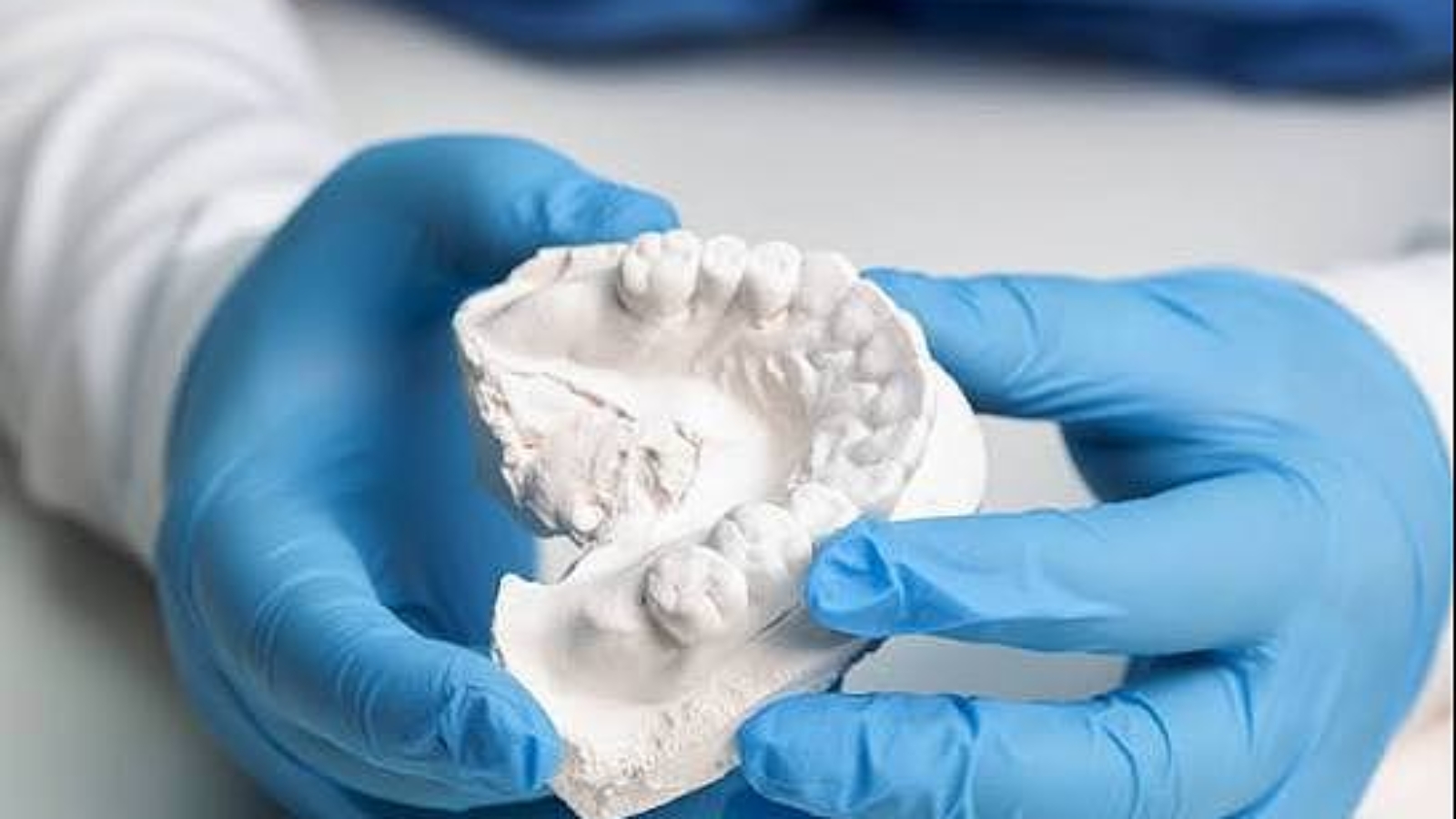
Accurate reproduction of the anatomy of teeth and surrounding tissues is one of the fundamental conditions of modern dentistry, because the precision of diagnosis, the adaptation of restorations, and the prognosis of treatment directly depend on the quality of this information. Professor Alexander von Breuer asserts that even the most advanced clinical solutions lose their predictability if the initial data on tooth shape, soft tissues, and occlusal relationships are not recorded with sufficient accuracy. At DentalClinic24, dental impressions are regarded not as a technical formality, but as an important clinical stage that connects diagnosis, planning, and implementation of treatment into one unified system.
Dental impressions are used in many areas of dentistry – from prosthetics and orthodontics to implantology and functional diagnostics. Their main purpose is to transfer as accurately as possible the shape of the dental arches, the position of the teeth, the characteristics of the bite, and the condition of the adjacent tissues. At DentalClinic24, this stage is regarded as the foundation for subsequent modeling and clinical decision-making.
One of the main advantages of dental impressions is the possibility of creating an accurate model of the patient’s dentofacial system. Such a model allows the clinician to analyze spatial relationships, evaluate functional contacts, and identify nuances that are not always obvious during direct examination in the oral cavity. At DentalClinic24, the diagnostic value of models is regarded as an important part of treatment preparation.
Dental impressions play a particularly significant role in prosthetic dentistry, where the precision of the fit of the future restoration directly depends on the quality of the initial anatomical information. Even minimal distortions may affect the adaptation of crowns, inlays, veneers, or other restorations. At DentalClinic24, impressions are regarded as one of the most important stages in ensuring the accuracy of the prosthetic result.
Impressions are equally important in implant treatment, especially when precise transfer of implant position and soft tissue contour is required. This influences not only the fit of the restoration, but also its biological compatibility with the surrounding tissues. At DentalClinic24, attention to precision at this stage is regarded as part of the long-term prognosis of implant treatment.
Dental impressions are also highly valuable in orthodontic planning, where it is necessary to analyze not only the position of individual teeth, but also the overall balance of the dental arches, arch width, contacts, and symmetry. At DentalClinic24, models derived from accurate impressions are used as a tool for evaluating the clinical situation and constructing the strategy of correction.
Particular attention should also be given to the role of impressions in functional diagnostics. When analyzing occlusion, chewing contacts, and the characteristics of mandibular movement, it is important to have an accurate anatomical reference on which potential areas of overload or instability can be assessed. At DentalClinic24, impressions are regarded as an important part of comprehensive functional analysis.
The accuracy of anatomical transfer is especially important because many stages of treatment are performed outside the oral cavity – in the laboratory setting, where the specialist works only with the obtained model. Any inaccuracy at the impression stage may be transferred into the final restoration. At DentalClinic24, this is regarded as the reason why this stage requires the same level of attention as the treatment itself.
Dental impressions remain a significant clinical tool even in the context of the active development of digital technologies, because the principle remains unchanged – successful treatment is impossible without accurate recording of anatomy. At Dental Clinic24, the precision of initial data is regarded as the basis of quality and predictability in any dental intervention.
Dental impressions should not be regarded merely as a technical stage, but as an important clinical instrument that provides the connection between the patient’s anatomy and the precision of treatment decisions. It is precisely through the correct transfer of form and spatial relationships that it becomes possible to create restorations and treatment plans that correspond to the real clinical situation.
Previously we wrote about Pediatric anesthesia in the dentistry of DentalClinic24 – principles of safety, reaction monitoring, and the comfort of the young patient