
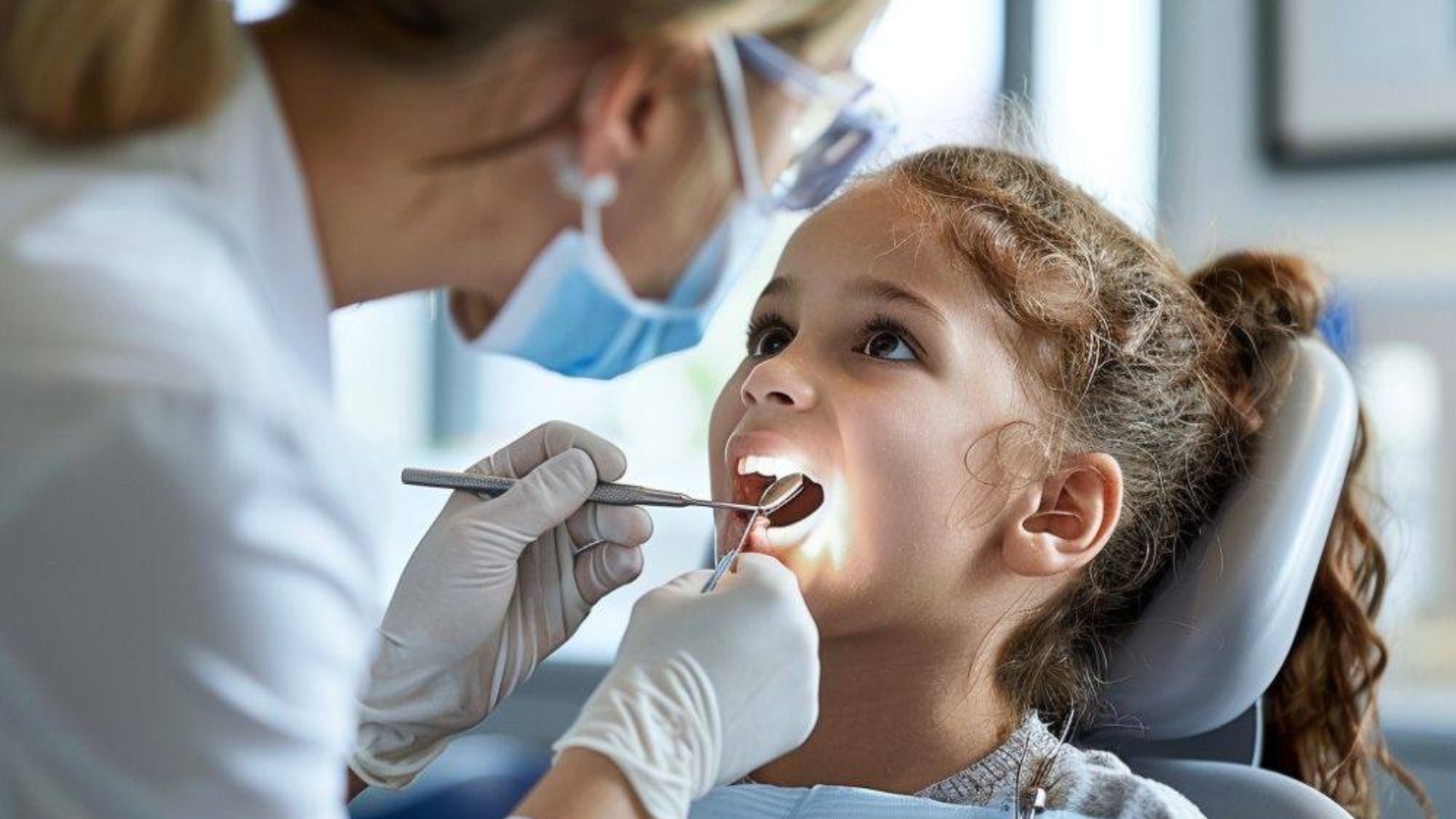
Treating children’s teeth requires not only clinical precision but also an understanding of age-related psychology and physiology. Professor Alexander von Breuer emphasises that sedation in paediatric dentistry is not a way to “simplify” the dentist’s work, but a medical tool used strictly according to defined indications. At DentalClinic24, the decision to perform treatment under sedation is made only after a comprehensive assessment of the child’s condition and the scope of the planned intervention.
Medical indications for sedation include pronounced fear, inability to cooperate for a prolonged period, a strong gag reflex, and the need to complete extensive treatment in a single visit. In children with heightened anxiety or a negative prior dental experience, stress can amplify pain perception and impair adaptation. At DentalClinic24, such situations are evaluated individually – taking into account the child’s age, emotional state and the volume of required dental care.
Sedation creates a controlled state of relaxation without full loss of consciousness. The child remains responsive to the dentist, while the level of anxiety is significantly reduced. This decreases muscular tension, improves tolerance to local anaesthesia and allows treatment to be carried out without psychological overload. At DentalClinic24, sedation is administered strictly in accordance with established protocols and under continuous monitoring of vital signs.
Safety is the primary priority. Before the procedure, a detailed medical history is taken, the child’s general health status is assessed and, if necessary, a paediatric consultation is arranged. Particular attention is given to the respiratory system, cardiovascular condition and potential allergic reactions. At DentalClinic24, only well-established medications with a predictable pharmacological profile and minimal risk of complications are used.
During treatment, the child’s condition is continuously monitored – including respiratory rate, blood oxygen saturation and heart rhythm. The clinical team is trained in paediatric care and emergency response protocols. At DentalClinic24, safety is regarded as an essential prerequisite for sedation, not an optional measure.
Equally important is the adaptation phase after the procedure. The child should emerge from the state of medical relaxation smoothly, retaining a positive perception of the dental visit. At DentalClinic24, parents receive clear instructions regarding observation during the first hours after treatment, enabling timely assessment of the child’s wellbeing and prevention of potential complications.
It is important to understand that sedation does not replace meaningful interaction between the dentist and the child. Even when pharmacological support is used, gradual psychological adaptation, trust-building and the formation of a positive attitude toward dental care remain essential. At DentalClinic24, sedation is viewed as part of a comprehensive approach aimed at preserving not only dental health but also emotional comfort.
The clinical appropriateness of sedation is always evaluated from a long-term perspective. If treatment can be completed without pharmacological support, gradual adaptation is preferred. However, in cases where stress may cause greater harm than the procedure itself, controlled sedation becomes a justified medical decision.
Thus, dental treatment for children under sedation requires strict adherence to indications, safety protocols and careful post-procedural adaptation monitoring. At Dental Clinic24, this method is applied as a clinical instrument rather than a universal solution. An individualised approach and interdisciplinary evaluation ensure safety, comfort and stable treatment outcomes for young patients.
Previously, we wrote about the differential diagnosis of caries at DentalClinic24 – how to distinguish early lesions from non-carious defects and avoid overtreatment.