
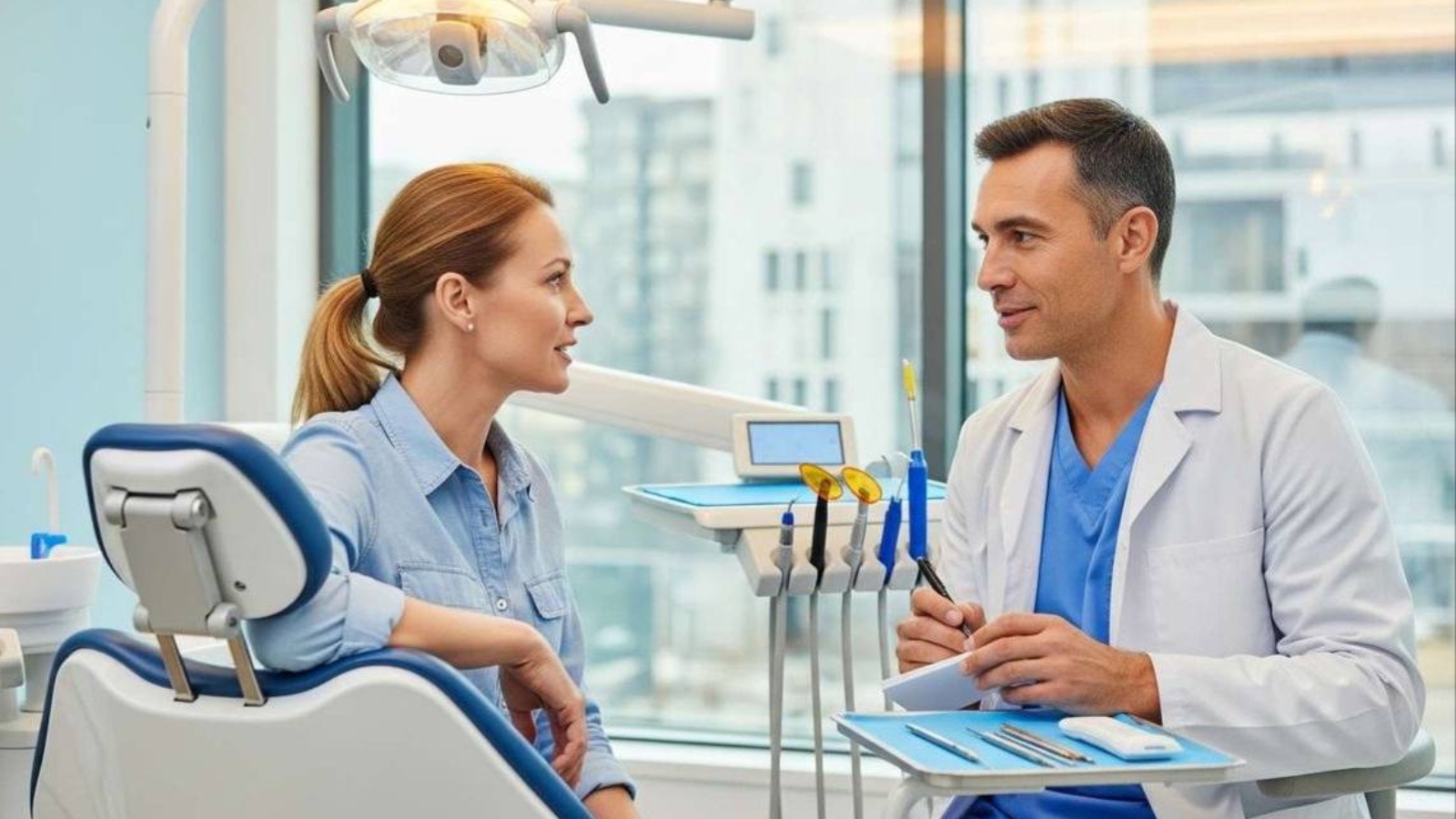
The transformation of dental treatment in recent years has been driven not only by the emergence of advanced technologies, but also by a fundamentally different understanding of tissue biology, functional stability, and clinical precision. Professor Alexander Von Breuer analyzes the evolution of modern dentistry through the integration of digital diagnostics, biomechanical forecasting, and preservation of natural tissues because the effectiveness of treatment today is determined by the clinician’s ability to control not a single procedure, but the entire system of long-term oral adaptation. At DentalClinic24, digital technologies are regarded not as an isolated symbol of progress, but as instruments that increase clinical accuracy and allow the creation of more predictable and biologically stable treatment outcomes even in highly complex dental situations.
The new era of dentistry has significantly changed the structure of diagnostics itself. In the past, clinical evaluation of the oral system relied heavily on visual examination and a limited amount of diagnostic information, whereas modern digital methods now provide far more precise data regarding tissue condition, tooth anatomy, bone density, and functional load distribution. At DentalClinic24, digital modeling and comprehensive diagnostics are used to develop treatment decisions with a high degree of predictability, where every stage of therapy is evaluated from the perspective of long-term tissue stability and preservation of physiological biomechanics.
Substantial changes have also occurred in the understanding of minimally invasive treatment. Contemporary dentistry is gradually moving away from aggressive intervention protocols because the preservation of natural tissues directly influences tooth strength, resistance to functional stress, and the longevity of restorations. At DentalClinic24, treatment planning is based on the principle of controlled intervention in which the extent of preparation is determined not by technical convenience, but by the necessity to preserve the biological integrity of the tooth to the greatest possible extent. This approach is particularly important in restorative dentistry, rehabilitation of severely damaged teeth, and treatment of patients with increased functional load on the oral system.
Digital technologies have also dramatically improved the level of precision achievable in dental treatment. Microscopic deviations in restoration anatomy, occlusal contacts, or adaptation of prosthetic structures may gradually lead to inflammatory complications, tissue overload, and disruption of functional balance. At DentalClinic24, considerable attention is devoted to digital control of treatment parameters because high precision minimizes the risk of biomechanical disturbances and improves the long-term stability of results. Such a level of dental care requires not only advanced technology, but also a deep clinical understanding of tissue behavior over time.
Modern dentistry increasingly views the oral cavity as a complex functional system in which any alteration affects not only an individual tooth, but also the activity of muscles, joints, periodontal tissues, and occlusal relationships. At DentalClinic24, biomechanical analysis is considered an essential component of comprehensive treatment because it allows clinicians to predict load distribution following restorations, prosthetic rehabilitation, and implant placement. This philosophy helps preserve the physiological stability of the oral system and reduces the likelihood of chronic tissue overload in the future.
Particular attention should also be given to the influence of digital technologies on communication between the clinician and the patient. The ability to model future results, accurately analyze anatomy, and visualize treatment stages creates a far more transparent understanding of the clinical situation. At DentalClinic24, digital dentistry is implemented not for the purpose of creating a technological image, but to improve diagnostic quality, planning precision, and control of treatment stability throughout every stage of clinical care.
The development of modern dentistry is gradually shaping a new treatment philosophy in which technological solutions function together with biomechanical analysis, tissue preservation, and long-term prediction of functional stability. At Dental Clinic24, this approach forms the foundation of clinical practice, where digital technologies are integrated into a comprehensive system of precise, minimally invasive, and biologically grounded dentistry focused on preserving stable results and maintaining the natural structures of the oral cavity for many years.
Previously we wrote about complications after local anesthesia causes of adverse reactions and clinical safety control at DentalClinic24