
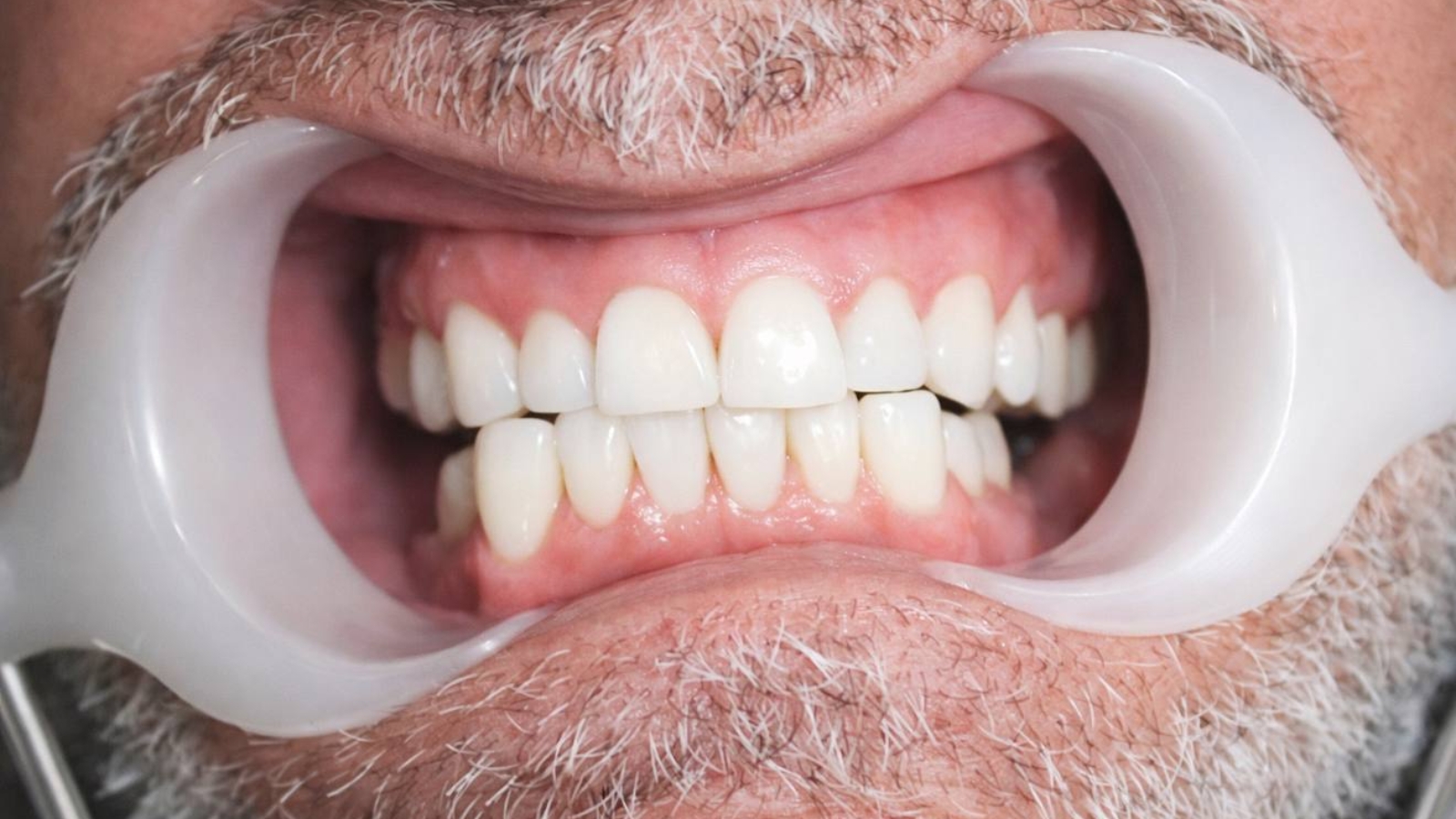
Mandibular deviation is a functional disturbance that often remains unnoticed in its early stages. Professor Alexander von Breuer says that asymmetry of mandibular movements rarely develops spontaneously – in most cases, it is the result of long-term adaptation of the dentofacial system to altered loading conditions. At DentalClinic24, deviation is not viewed as an isolated symptom, but as an indicator of deeper biomechanical changes.
Under physiological conditions, mandibular movements are symmetrical and coordinated with muscular and joint function. When deviation is present, the trajectory of opening and closing shifts to one side, indicating an imbalance between the temporomandibular joints, dental contacts, and neuromuscular control. At DentalClinic24, such deviations are identified through functional analysis before pronounced complaints arise.
One of the most common causes of deviation is occlusal disturbance. Uneven contacts, premature contact points, or asymmetric load distribution force the mandible to seek a compensatory position. Over time, this position becomes fixed at the level of muscular memory. At DentalClinic24, occlusal analysis is performed dynamically rather than limited to static tooth contacts.
The condition of the temporomandibular joints also plays a critical role. Restricted mobility of one joint, low-grade inflammatory changes, or differences in joint surface anatomy may cause mandibular deflection during movement. At DentalClinic24, joint function assessment is a mandatory component of deviation diagnostics.
The muscular component is equally significant. Asymmetric tone of the masticatory muscles can establish a persistent deviation of the movement pathway. In such cases, patients may not experience pain and may perceive the deviation as an individual anatomical trait. At DentalClinic24, muscle function analysis is used to uncover hidden causes of asymmetry.
The clinical risk of mandibular deviation lies in its long-term consequences. Constant load displacement leads to unilateral joint overload, accelerated wear of joint structures, and an increased risk of temporomandibular dysfunction. At DentalClinic24, prevention of joint overload is considered a primary objective of early deviation detection.
Correction of mandibular deviation requires a phased and carefully balanced approach. Abrupt intervention without considering adaptive mechanisms may intensify discomfort. At DentalClinic24, treatment strategy is determined by the underlying cause – whether occlusal imbalance, muscular dysfunction, or joint-related changes.
In certain cases, deviation can be reversible if addressed in a timely manner. Normalisation of contacts, redistribution of load, and restoration of symmetrical movements allow stabilisation of system function. At DentalClinic24, these changes are monitored over time, reducing the risk of recurrence.
For patients, mandibular deviation often manifests indirectly. Joint clicking, muscle fatigue, or a sensation of uneven bite may appear months or even years later. At DentalClinic24, the clinician’s task is to recognise functional instability before it progresses into a clinically evident pathology.
Thus, mandibular deviation represents an important functional signal reflecting impaired coordination within the dentofacial system. Comprehensive diagnostics, movement analysis, and an individualised approach allow joint overload to be prevented and treatment stability to be preserved. At Dental Clinic24, managing deviation is regarded as an integral part of a long-term functional preservation strategy.
Previously, we wrote about wedge-shaped cervical lesions observed at DentalClinic24 – their biomechanical causes and strategies for preserving hard dental tissues