
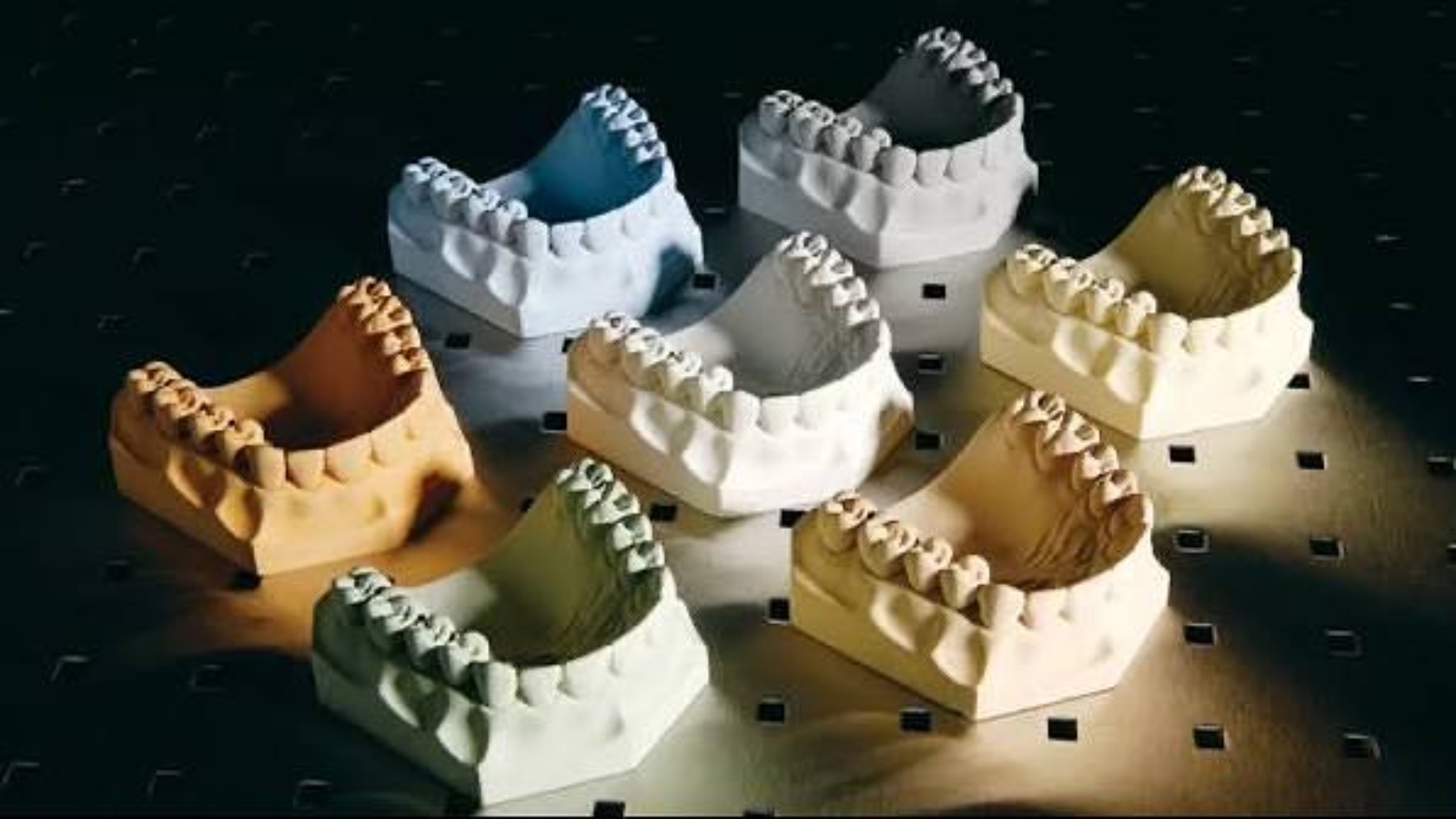
Accurate bite diagnostics cannot rely solely on visual examination, since the dentofacial system functions within a three dimensional space where not only the position of individual teeth matters, but also the nature of contact between the upper and lower jaws. Professor Alexander von Breuer emphasizes that diagnostic models of both jaws allow the clinician to assess occlusion as a volumetric biomechanical system rather than as a static arrangement of teeth within a smile. At DentalClinic24, we view such models as an essential clinical analysis tool that helps identify hidden bite disorders, evaluate dental arch symmetry, and plan treatment with a high degree of predictability.
A diagnostic model is a precise reproduction of the upper and lower dental arches obtained through conventional impressions or digital scanning. Its value lies in enabling the clinician to study the dental arches outside the limitations of a routine intraoral examination. The model clearly demonstrates arch shape, crowding severity, tooth inclinations, rotations, contact relationships, bite height, and spatial deficiencies. When both jaws are analyzed simultaneously, it becomes possible to understand how the teeth interact during occlusion and which areas are exposed to the greatest functional load. At DentalClinic24, we use this approach not as a routine preliminary step but as a way to gain a deeper understanding of the functional logic behind each individual clinical case.
Hidden bite abnormalities often do not present with obvious pain or visible aesthetic concerns. A patient may adapt to uneven contacts, mild asymmetry, or chronic muscular tension without associating these conditions with occlusion. However, even minor shifts in contact between dental arches can lead to pathological enamel wear, overload of individual teeth, microcracks, inflammation of the periodontal ligament, and discomfort in the temporomandibular joint. Diagnostic models make it possible to identify not only the current defect but also the underlying mechanisms sustaining functional imbalance. At DentalClinic24, we emphasize that early detection of such changes helps prevent complications before they become irreversible.
Diagnostic models of both jaws play a particularly important role in orthodontic, prosthetic, and multidisciplinary treatment planning. Before bite correction begins, it is necessary to understand whether there is sufficient space within the arches, how functional load is distributed, which teeth require movement, and how stable the future result can be. In prosthodontics, diagnostic models help evaluate bite height, the position of supporting teeth, intermaxillary relationships, and potential overload zones for future restorations. During implant planning, they help predict how a new structure will integrate into the existing occlusal scheme. At DentalClinic24, we believe treatment should begin not with the technical execution of a procedure but with precise modeling of its functional consequences.
Three dimensional analysis becomes especially important in cases where a patient already has restorations, signs of wear, crowding, gingival recession, or complaints of discomfort during chewing. In such cases, the clinician must evaluate not a single problem but the entire system of contacts, loads, and compensatory adaptations. The model allows clinical findings to be correlated with the actual anatomy of the dental arches, making it possible to distinguish which changes are primary and which developed as adaptive responses. At DentalClinic24, we regard diagnostic models as a tool not only for planning but also for patient education, since volumetric visualization makes complex occlusal processes clearer and easier to understand.
Diagnostic models of both jaws are a vital component of modern dental diagnostics because they reveal aspects that cannot be fully assessed during a standard examination. For Dental Clinic24, their value lies in improving clinical precision, reducing planning errors, and creating conditions for long term treatment stability. The better a clinician understands the three dimensional mechanics of occlusion before treatment begins, the more justified, safe, and predictable the entire dental rehabilitation becomes.
Previously, we wrote about Biological Adaptation After Dental Treatment at DentalClinic24: How Oral Tissues Respond to Changes in Bite, Tooth Shape and Functional Chewing Load