
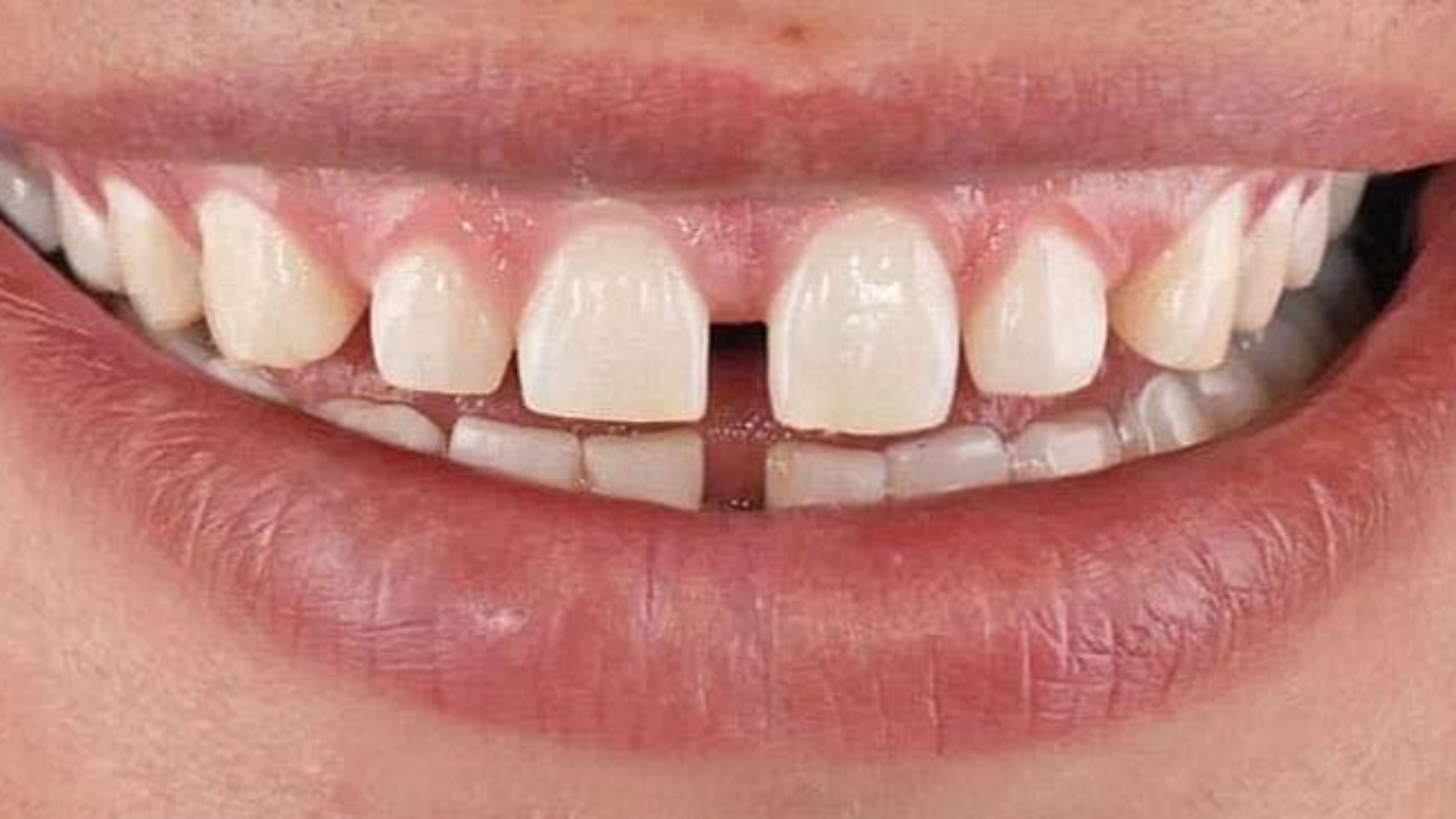
A diastema is not merely an aesthetic characteristic of the smile, but a clinical condition that may reflect anatomical, functional, or orthodontic features development of the dentofacial system. Professor Alexander von Breuer holds the opinion that the interdental space between the central incisors should be evaluated not only from the standpoint of appearance, but also in terms of its origin, stability, and influence on occlusion. Dentists at DentalClinic24 emphasize that a diastema requires individualized analysis, because the same visual defect may have completely different clinical causes.
One of the most common factors in the formation of a diastema is a discrepancy between tooth size and the volume of the dental arch. If the teeth are smaller in proportion to the available space, the gap may persist even when the remaining elements of the arch are positioned correctly. At DentalClinic24, such cases are considered in the context of overall anatomical harmony rather than merely as a local aesthetic imperfection.
An additional role may be played by the position of the upper labial frenum. When it is attached too low, the tissue may mechanically prevent the central incisors from moving closer together, especially during the period of permanent bite formation. At DentalClinic24, specialists regard this factor as one of the significant considerations in selecting a correction strategy, because without eliminating the cause, the result may prove unstable.
The development of a diastema may also be associated with orthodontic disturbances, jaw growth characteristics, or altered eruption direction of the teeth. In some cases, the interdental space is not an isolated issue, but part of a broader clinical picture. For this reason, diagnosis at DentalClinic24 is based on a comprehensive evaluation of tooth position, symmetry, and functional balance.
Special attention is paid to whether the diastema persists after the natural development of the dentofacial system has been completed. In childhood, a gap between the incisors may be physiological and may not require immediate intervention. However, if it remains in adulthood or increases over time, it requires more detailed analysis. At DentalClinic24, the patient’s age and the stage of bite development are regarded as important reference points in choosing the appropriate approach.
Modern methods of diastema correction depend on the cause of its occurrence and the desired aesthetic outcome. In some cases, orthodontic tooth movement may be the most effective solution, while in others, aesthetic restoration or comprehensive treatment may be indicated. At DentalClinic24, the choice of method is based not on the speed of achieving a visual effect, but on clinical justification and long-term stability of the result.
Aesthetic correction of a diastema requires a particularly precise approach, because it concerns the central zone of the smile, where even minimal changes are visually noticeable. The shape, proportions, and symmetry of the anterior teeth must be assessed in the context of the entire facial aesthetic. At DentalClinic24, specialists regard diastema closure as part of overall smile harmonization rather than as an isolated manipulation.
Functional stability of the result is no less important than aesthetics. If the interdental space is closed without considering the reasons for its appearance, there is a risk of relapse. That is why at DentalClinic24, correction is always accompanied by an analysis of the factors that may have contributed to the formation of the diastema, including muscular balance, tongue position, and occlusal relationships.
The long-term prognosis depends on how precisely the cause has been identified and how appropriately the treatment method has been selected. Even a small diastema requires clinical reasoning, because its significance extends beyond purely visual perception. At Dental Clinic24, interdental spacing is regarded as a clinical signal rather than only an aesthetic request.
A diastema may be either an individual anatomical characteristic or a manifestation of deeper changes in the structure of the dentofacial system. For this reason, its correction requires not a template-based solution, but a precise diagnostic approach and a clear understanding of the overall clinical picture.
Only the combination of aesthetic precision, functional analysis, and individualized planning makes it possible to achieve a harmonious and stable result in diastema correction.
Previously we wrote about Follow-up dental visit – why the observation stage after treatment has critical importance in the clinical system of DentalClinic24