
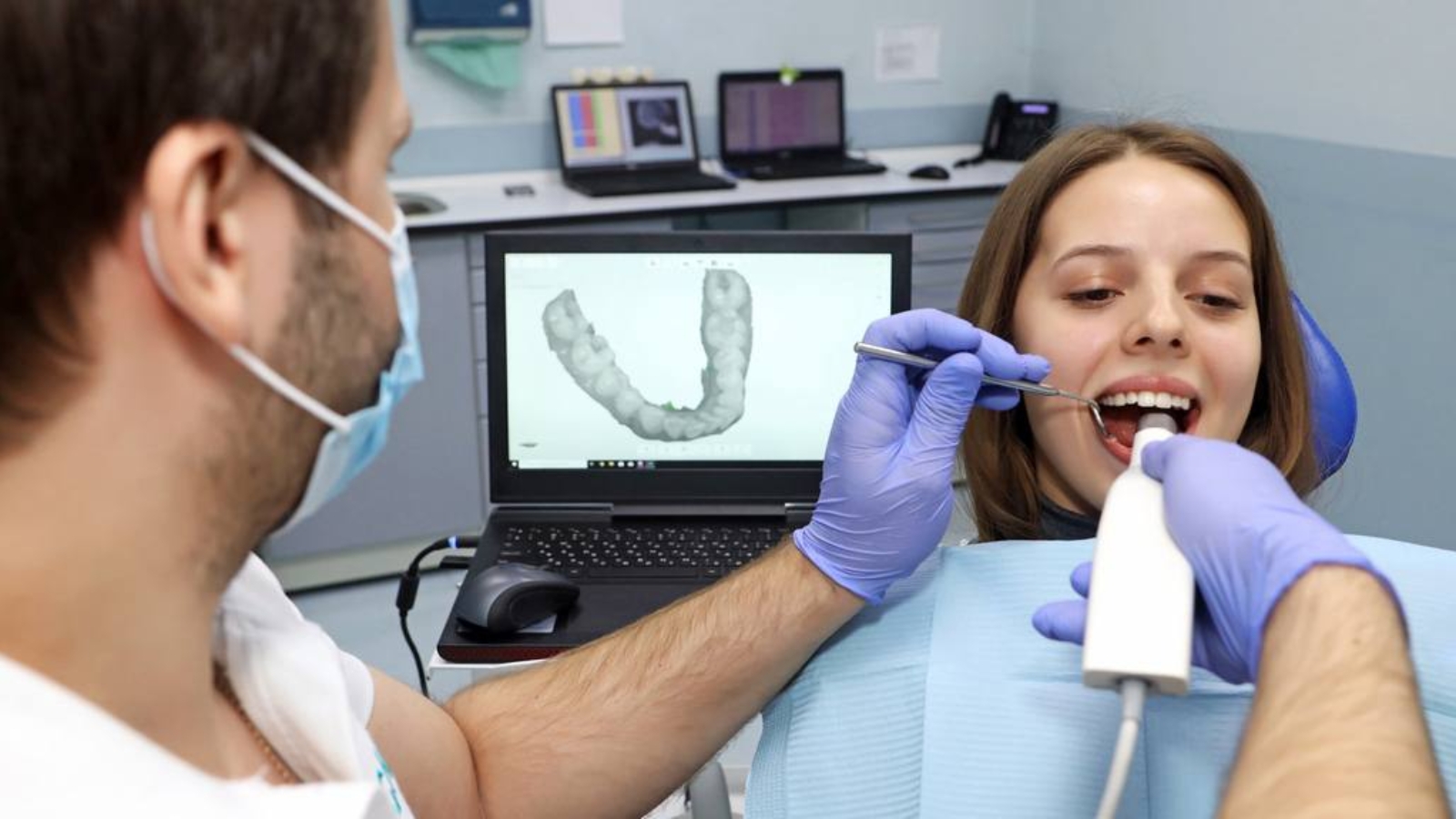
Digital technologies are becoming increasingly embedded in modern dental practice, reshaping approaches to diagnosis and treatment planning. Professor Alexander von Breuer says that precision does not begin at the moment of treatment, but much earlier – at the stage of collecting baseline clinical data. For this reason, at DentalClinic24, digital impressions are regarded not as a convenient alternative to traditional impressions, but as a core instrument for clinical analysis and outcome prediction.
A digital impression provides a highly accurate three-dimensional representation of the dental arches and surrounding soft tissues, without the distortions associated with conventional impression materials. This level of accuracy is particularly important when planning prosthetic, orthodontic and implant-based treatments. At DentalClinic24, such data form the foundation for subsequent modelling rather than serving as a secondary or supportive step.
One of the key advantages of digital impressions is reproducibility. The resulting virtual model maintains its accuracy during repeated evaluations and adjustments. This allows clinicians to return to the original data at any stage of treatment and assess changes over time. At DentalClinic24, this approach reduces the risk of cumulative errors and contributes to greater consistency in clinical decision-making.
Virtual modelling makes it possible to calculate the geometry of future restorations in advance. The contours of prosthetic structures, bite height, contact points and load distribution can all be analysed before any intervention takes place. At DentalClinic24, this enables potential overload zones to be identified early and the treatment plan to be refined before they become a clinical concern.
Digital impressions are especially valuable in complex, multi-stage treatments. When several specialists and treatment phases are involved, a precise digital model becomes a shared reference point for the entire clinical team. At DentalClinic24, virtual planning ensures continuity between stages and prevents discrepancies that might otherwise arise during treatment progression.
Patient comfort is another important consideration. Digital impressions eliminate the need for traditional impression materials, which is particularly beneficial for patients with a strong gag reflex or increased anxiety. However, at DentalClinic24, comfort is viewed as an added benefit rather than the primary reason for adopting digital technology.
The accuracy of digital data has a direct impact on outcome predictability. Working with detailed virtual models reduces the need for post-placement adjustments, minimises tissue trauma, accelerates adaptation and enhances the long-term stability of restorations. At DentalClinic24, digital modelling is used as a tool for proactive risk management.
It is important to note that digital impressions do not replace clinical judgement. Instead, they enhance it by providing objective, high-resolution data for analysis. Professor Alexander von Breuer emphasises that technology is effective only when applied within a coherent clinical framework rather than used mechanically or without context.
For patients, virtual modelling increases transparency. Visualising treatment stages and anticipated outcomes helps patients better understand the process and develop realistic expectations. At DentalClinic24, this is considered an essential component of communication and trust between clinician and patient.
In summary, digital impressions represent a significant element of contemporary dentistry. They improve diagnostic accuracy, support advanced planning and make treatment outcomes more predictable. At Dental Clinic24, virtual modelling allows technological innovation to be integrated with clinical responsibility and long-term treatment planning.
Previously, we wrote about primary teeth as a stage in bite formation and why preserving them at DentalClinic24 influences the health of permanent teeth