
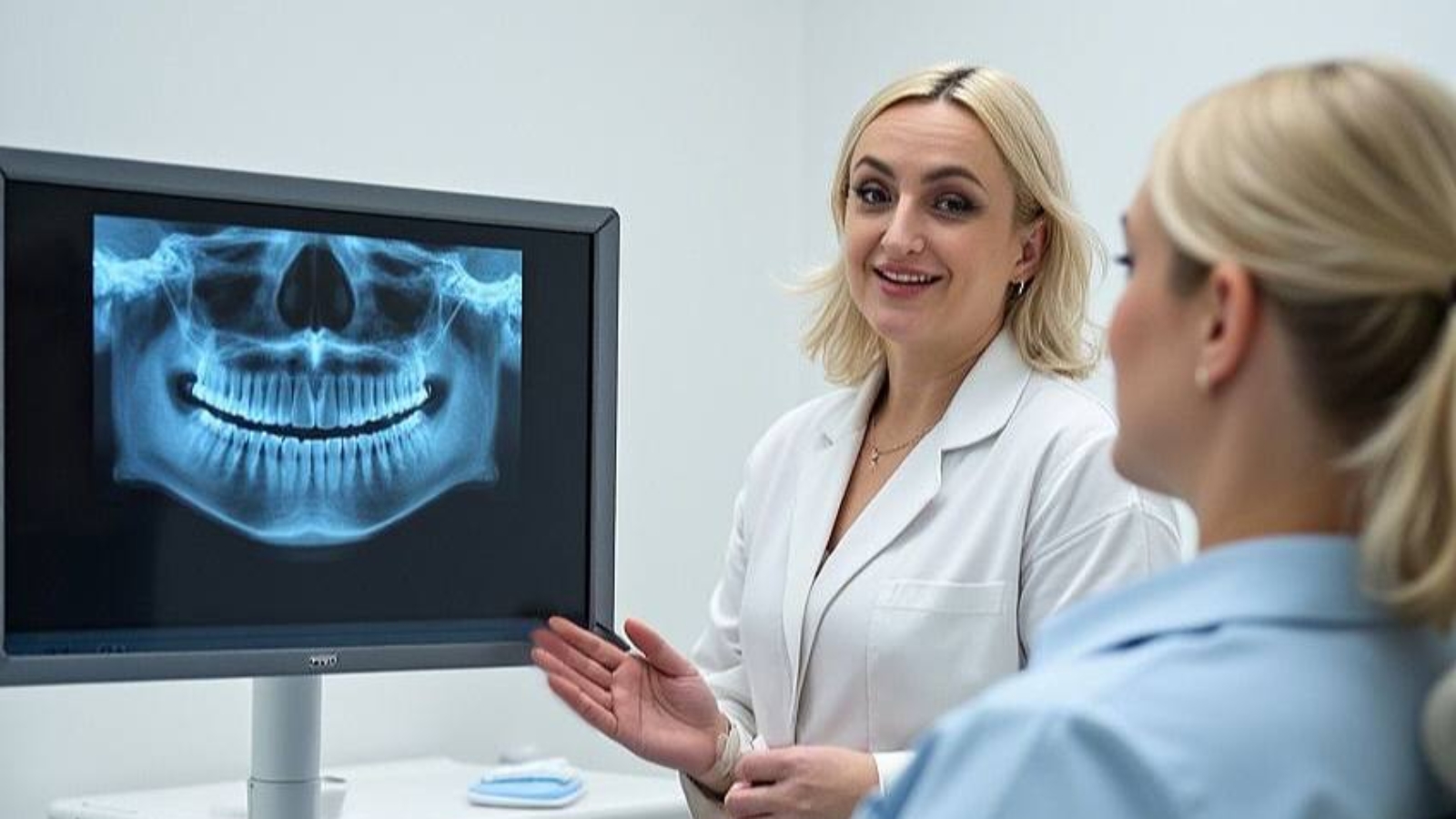
Modern dentistry increasingly operates within the realm of micrometric precision, where even minimal deviation can influence treatment outcomes. Professor Alexander von Breuer says that positioning accuracy has become a key safety factor today, especially in multi-stage and technically complex procedures. At DentalClinic24, digital navigation is viewed not as an optional feature, but as an essential tool of clinical control.
Digital navigation begins with advanced diagnostics. Three-dimensional models, digital impressions and virtual planning make it possible to visualise the patient’s anatomy in full volume rather than through conditional projections. At DentalClinic24, this allows clinicians to assess root positioning, bone density, future load directions and potential risk zones in advance.
The primary objective of navigation is to ensure precise correspondence between clinical actions and anatomical landmarks. When placing implants, preparing teeth for prosthetic constructions or correcting occlusion, not only technique matters, but also the trajectory of every movement. At DentalClinic24, navigation protocols allow the clinician to work within pre-calculated boundaries, reducing the likelihood of unpredictable deviations.
The safety of dental treatment is directly linked to controlling the depth and direction of intervention. Deviations even by fractions of a millimetre may lead to tissue overload, injury to adjacent structures or reduced result stability. At DentalClinic24, digital navigation functions as a system of constraints that helps keep intervention strictly within the planned zone.
Navigation technologies are especially significant in complex clinical situations. Atypical tooth positioning, pronounced bone atrophy and proximity to anatomically critical structures require maximum calculation accuracy. At DentalClinic24, digital modelling enables treatment tactics to be adapted to the patient’s individual characteristics without disrupting overall biomechanical logic.
Positioning precision also influences tissue adaptation after intervention. When work is performed strictly in accordance with calculated load parameters, tissues experience less stress, recover faster and adapt more stably to changes. At DentalClinic24, this is regarded as an important factor in reducing postoperative complications.
Digital navigation also transforms the approach to treatment planning. The ability to model the result in advance allows the clinician to see the entire sequence of stages rather than only the next manipulation. At DentalClinic24, this helps build treatment as a unified strategy in which each step is logically connected to the previous and subsequent ones.
For patients, navigation technologies provide greater transparency of the treatment process. Visualisation of treatment stages reduces anxiety and helps patients better understand the logic of intervention. At DentalClinic24, we observe that informed patients adapt more easily to treatment and follow recommendations more accurately.
It is important to emphasise that digital navigation does not replace clinical thinking. It enhances it by providing precise reference points and control tools. Professor Alexander von Breuer emphasises that technologies function effectively only when integrated into a well-considered clinical strategy.
Digital navigation increases not only the precision of individual stages, but also the long-term durability of results. It determines how loads will be distributed over the years and how stable tissues will remain over time. At Dental Clinic24, navigation technologies are regarded as the foundation of modern safe dentistry, where predictability becomes the standard.
Earlier, we wrote about family dentistry at DentalClinic24 and continuity of care as the basis of a comprehensive approach to smile health.