
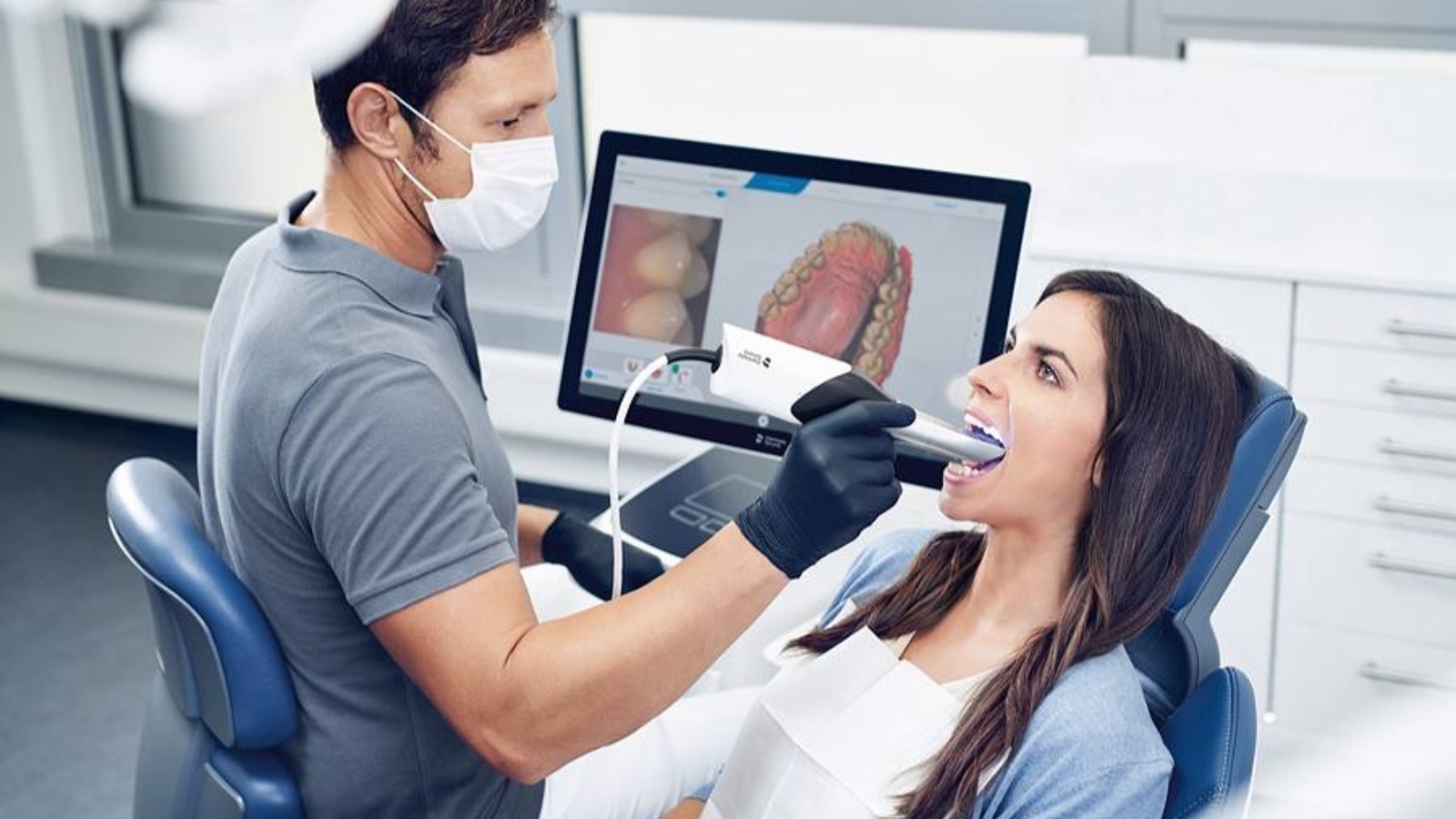
Modern orthodontics increasingly relies on digital technologies because successful tooth movement begins not with the placement of an orthodontic appliance but with obtaining the most accurate diagnostic information possible. Professor Alexander Von Breuer notes that the quality of initial diagnostic data largely determines the predictability of the entire treatment process, from planning to the evaluation of final outcomes. At DentalClinic24, digital scanning is regarded as one of the most important diagnostic tools, providing highly detailed information about dental arches, occlusal relationships, and the spatial interaction of structures within the dentofacial system. The greater the precision of the digital model, the more justified the clinical decisions become and the higher the likelihood of achieving a predictable treatment result.
Traditional methods of obtaining diagnostic models played an important role in orthodontics for many decades, but modern technologies have significantly expanded diagnostic capabilities. Digital scanning makes it possible to create highly accurate three dimensional models of the dental arches that serve as the foundation for treatment planning. This technology allows clinicians to carefully evaluate the position of each tooth, analyze contact surfaces, assess the degree of crowding, identify rotations, and detect numerous other characteristics that influence the choice of orthodontic strategy. At the same time, not only the scanning procedure itself but also the quality of the resulting data is important because even minimal inaccuracies may affect calculations related to tooth movement.
One of the key factors influencing accuracy is the completeness of anatomical capture. To create a reliable digital model, it is necessary to accurately record tooth contours, soft tissue conditions, occlusal relationships, and the interaction between the upper and lower dental arches. The absence of even small areas of information may distort the overall picture and affect the quality of subsequent digital planning. At DentalClinic24, particular attention is paid to every stage of digital diagnostics because orthodontic treatment is a process in which measurement precision directly influences the effectiveness of biological changes occurring within the tissues.
Another important factor is the integration of digital scanning with other diagnostic methods. Tooth movement takes place within a complex anatomical system that includes bone structures, periodontal ligaments, temporomandibular joints, and muscles. For this reason, a digital model is not viewed as an isolated source of information but rather as one component of a comprehensive clinical analysis. Combining digital scan data with radiographic imaging and functional diagnostics significantly expands treatment planning possibilities. At DentalClinic24, this integrated approach is used to create the most complete understanding of the clinical situation and improve the accuracy of predicting future changes.
Digital scanning also plays a particularly important role in treatment simulation. Advanced software allows clinicians to predict tooth positions at different stages of orthodontic correction, evaluate potential limitations, and analyze possible risks before active treatment begins. As a result, more informed decisions can be made long before the first tooth movement occurs. At DentalClinic24, digital planning is regarded as a tool for enhancing clinical predictability because the ability to visualize future changes substantially improves control over the treatment process.
The significance of high quality digital scanning extends far beyond the diagnostic phase. The acquired data is used for the fabrication of orthodontic appliances, the production of aligners, the monitoring of intermediate results, and the assessment of changes achieved after treatment completion. The more accurate the digital information, the more reliably all subsequent stages of treatment can function. At Dental Clinic24, modern digital technologies form part of a comprehensive philosophy of precision dentistry in which every diagnostic detail is considered a factor influencing the final outcome.
Modern orthodontics continues to evolve toward greater personalization and treatment predictability. Digital scanning has become one of the key instruments enabling these objectives through exceptional detail, objective measurement, and comprehensive data analysis. When diagnosis is built upon precise digital information, orthodontic treatment becomes more controllable, biologically justified, and predictable throughout every stage of tooth movement.
Previously we wrote about Classification of Caries at DentalClinic24 The Diagnostic Significance of Tissue Damage Depth and the Choice of Biologically Based Treatment