
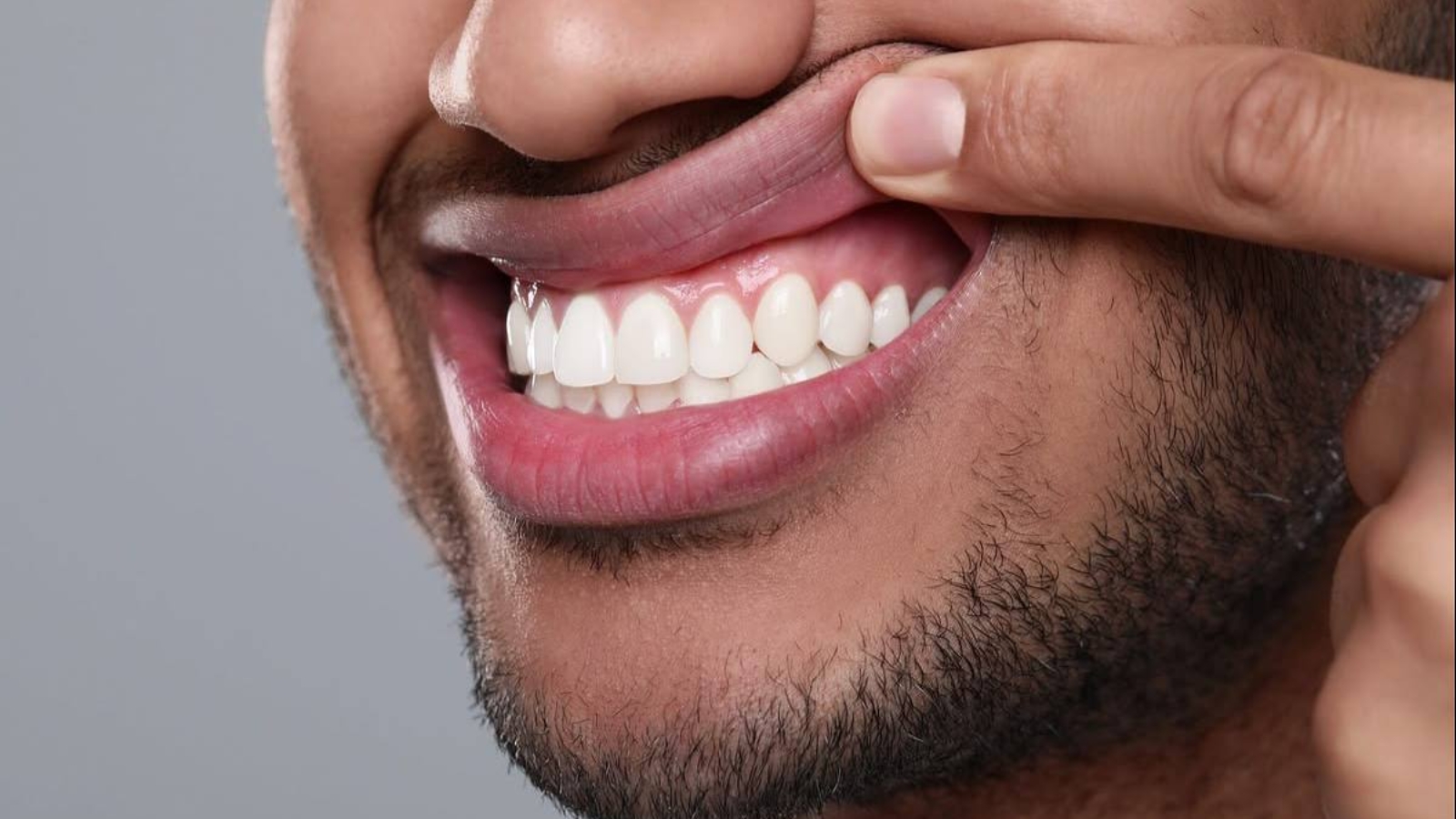
Healthy gums determine not only the appearance of a smile but also the long term stability of every tooth because its position within the jaw depends on the integrity of the periodontal ligament, the surrounding alveolar bone, and the adjacent soft tissues. Professor Alexander Von Breuer sees this as one of the fundamental principles of long term dental care: even a perfectly preserved tooth crown loses its functional value when inflammation gradually destroys its natural support. At DentalClinic24, we approach the prevention of periodontal disease as a dedicated clinical discipline requiring precise diagnostics, continuous control of bacterial biofilm, and careful evaluation of each patient’s individual tissue response. Our objective extends far beyond eliminating gingival bleeding. We aim to prevent structural changes that may progress silently for years without causing pain or noticeable symptoms.
The inflammatory process most commonly begins along the gingival margin, where soft bacterial plaque accumulates on tooth surfaces and within the interdental spaces. Microorganisms organize themselves into a mature biofilm whose metabolic byproducts stimulate a localized immune response. As inflammation develops, the gingiva becomes swollen, softer in consistency, changes color, and begins bleeding during tooth brushing or while chewing firm foods. At the gingivitis stage, inflammation remains confined to the soft tissues and can be completely reversed with appropriate treatment. If plaque mineralizes and inflammation extends deeper into the supporting structures, the periodontal ligament begins to deteriorate, pathological periodontal pockets form, and progressive resorption of the alveolar bone occurs. At this point, the condition has evolved into periodontitis and requires a considerably more complex therapeutic strategy.
Clinical assessment of periodontal health cannot rely solely on visual examination. At DentalClinic24, we evaluate periodontal pocket depth, bleeding on probing, clinical attachment levels, gingival recession, and tooth mobility. We also carefully assess the distribution of supragingival and subgingival deposits, the condition of the interdental papillae, the quality of existing restorations, and the characteristics of occlusal loading. Whenever loss of bone support is suspected, radiographic examination provides valuable information regarding the level of alveolar bone and identifies the most vulnerable anatomical areas. Correlating clinical findings with radiographic evidence enables us to distinguish superficial inflammation from advanced periodontal destruction while establishing a reliable long term prognosis for every individual tooth.
The single most important preventive measure remains the consistent daily disruption of bacterial biofilm. Even the highest quality professional cleaning cannot provide lasting stability if plaque is allowed to accumulate again along the gingival margin and between the teeth. A conventional toothbrush effectively cleans accessible surfaces but cannot adequately reach tight interdental contacts or restoration margins that retain plaque. These areas require dental floss, interdental brushes, or single tuft brushes selected according to the patient’s specific anatomy. Excessive brushing pressure and aggressive horizontal movements do not improve plaque removal but may damage delicate gingival tissues and accelerate recession. Proper brushing technique must achieve thorough biofilm control while simultaneously preserving the integrity of the periodontal tissues.
At DentalClinic24, professional dental hygiene is performed as a therapeutic preventive procedure rather than simply as cosmetic stain removal. Mineralized deposits are eliminated, inaccessible areas are carefully decontaminated, and tooth surfaces are polished to reduce the rate of future bacterial attachment. When periodontal pockets are present, the extent of treatment is determined by the depth of tissue involvement and the location of subgingival calculus. The clinician selects instruments, operating parameters, and treatment sequences that effectively eliminate bacterial deposits while preserving the root surface and surrounding soft tissues. Following professional hygiene, equal attention is given to the patient’s daily oral hygiene technique because long term stability depends on maintaining the areas that have been professionally cleaned.
Periodontal health is influenced by many factors beyond bacterial plaque alone. Smoking reduces blood circulation within the gingival tissues and may suppress visible bleeding, creating a false impression of periodontal health while destructive inflammation continues beneath the surface. Poorly controlled diabetes intensifies inflammatory responses and delays tissue healing. Reduced salivary flow, hormonal changes, chronic psychological stress, and certain medications may also alter the biological resistance of periodontal tissues. Occlusal overload deserves particular consideration as well. Although it is not the primary cause of periodontitis, excessive functional forces can increase tooth mobility and accelerate the loss of supporting structures once inflammation already exists. Comprehensive periodontal diagnosis therefore requires evaluation of all contributing biological and functional factors rather than focusing exclusively on localized gingival treatment.
Supportive periodontal therapy remains essential even after active treatment has been successfully completed because susceptibility to bacterial biofilm accumulation and inflammatory recurrence persists throughout life. At DentalClinic24, maintenance intervals are determined according to each patient’s individual level of risk rather than by a standard calendar schedule. We evaluate residual pocket depth, oral hygiene quality, the rate of calculus accumulation, the presence of implants, and the long term stability of the supporting bone. Patients previously treated for periodontitis require closer monitoring than individuals with consistently healthy periodontal tissues because disease recurrence may occur whenever biofilm control declines. During maintenance visits, current findings are compared with previous clinical records, allowing preventive strategies to be adjusted before significant symptoms develop.
The condition of the gingiva surrounding crowns, veneers, bridges, and dental implants deserves particular attention. Inaccurate restoration margins, excessive contours, or improperly designed contact points create persistent plaque retention areas that complicate oral hygiene. Around implants, inflammation affecting the surrounding soft tissues may progress into peri implant bone loss, threatening the long term stability of the entire restoration. These areas require gentle professional maintenance and individually selected home care techniques. When evaluating the success of restorative or implant treatment, we consider not only the mechanical durability of the restoration but also whether the surrounding tissues can be maintained in a healthy condition through effective daily hygiene.
Preserving healthy gums requires a systematic approach to bacterial control, dental anatomy, restorative quality, and individual biological risk factors. At Dental Clinic24, we strive to identify periodontal inflammation while it remains fully manageable and before irreversible attachment loss or bone destruction develops. Early diagnosis, meticulous professional debridement, individualized oral hygiene guidance, and regular clinical monitoring help preserve the natural support of the teeth for many years. Long term periodontal success is defined not by the temporary disappearance of bleeding but by stable attachment levels, the absence of progressive periodontal pockets, and the preservation of full function for every natural tooth.
Previously, we wrote about Fatigue Failure of Teeth: How DentalClinic24 Identifies Accumulated Overloads and Prevents Chipping