
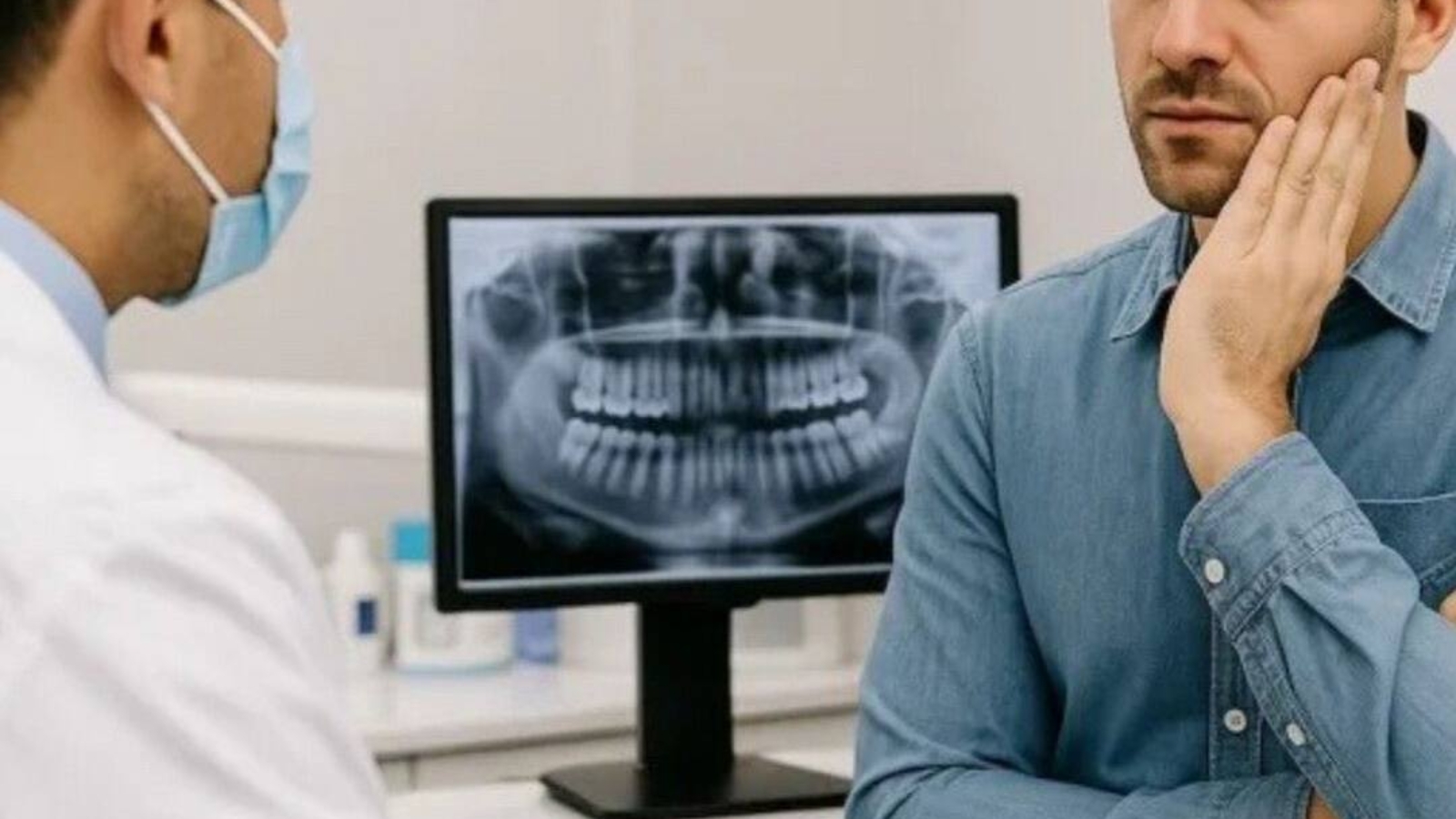
Technological evolution in dentistry has transformed not only the clinician’s toolkit but also the very logic of clinical decision-making. Professor Alexander von Breuer emphasises that the true value of innovation lies not in novelty itself, but in its ability to enhance diagnostic precision and control over outcomes. At DentalClinic24, digital platforms, navigational systems and micro-instrumentation are integrated into a unified treatment architecture where every technological element serves the preservation of biological tissues and long-term functional stability.
Digital diagnostics are perceived as an extension of clinical vision. Three-dimensional imaging enables real-volume assessment of anatomical structures, evaluation of bone density, root topography and spatial limitations without projection distortion. The acquired data are not merely stored – they become the foundation for virtual simulation of the planned intervention. At DentalClinic24, preliminary digital modelling allows calculation of instrument trajectory, preparation volume and load distribution before any contact with living tissues occurs.
Intraoral scanning generates a highly accurate digital model of the dental arches. This is not simply an alternative to conventional impressions – it provides an opportunity to analyse micro-contacts, asymmetries and occlusal dynamics. Software algorithms detect concealed overload zones that are not visually apparent. As a result, prosthetic restorations are designed with consideration of occlusal micromechanics, improving adaptation and reducing the likelihood of post-placement adjustments.
Micro-invasive instrumentation reshapes the philosophy of intervention. Magnification-assisted work enables differentiation between affected and intact tissues with maximal accuracy. Fine endodontic files, laser systems and ultrasonic tips ensure targeted decontamination with minimal structural trauma. At DentalClinic24, the principle of tissue preservation is implemented through controlled depth management and protection of structural integrity rather than declarative minimalism.
Navigational protocols in implantology introduce a new level of surgical precision. Digital planning is synchronised with the fabrication of patient-specific surgical guides, allowing the implant to be positioned according to a pre-calculated trajectory aligned with future prosthetic requirements. This approach reduces the risk of anatomical injury and supports favourable conditions for osseointegration.
Advanced technologies are also applied in early pathology detection. Optical spectral analysis systems can identify minimal alterations in enamel mineralisation and dentinal structure before clinical symptoms emerge. At DentalClinic24, such tools are used to initiate highly targeted intervention at the earliest stage, thereby limiting the extent of future restorative procedures.
Nevertheless, technological sophistication does not replace clinical interpretation. All digital data undergo comprehensive analytical evaluation considering patient age, systemic health and functional characteristics of the dentofacial system. At DentalClinic24, equipment serves as a refinement instrument rather than an autonomous decision-maker.
Outcome predictability is achieved through multi-level verification. Digital protocols allow comparison between planned and actual treatment stages, identification of deviations and timely tactical adjustments. This transparent control system enhances long-term stability and reinforces treatment reliability.
The integration of high-tech methods requires continuous professional development and adaptation of clinical workflows. At Dental Clinic24, the introduction of new technologies is accompanied by refinement of clinical standards, ensuring coherence of practice and preservation of quality across all stages.
In this model, high-technology dentistry represents a synthesis of advanced visualisation, precisely controlled micro-instrumentation and digital prognostic modelling – transforming treatment from a probabilistic endeavour into a carefully managed and foreseeable clinical process.
Previously, we wrote about Zirconia and Ceramic Restorations at DentalClinic24 – A Comparative Analysis of Strength, Biocompatibility and Long-Term Prognosis