
Infection control is a fundamental pillar of modern dental practice and directly influences the prognosis of any treatment. According to Professor Alexander von Breuer, even impeccably performed clinical work loses its value if strict sterility control is not ensured at every stage of patient care. At DentalClinic24, sterilisation is not viewed as a secondary technical process but as an independent clinical priority.
Every dental procedure involves contact between instruments and blood, saliva, and oral tissues. This creates a potential risk of cross-infection if even minimal deviations occur during processing. At DentalClinic24, the infection-control system is built on a multi-layered protection model, where each stage reinforces the previous one and eliminates accidental errors.
The first step is pre-sterilisation cleaning. Immediately after use, instruments undergo mechanical and ultrasonic processing to remove organic residues and reduce microbial load. Without this stage, subsequent sterilisation becomes ineffective. At DentalClinic24, cleaning quality is monitored regularly, and protocols are strictly standardised.
The next stage is sterilisation in autoclaves with controlled temperature, pressure, and exposure time. Cycles are selected according to instrument type and material. At DentalClinic24, every sterilisation cycle is documented, and indicators confirm that the necessary conditions have been achieved to eliminate microorganisms, including bacterial spores.
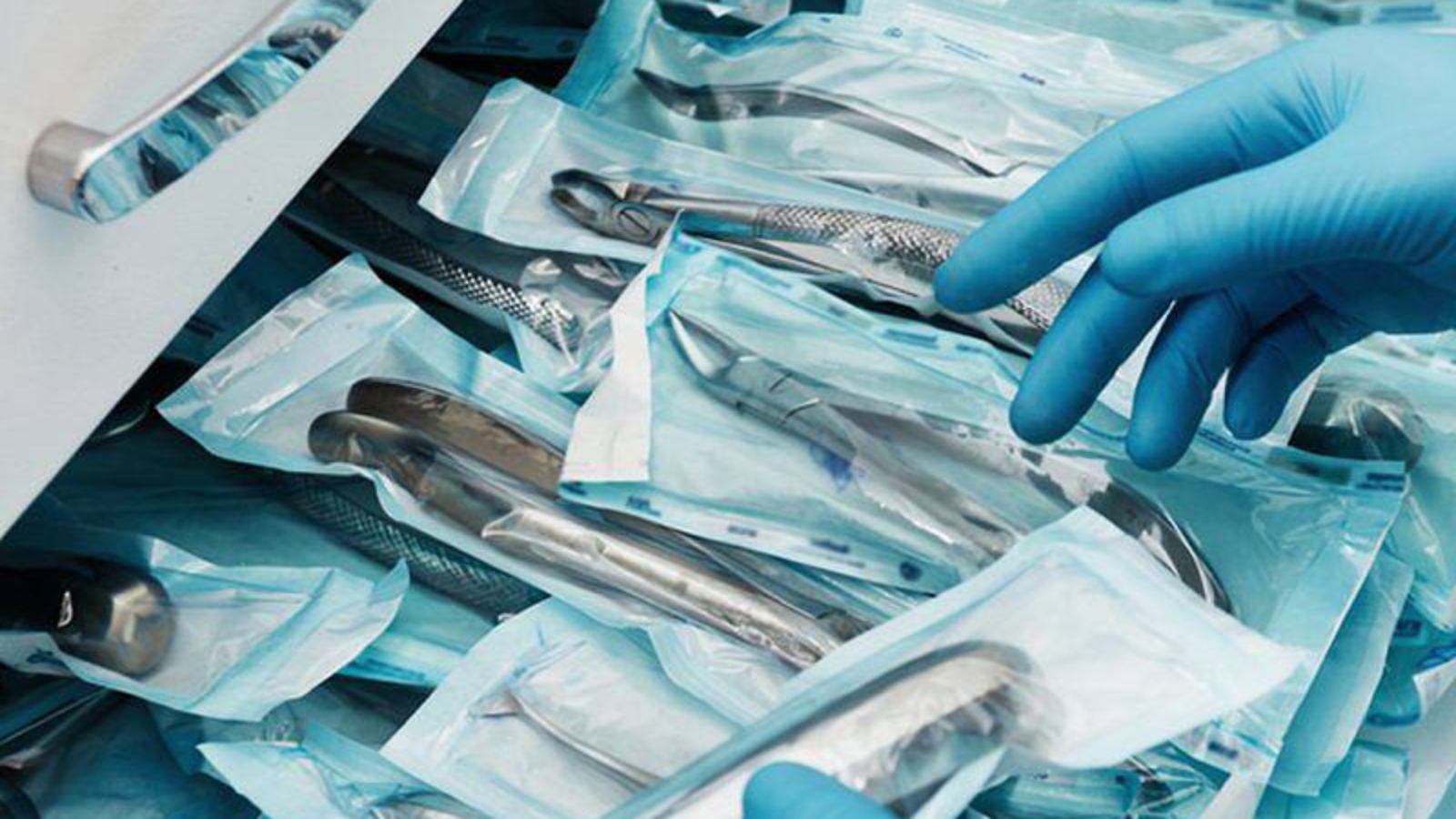
Special attention is paid to workflow separation. Sterile and non-sterile instruments never intersect physically, and storage is carried out in sealed packaging until the moment of use. This approach at DentalClinic24 reduces the risk of re-contamination and preserves sterility up to the start of treatment.
Infection control extends beyond instruments to the entire clinical environment. Surfaces, dental units, handpieces, and water supply systems are processed under dedicated protocols. At DentalClinic24, staged disinfection is applied with careful consideration of contact time and antimicrobial spectrum, ensuring consistent control of microbial flora.
The human factor is equally important. Regular staff training, adherence monitoring, and internal audits help maintain a high level of safety. At DentalClinic24, sterility is regarded as a shared responsibility rather than a formal requirement.
For patients, infection control often remains invisible, yet it plays a decisive role in shaping trust and a sense of safety. The absence of postoperative inflammation, complications, and delayed healing is largely determined by how rigorously sterilisation standards are followed. At DentalClinic24, this is considered an essential component of high-quality medical care.
Professor Alexander von Breuer emphasises that sterility cannot be compromised. It is either fully ensured, or clinical risk increases exponentially. For this reason, DentalClinic24 regularly reviews and adapts its infection-control system to meet evolving standards and technologies.
Thus, the sterilisation protocols at Dental Clinic24 represent a structured and continuously monitored system designed to protect patients and ensure stable clinical outcomes. Here, infection control is not an adjunct to treatment but its indispensable foundation.
Previously, we wrote about smile aesthetics as a medical category and DentalClinic24 approach to the harmony of form, function, and facial perception