
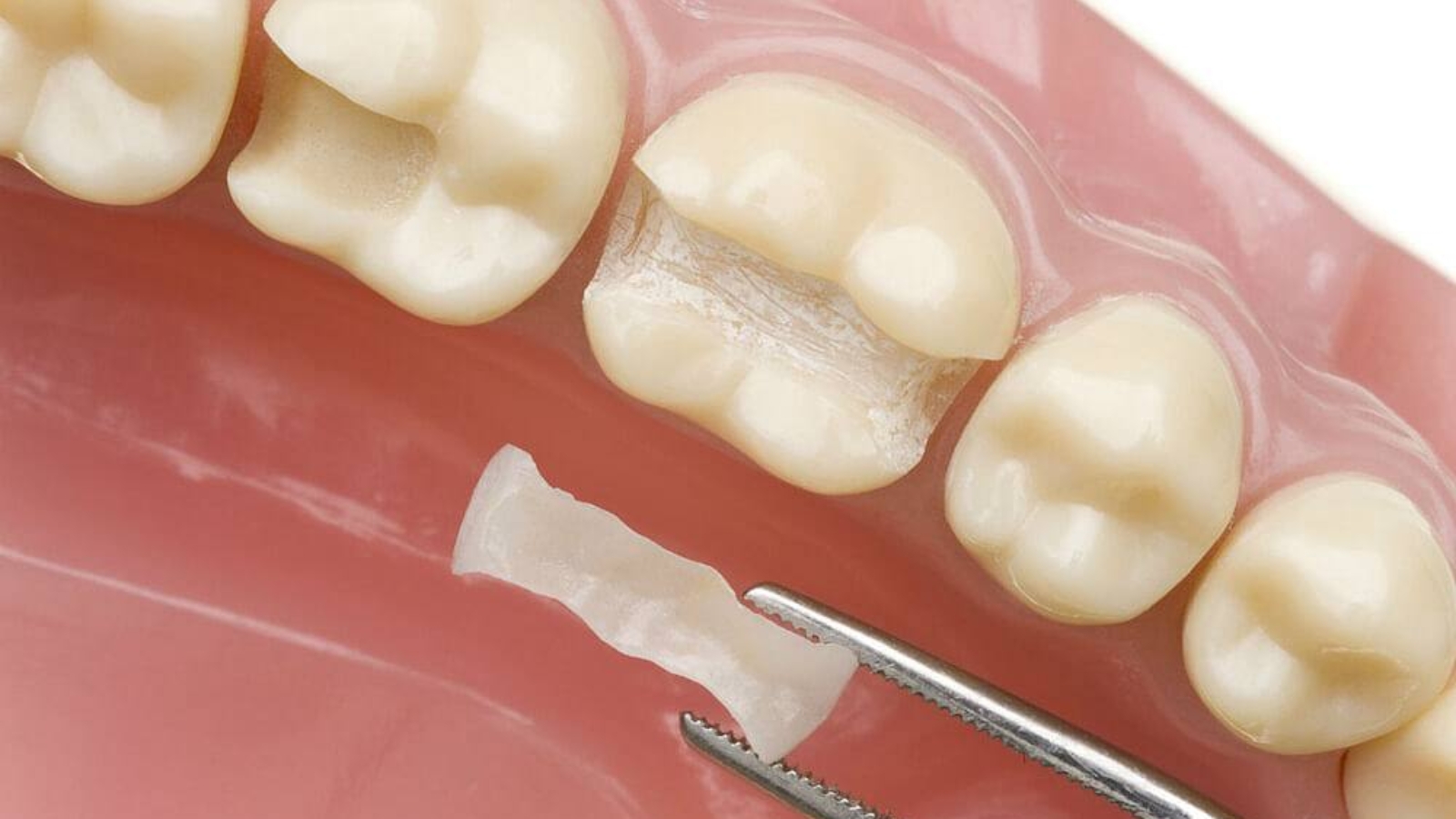
Modern restorative dentistry increasingly relies on solutions that go beyond traditional direct fillings. Professor Alexander von Breuer considers that an inlay restoration should be regarded as an independent clinical tool rather than a more complex version of a conventional filling. At DentalClinic24, this method is selected in situations where maximum precision, shape stability, and controlled biomechanics are required.
An inlay restoration is fabricated under laboratory conditions and offers a fundamentally higher level of accuracy compared to direct restorations. It allows precise reproduction of occlusal anatomy, contact points, and marginal adaptation with minimal tolerances. At DentalClinic24, this approach is preferred for medium to extensive defects where manual modelling of a direct filling cannot ensure sufficient long-term stability.
One of the key indications for choosing an inlay is a tooth that remains structurally present but weakened. When a significant amount of hard tissue is lost, a conventional filling may function at the limit of its mechanical capacity and become prone to deformation or shrinkage. An inlay, by contrast, is designed according to the exact geometry of the cavity and distributes functional load more evenly. At DentalClinic24, this is viewed as a way to extend the service life of the natural tooth.
Laboratory precision is particularly important for restoring interdental contact points. Incorrect contact leads to food impaction, gingival inflammation, and secondary caries. At DentalClinic24, inlays are used to recreate anatomically correct contacts, which can be difficult to achieve reliably with direct restorations in complex clinical conditions.
Marginal adaptation is another critical factor. Micron-level discrepancies between a restoration and tooth tissues can eventually cause microleakage. A laboratory-fabricated inlay makes it possible to minimise this risk. At DentalClinic24, the quality of marginal fit is considered a decisive criterion when selecting the restorative method.
At the same time, inlay restorations have limitations. They require a sufficient amount of remaining tooth structure and stable support. In cases of pronounced tooth mobility or unfavourable occlusal conditions, an alternative treatment strategy may be more appropriate. At DentalClinic24, such decisions are made after functional and biomechanical assessment rather than based solely on defect size.
Preparation is also a crucial stage. An inlay requires clearly defined cavity geometry without unnecessary removal of healthy tissues. At DentalClinic24, preparation is carried out with consideration of the future seating of the restoration and the direction of masticatory forces, which fundamentally distinguishes inlays from standard fillings.
For the patient, an inlay restoration means greater predictability, chewing comfort, and long-term durability. However, its effectiveness directly depends on correct indications and sound clinical logic. At DentalClinic24, an inlay is not treated as a universal solution, but as the optimal choice in specific clinical situations.
In summary, an inlay restoration is a full-fledged alternative to conventional fillings when appropriate indications are present. Laboratory precision, shape stability, and controlled biomechanics make this method an important component of modern dentistry. At Dental Clinic24, its use is guided by analysis, prognosis, and a commitment to preserving the tooth over the long term.
Previously, we wrote about dental fluorosis in the practice of DentalClinic24 and a differentiated approach to treatment and restoration of enamel aesthetics