
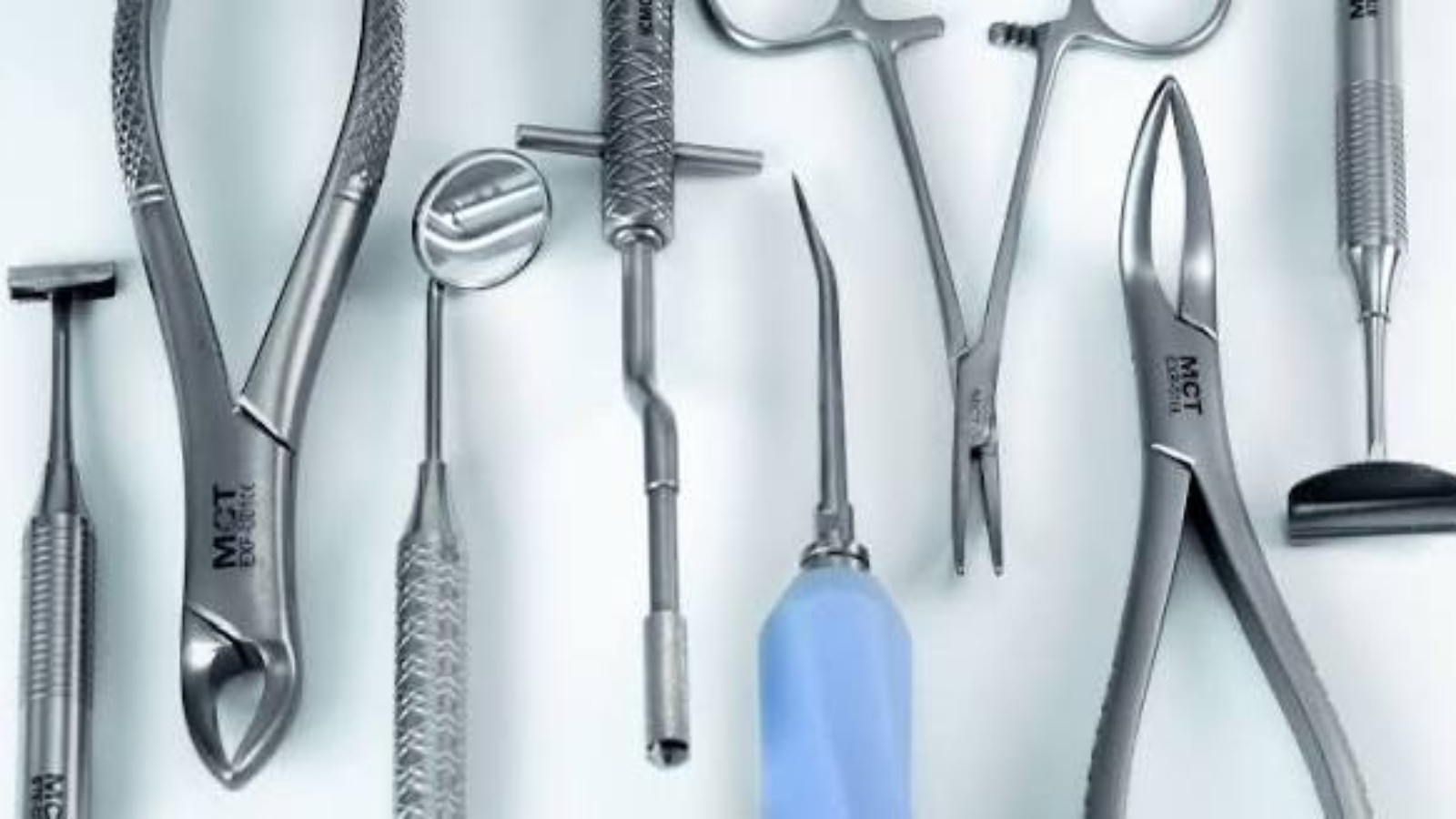
Modern dentistry has long moved beyond the era of purely manual clinical practice, where treatment outcomes depended mainly on the dentist’s basic technical skills. Today, the quality of diagnostics and the predictability of treatment are largely determined by the technological equipment of the clinic and the precision of every instrument involved in the treatment process. Professor Alexander Von Breuer notes that dental office instruments are an extension of the clinician’s diagnostic thinking, since equipment makes it possible to transform clinical hypotheses into objective data and precise therapeutic actions. At DentalClinic24, technical equipment is regarded as a critical component of the clinical system, directly influencing biomechanical precision, patient safety, and the long term prognosis of treatment.
Dental office instruments cannot be viewed as isolated technical units. They form a unified functional ecosystem in which every component affects the final treatment outcome. Diagnostic devices allow the clinician to obtain highly precise information about the condition of hard and soft tissues, endodontic instruments ensure controlled root canal treatment, surgical equipment improves the atraumatic nature of interventions, and optical systems dramatically enhance visualization of the clinical field. The greater the precision at every stage, the lower the probability of errors, complications, and unpredictable clinical outcomes.
Diagnostic equipment plays a central role in modern dentistry. Intraoral cameras, digital radiographic systems, three dimensional computed tomography, and scanners allow anatomical structures to be analyzed at a level of detail that was previously unattainable. Even microscopic changes in bone tissue, hidden carious lesions, early inflammatory processes, or complex root canal anatomies can be identified before treatment begins. At DentalClinic24, digital diagnostics serve as the foundation of clinical planning because an accurate understanding of anatomical structures directly determines the treatment strategy.
The role of therapeutic and endodontic instruments is equally significant. Working inside the root canal system requires exceptional precision, since a deviation of even fractions of a millimeter can alter the prognosis of tooth preservation. Modern rotary systems, apex locators, ultrasonic tips, and microscopic visualization make root canal preparation far more accurate than traditional methods. This reduces the risk of missed canals, perforations, ledge formation, and incomplete elimination of infected tissues. At DentalClinic24, endodontic instruments are selected individually based on the anatomical complexity of each clinical case.
Surgical equipment has also fundamentally transformed treatment quality. Piezosurgical systems, modern handpieces, microsurgical instruments, and high precision irrigation systems allow procedures to be performed with minimal tissue trauma. This is particularly important during tooth extraction, bone grafting, implant placement, and periodontal surgery. The less traumatic the intervention, the faster tissue regeneration occurs, the lower the inflammatory response, and the greater the patient’s comfort during recovery. At DentalClinic24, surgical protocols are built around the principle of maximum preservation of biological structures.
Patient safety depends not only on treatment instruments but also on equipment responsible for infection control. Sterilization systems, autoclaves, ultrasonic cleaning units, and validated processing protocols create an invisible yet critically important layer of clinical safety. Even perfectly performed treatment loses its value if sterility standards are compromised. For this reason, at DentalClinic24, instrument decontamination protocols are considered an essential component of clinical quality rather than a secondary technical routine.
Special attention must also be given to the ergonomics of the dental unit. Chair positioning, precision of water and air delivery, stability of suction systems, and quality of illumination directly influence control over the working field. Patient comfort is also strongly linked to technical equipment, since reduced vibration, precise handpiece operation, and optimized treatment duration lower both physical and emotional stress during procedures.
Modern dentistry represents a synthesis of clinical expertise and technological precision. Dental office instruments are no longer simply tools for performing procedures but active participants in the treatment process. For Dental Clinic24, advanced equipment means the ability to diagnose with greater precision, treat with higher safety, and achieve results with outstanding long term predictability. It is the combination of expert clinical reasoning and cutting edge technology that defines a new standard of premium dental care.
Previously we wrote about Teething in Infants Clinical Observations at DentalClinic24 and Signs Requiring Specialist Attention