
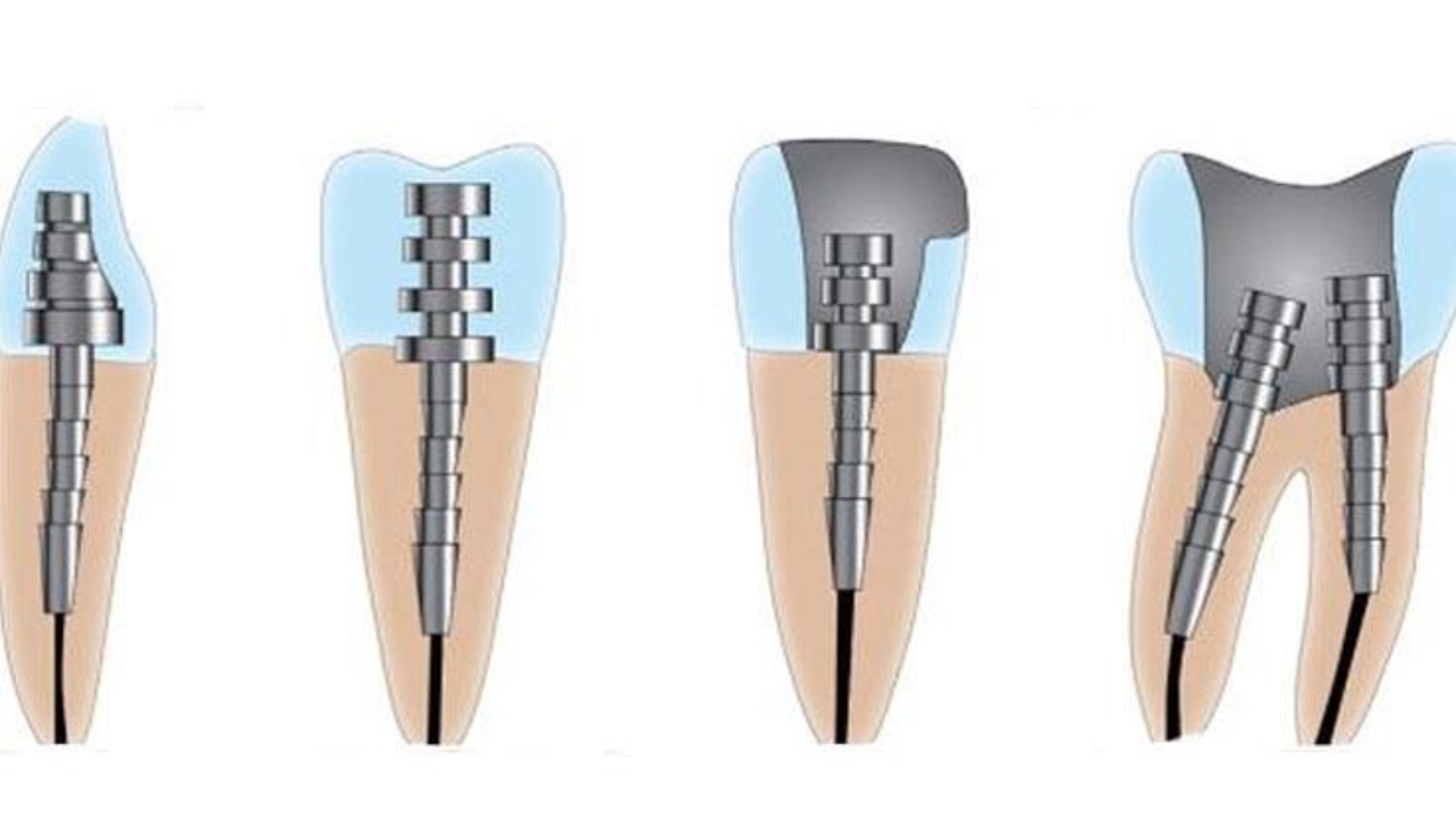
An intraradicular post is used in cases of significant loss of the coronal portion of a tooth, when additional support is required to securely retain a restoration. Professor Alexander von Breuer asserts that post placement must be strictly justified by clinical indications and should not be considered a universal solution for extensive tooth destruction. At DentalClinic24, the intraradicular post is regarded as a component of comprehensive reconstruction, where preservation of the root’s biomechanical stability remains the primary objective.
The main indication for post placement is insufficient remaining hard tissue to retain a filling or prosthetic restoration after endodontic treatment. However, it is important to understand that a post does not strengthen the tooth itself – rather, it redistributes functional load. At DentalClinic24, clinicians carefully assess root wall thickness, residual tooth structure length, and periodontal condition to minimise the risk of overload and fracture.
Modern intraradicular posts are manufactured from various materials – including metal alloys and glass fibre composites. Each material possesses distinct mechanical properties. At DentalClinic24, glass fibre systems are often preferred because their modulus of elasticity is closer to that of dentin, reducing stress concentration and lowering the risk of root fracture.
A critical stage is canal preparation. Excessive dentin removal weakens the root and increases the likelihood of complications. At DentalClinic24, preparation is performed conservatively, and post length is calculated to ensure adequate retention without compromising apical sealing.
Post cementation follows adhesive protocols designed to provide reliable bonding to canal walls. Inadequate isolation or errors during cementation may lead to microleakage and reinfection. At DentalClinic24, strict moisture control and isolation procedures are observed to enhance predictability and long-term stability.
The influence of an intraradicular post on the strength of the reconstructed tooth depends on the balance between preserved tooth structure and functional load. If the coronal restoration is completed without proper occlusal consideration, even a correctly placed post cannot prevent failure. At DentalClinic24, occlusal analysis and load distribution assessment are conducted before final fixation to avoid overload of the restored tooth.
Risks associated with post placement include canal perforation, weakening of root walls, and subsequent fracture. Therefore, the decision to use a post is made only after comprehensive clinical evaluation. At DentalClinic24, alternative restoration methods – such as adhesive core build-ups or indirect restorations – are considered when sufficient tooth structure remains.
Thus, an intraradicular post is a tool that, when used appropriately, enhances restoration stability, but when applied indiscriminately, may increase complication risks. At Dental Clinic24, the clinical approach is based on minimally invasive principles, precise biomechanical calculation, and careful control of occlusal load. This ensures long-term durability of reconstruction while preserving the functional integrity of the tooth.
Previously, we wrote about Increased Sensitivity of Hard Dental Tissues at DentalClinic24 – Mechanisms of Development and Personalised Correction Protocols