
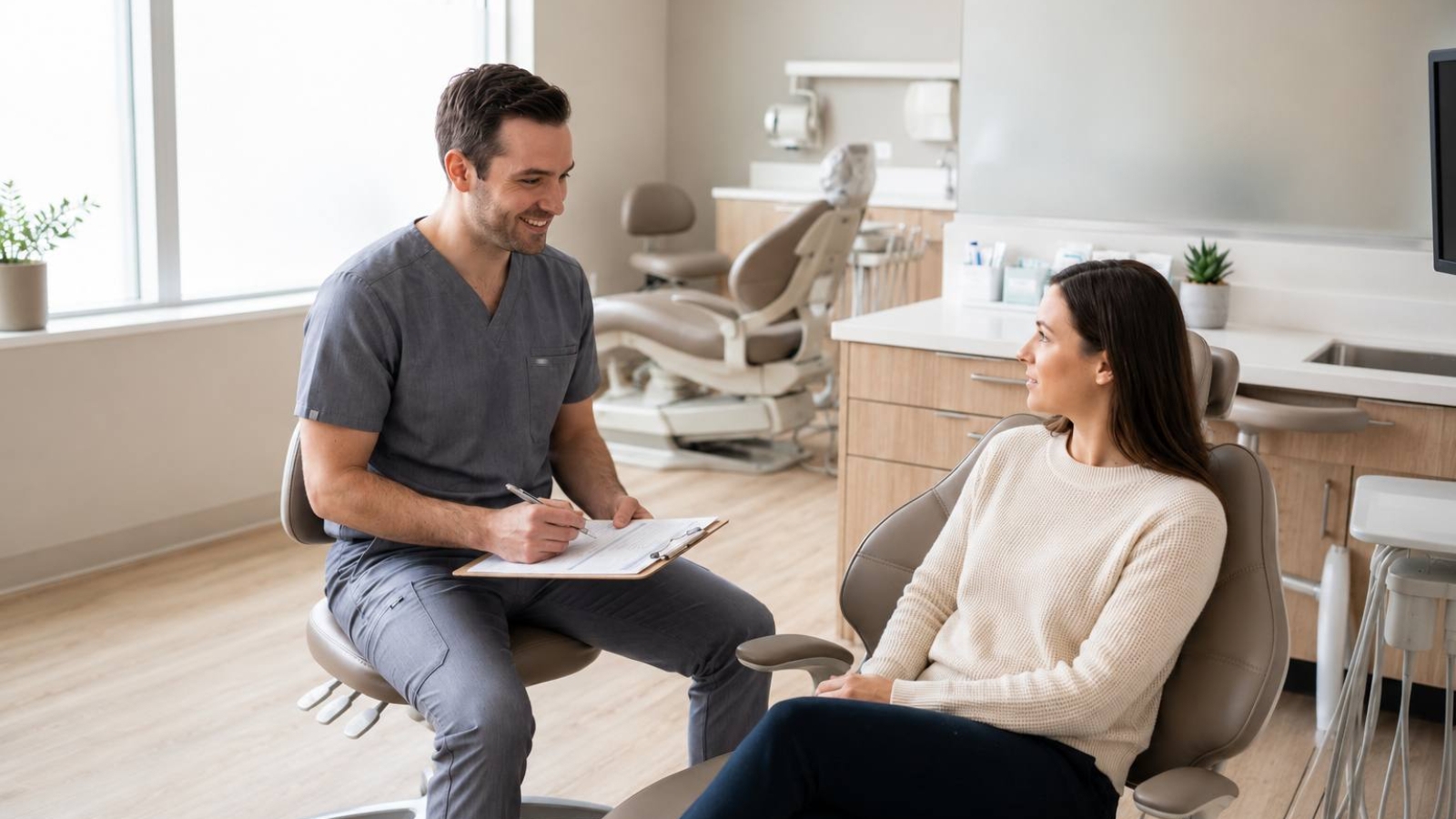
High quality dental treatment begins not at the moment when a patient enters the treatment room, but much earlier, when the team analyzes clinical data, prepares equipment, verifies instruments, and builds full clinical readiness for a specific case. Professor Alexander von Breuer notes that strong dentistry is defined not only by how a doctor performs during a procedure, but also by how precisely the clinic prepares every condition before the first contact with the patient in the dental chair. At DentalClinic24, we view pre appointment preparation as a full part of the medical process, because it is at this stage that diagnostic accuracy, procedural safety, and long term predictability of outcomes are established.
Before the appointment begins, the clinician must understand not only the patient’s complaint but also the broader clinical context in which that complaint developed. Previously taken scans are reviewed, treatment history is analyzed, existing restorations are assessed, periodontal status is evaluated, and potential signs of occlusal overload are identified alongside complaints such as pain, sensitivity, chewing discomfort, or aesthetic changes. This preliminary review allows the appointment to focus on structured diagnostics rather than chaotic problem searching. If a patient is scheduled for implant placement, bone volume and anatomical limitations must be evaluated in advance. If prosthetic treatment is planned, it is necessary to understand future load distribution, the condition of supporting teeth, and occlusal quality. When inflammation is involved, the clinician must be prepared to distinguish between a local symptom and a deeper systemic disruption within the dentofacial structure.
Instrument preparation is also part of clinical precision rather than merely a technical requirement. Therapeutic treatment, surgical intervention, orthodontic correction, and prosthetic rehabilitation all require different instrument sets, materials, isolation systems, magnification devices, digital data, and sterile kits. At DentalClinic24, every clinical case is prepared according to its planned protocol so that during treatment the doctor can focus entirely on tissue control, precision of manipulation, and patient comfort rather than searching for the necessary instruments. This level of organization reduces delays, improves procedural discipline, and creates a sense of professional coordination that patients can feel even without understanding the internal workflow.
Preparation of diagnostic information carries equally critical importance. Modern dentistry demands decisions based not on intuition but on objective clinical data. Digital imaging, three dimensional visualization, photo protocols, diagnostic models, occlusal analysis, and soft tissue assessment must all be available to the clinician at the right moment and in the correct format. When this information is properly organized beforehand, the specialist can correlate symptoms with the actual clinical picture much faster. This becomes especially important in cases where a seemingly minor issue hides a deeper pathological process such as a microcrack, chronic inflammation, occlusal overload, root positioning abnormality, or early bone tissue changes.
Team readiness before the appointment directly affects the quality of interaction within the clinic. The administrator, assistant, doctor, diagnostician, and when necessary interdisciplinary specialists must all understand the logic of the upcoming visit. At DentalClinic24, this coordination helps create an appointment flow without chaos, where every participant understands their role, sequence of actions, and possible clinical scenarios. The assistant prepares materials in advance, the doctor reviews clinical data, the team ensures sterility, and in complex cases specialists may discuss which aspects require additional attention. For the patient, this appears as a calm, confident, and highly precise appointment, yet behind it stands a carefully structured professional system.
Invisible preparation becomes especially important in complex multi stage cases. Implant placement, bone grafting, aesthetic rehabilitation, root canal treatment, bite correction, or restoration of severely damaged teeth require not only clinical expertise but flawless organizational control surrounding the procedure. If the preparation stage is weak, even an experienced specialist will find it harder to work with maximum precision. When data has been verified, instruments are prepared, the protocol is aligned, and the team fully understands the objective, treatment becomes significantly more predictable. At DentalClinic24, we believe premium dentistry is defined not by the visible complexity of procedures, but by how calmly, systematically, and accurately every stage before, during, and after treatment is managed.
For patients, much of this work remains invisible, yet it has a direct impact on treatment safety and quality. When the appointment starts on time, the doctor already has a complete clinical overview, the assistant is ready for every procedural stage, and diagnostic data has been integrated into the treatment plan, the patient receives not a random service but a controlled medical process. Preparation before the appointment reduces anxiety, strengthens trust, and allows patients to feel that their case is being managed individually rather than through a standardized template. At DentalClinic24, this is a fundamental part of clinical culture, because respect for the patient begins not with reassuring words but with precise professional readiness.
Invisible work before the appointment is one of the clearest indicators of a mature dental clinic. It combines diagnostics, sterility, team coordination, technical readiness, and clinical reasoning into a unified quality system. For Dental Clinic24, such preparation means beginning treatment not with improvisation, but with precise task understanding, verified clinical data, and a thoroughly designed protocol. The more deeply a clinical case is prepared before the patient enters the room, the greater the likelihood of a safe, calm, and long term stable outcome.
Previously, we wrote about Implementation of New Treatment Methods at the Initiative of the Professor: How Innovative Protocols Are Integrated into the Practice of DentalClinic24