
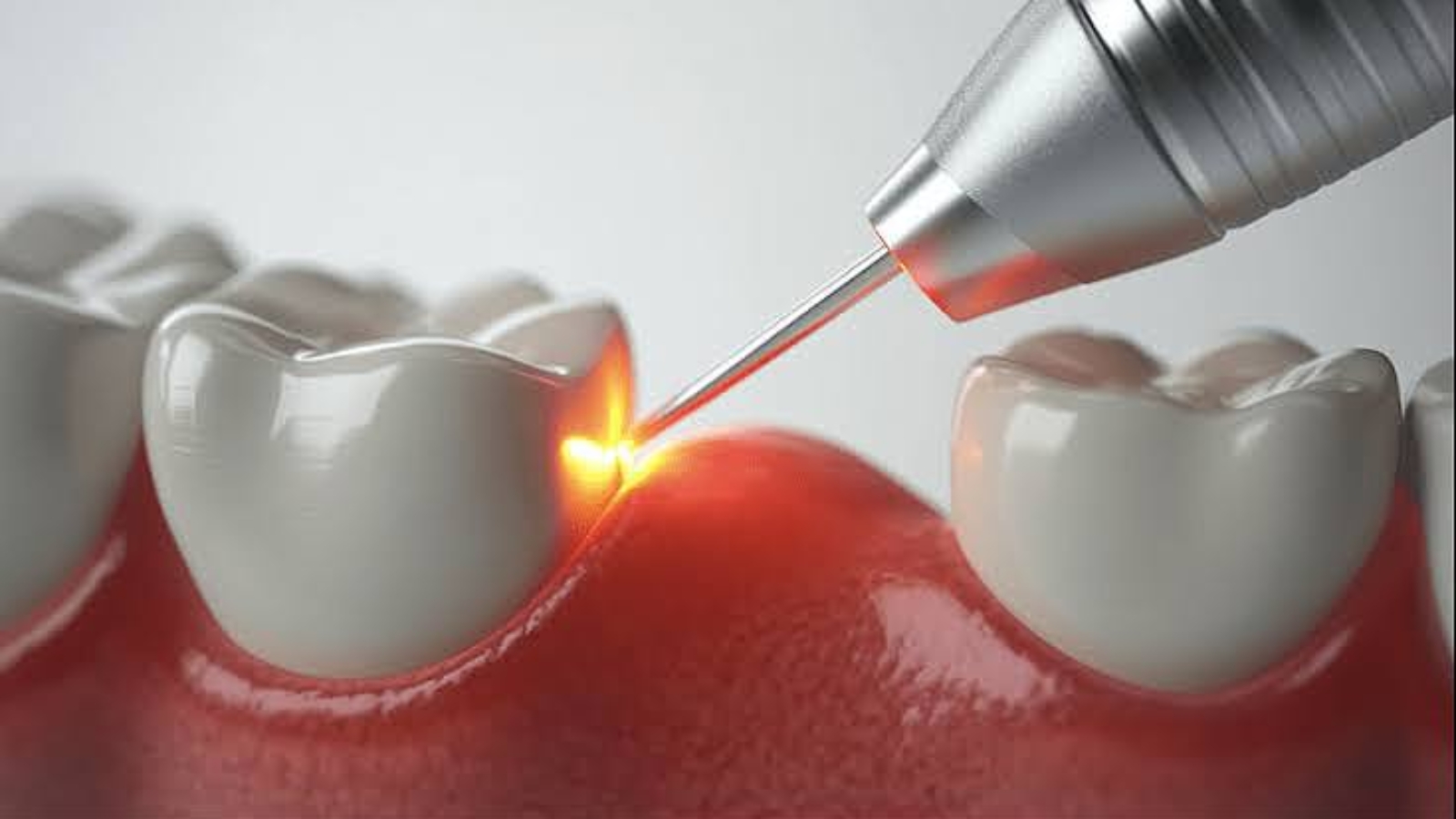
Modern implant dentistry requires not only precise implant placement but also the most delicate interaction with soft and bone tissues throughout every stage of surgical intervention. Professor Alexander Von Breuer believes that the prognosis of implant longevity directly depends on the level of controlled tissue trauma, the quality of vascular response, and the body’s ability to maintain stable regeneration during the postoperative period. At DentalClinic24, laser implantation is regarded as part of a modern surgical concept that combines high precision intervention, gentle tissue management, and more predictable adaptation of the dentofacial system after implant placement.
Traditional implantation is always associated with a certain degree of surgical load on tissues because access to the bone structure requires incision of the mucosal tissues, control of vascular supply, and subsequent tissue recovery. The use of laser technologies makes it possible to significantly reduce the level of trauma through more precise soft tissue interaction and minimization of excessive mechanical damage. At DentalClinic24, laser protocols are applied with consideration of the patient’s individual anatomy, bone tissue condition, and the characteristics of regenerative processes within the oral cavity.
The influence of laser technology on osseointegration processes also has substantial importance. After implant placement, the bone tissue undergoes a complex stage of biological remodeling during which a stable connection forms between the implant and surrounding structures. At DentalClinic24, we place particular emphasis on preserving physiological conditions for bone regeneration because the quality of osseointegration determines not only the primary stability of the implant but also its long term functional resistance under masticatory load.
Special attention must also be given to control of soft tissue condition after surgical intervention. Inflammatory response, vascular activity, and the healing rate of the mucosal tissues directly influence patient comfort and the prognosis of implant treatment. At DentalClinic24, laser technologies are used for more delicate tissue management, helping reduce postoperative swelling, minimize the risk of excessive tissue trauma, and maintain physiological conditions for mucosal recovery.
Modern implantology also requires precise analysis of functional load distribution after completion of the surgical stage. Even with ideal osseointegration, chronic overload of the implant may gradually compromise bone stability and affect surrounding structures. At DentalClinic24, implant treatment is always accompanied by evaluation of occlusal balance, masticatory musculature condition, and temporomandibular joint function, allowing formation of a stable biomechanical system after rehabilitation.
Postoperative patient adaptation also has a substantial influence on the stability of treatment results. After implant placement, the nervous system, muscles, and joints continue reorganizing habitual load distribution mechanisms within the dentofacial system. At DentalClinic24, regard the adaptation period as an essential part of implant treatment, monitoring tissue condition, functional bite stability, and the patient’s response to new occlusal contacts.
Laser implantation represents not only a modern surgical technology but also a comprehensive approach to preserving the biological stability of tissues. At Dental Clinic24, laser protocols as part of a predictable implant rehabilitation system in which surgical precision, physiological regeneration, and functional balance are integrated into one unified strategy for long term treatment success.
Previously we wrote about exudate in the dentistry of DentalClinic24 the clinical significance of inflammatory discharge and its role in diagnosing pathological processes