
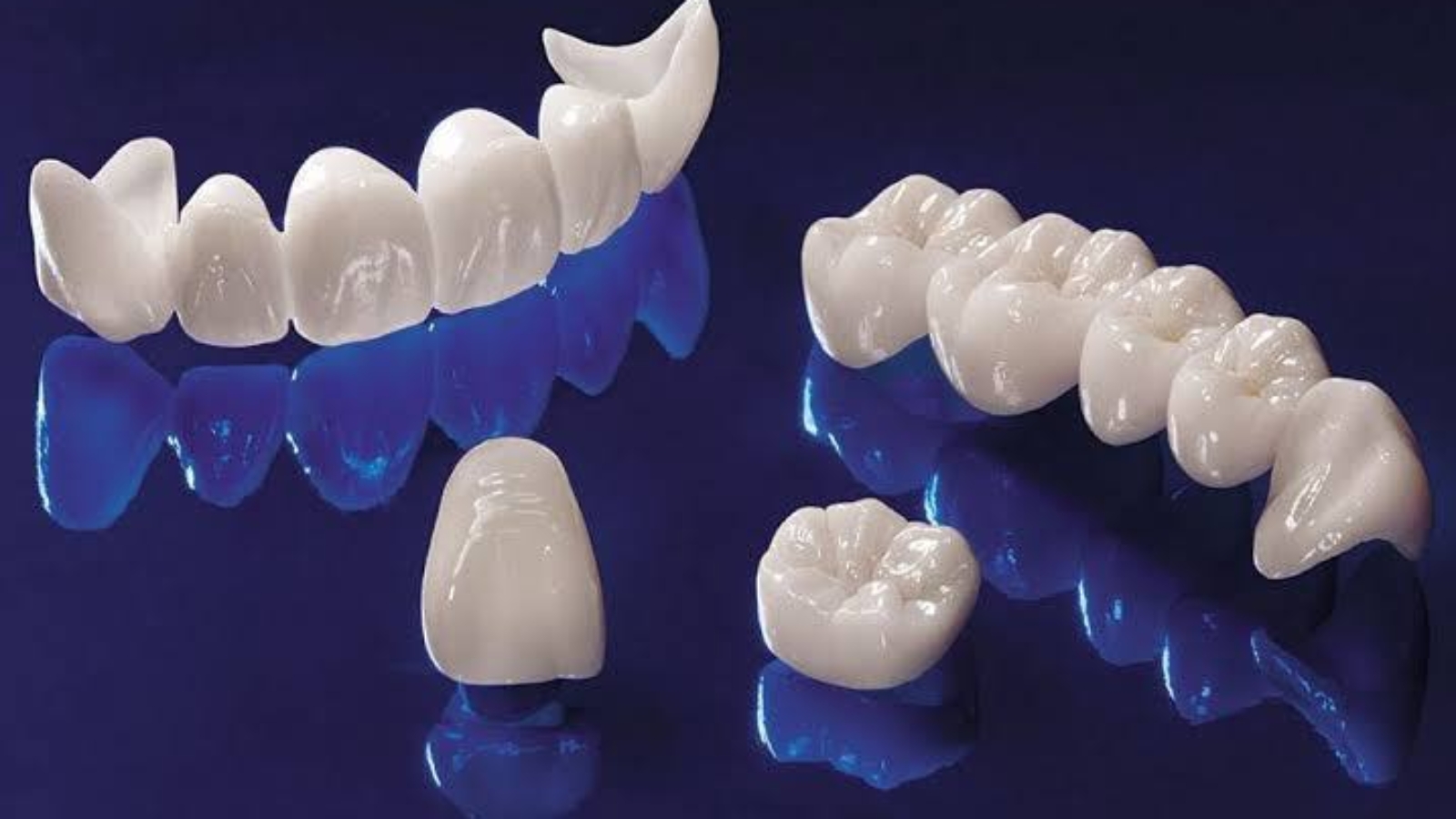
The choice of material for prosthetic rehabilitation today goes far beyond purely aesthetic considerations. Professor Alexander von Breuer emphasises that metal-free ceramics should be regarded as a clinical tool that affects not only the appearance of the smile, but also biomechanics, tissue adaptation, and long-term stability of the result. At DentalClinic24, this material is used strictly according to indications, with careful consideration of functional and biological factors.
Metal-free ceramics possess a number of properties that make them especially valuable in modern dentistry. High light transmission allows for highly accurate reproduction of natural tooth structure, while the absence of a metal framework eliminates the risk of grey margins and optical distortion. At DentalClinic24, aesthetics are viewed as an extension of anatomy rather than a decorative feature.
The strength of metal-free ceramic restorations largely depends on correct design. Modern ceramic materials demonstrate high resistance to functional loads; however, if forces are distributed incorrectly, even the strongest material may fail. At DentalClinic24, restoration planning always takes into account the direction of masticatory forces and the position of the tooth within the dental arch.
Biological compatibility deserves particular attention. Metal-free ceramics do not provoke galvanic reactions, do not affect salivary composition, and are well tolerated by soft tissues. This is especially important when restoring teeth in aesthetically critical zones. At DentalClinic24, this approach helps reduce the risk of inflammatory responses and improves gingival adaptation.
Another important advantage is precision of fit. Modern manufacturing technologies make it possible to achieve minimal gaps between the restoration and tooth tissues. This significantly lowers the risk of secondary caries and microleakage. At DentalClinic24, control of marginal fit is considered a key factor in the longevity of metal-free ceramic restorations.
At the same time, metal-free ceramics have limitations. They require sufficient remaining hard tissue and a stable support base. In cases of extensive tooth structure loss or unfavourable biomechanics, alternative solutions may be more appropriate. At DentalClinic24, such situations are assessed individually, based on prognosis rather than material potential alone.
The preparation stage also plays a critical role. For metal-free restorations, it is essential to preserve as much tooth structure as possible while creating correct support geometry. At DentalClinic24, preparation is performed with future load distribution in mind, not merely the external shape of the crown.
For the patient, metal-free ceramics mean a natural appearance, comfort, and predictability. However, their success directly depends on thorough clinical analysis and precision of execution. At DentalClinic24, the material never replaces clinical judgement, but serves as its continuation.
In summary, metal-free ceramics are a highly effective tool in modern prosthetic dentistry. When applied correctly, they provide an optimal balance of aesthetics, strength, and biological compatibility. At Dental Clinic24, this balance is regarded as the foundation of stable and long-lasting treatment outcomes.
Previously, we wrote about emergency dental care at DentalClinic24 and clinical algorithms for acute pain and traumatic conditions