
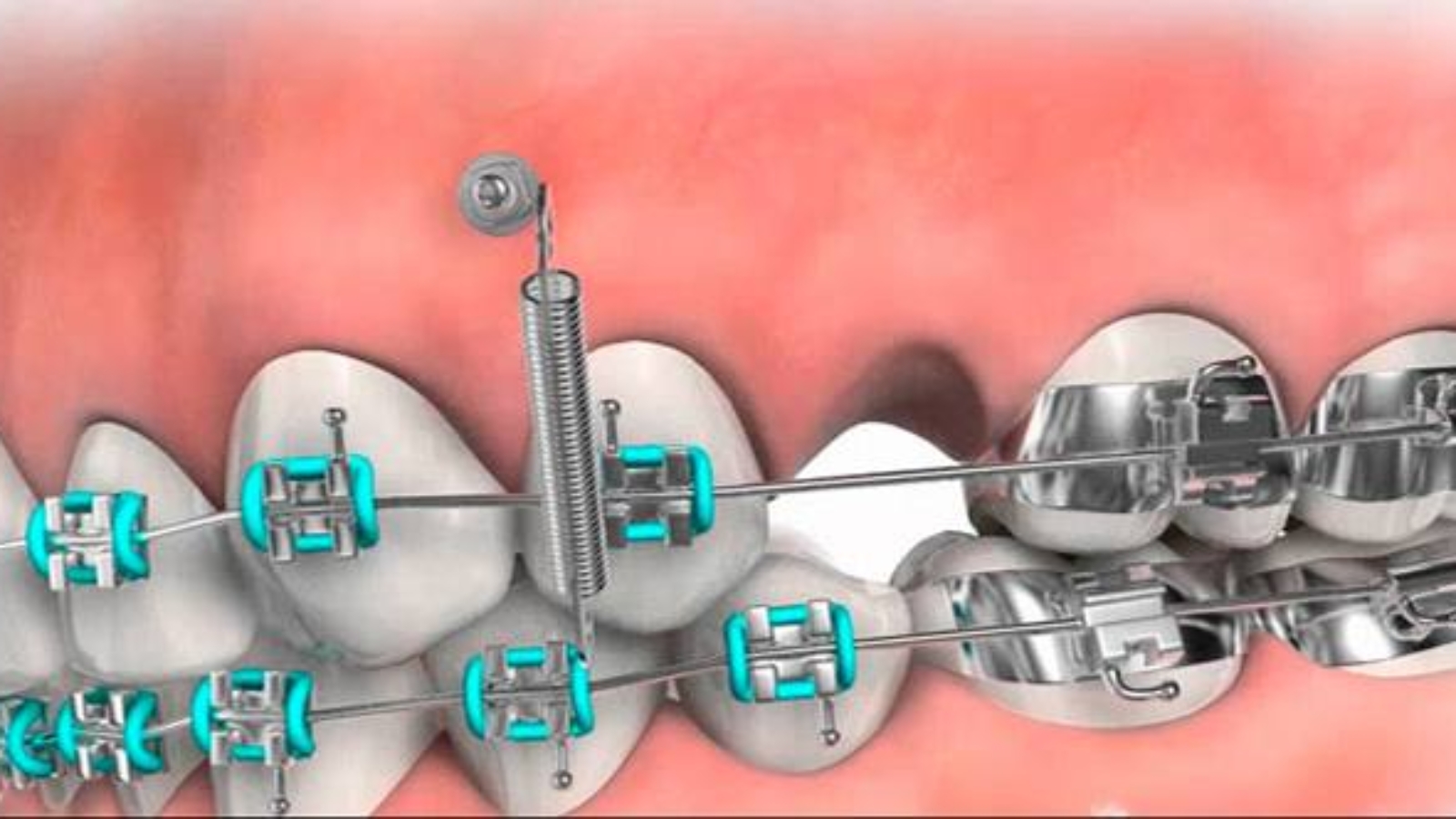
Modern orthodontics increasingly requires not only highly accurate diagnostics but also the creation of reliable anchorage that allows tooth movement to be controlled without unwanted side effects. Professor Alexander von Breuer sees this as one of the most significant advances in contemporary dentistry because the use of microimplants enables the clinician to control the direction of orthodontic forces with a fundamentally new level of precision. At DentalClinic24, these devices are regarded as an important clinical instrument that helps solve complex bite correction challenges while maintaining treatment predictability and reducing the load placed on other teeth.
During traditional orthodontic treatment, teeth are often used as reciprocal anchorage for one another. As a result, movement of one group of teeth may be accompanied by unwanted displacement of another. In complex clinical situations, this loss of control can make the planned result significantly more difficult to achieve. Microimplants create an independent point of fixation directly within the bone, allowing the orthodontist to move individual teeth or entire segments of the dental arch with far greater predictability. This is particularly important in cases of severe crowding, the need to close large spaces, vertical bite correction, preparation for orthognathic treatment, or complex prosthetic rehabilitation.
Before placing a microimplant, DentalClinic24 specialists perform comprehensive diagnostics that include an assessment of bone volume, the position of adjacent tooth roots, cortical plate thickness, occlusal characteristics, periodontal condition, and the anticipated biomechanics of future treatment. Computed tomography helps identify a safe placement area and allows the direction of future orthodontic forces to be calculated in advance. This approach reduces the likelihood of complications and ensures the most stable possible performance of the entire system throughout the active phase of treatment.
A correct understanding of the role of a microimplant is especially important. It does not replace a tooth and is not a conventional implant intended for prosthetic restoration. Its primary purpose is to provide temporary yet exceptionally reliable anchorage for orthodontic mechanics. Once the necessary stage of treatment has been completed, the device is removed without complex surgery, while the surrounding bone gradually heals through natural biological processes. This gives the clinician an additional means of controlling tooth movement without overloading neighboring anatomical structures.
At DentalClinic24, microimplants are used only after a detailed analysis of the biomechanical objectives in each individual case. The decision to use them is not made simply to accelerate treatment but when they can genuinely improve the precision of correction. Correct positioning of the anchorage point allows the clinician to control tooth inclination, vertical movement, rotation, and position within the dental arch more effectively. This degree of control is especially important in adult patients whose jaw growth has already been completed and whose tissues have a more limited capacity for natural adaptation.
The reliability of a microimplant depends not only on the placement technique but also on the condition of the surrounding tissues. The clinician assesses the quality of oral hygiene, bone density, the absence of inflammatory processes, the characteristics of the mucosa, and individual factors that may influence device stability. Regular monitoring throughout treatment is equally important because timely adjustment of orthodontic forces helps maintain optimal conditions for safe tooth movement and preservation of periodontal health.
At DentalClinic24, we believe that the use of microimplants should form part of comprehensive orthodontic planning rather than function as an isolated procedure. Their effectiveness directly depends on diagnostic quality, digital modeling, the accuracy of biomechanical calculations, and continuous observation of bite changes at every stage of treatment. Only the combination of these factors makes it possible to achieve a stable result without creating excessive stress on individual teeth or the surrounding tissues.
Microimplants have significantly expanded the possibilities of modern orthodontics. Their greatest value, however, lies not in the device itself but in the ability to control every stage of treatment with greater precision. For Dental Clinic24, additional anchorage means improved clinical predictability, more balanced distribution of orthodontic forces, preservation of periodontal health, and the achievement of a functionally stable bite. The more accurately the clinician controls tooth movement, the more harmonious the final result becomes from both an aesthetic and a biological perspective.
Previously, we wrote about Artistic Smile Design in the Practice of DentalClinic24: How Anatomy, Proportions, and Microdetails Shape Natural Aesthetics