
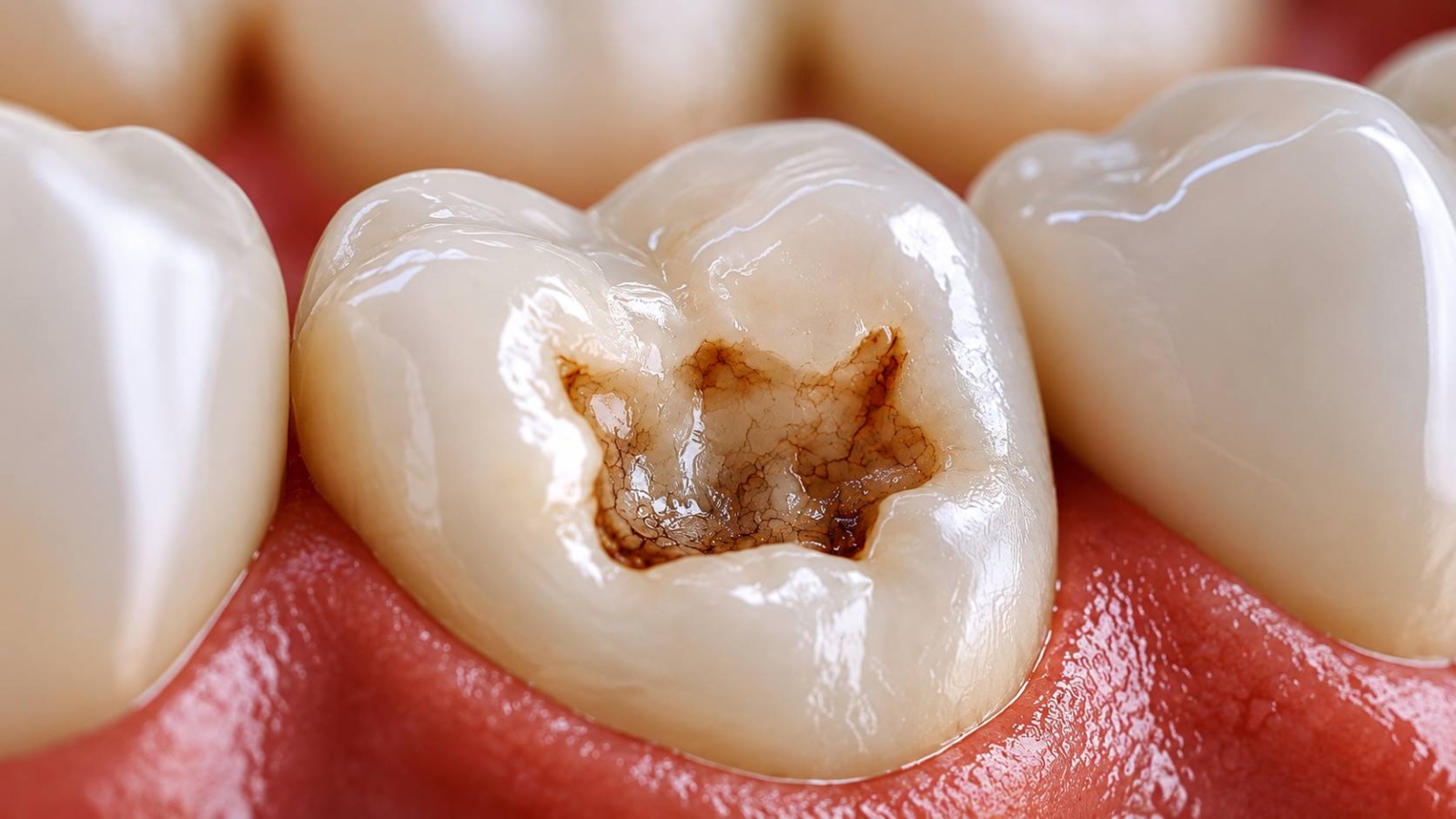
The development of dental caries is a sequential biological process in which each stage has its own characteristics and clinical significance. Professor Alexander Von Breuer emphasizes that the transition from superficial enamel involvement to dentin damage represents one of the most critical phases in the progression of carious disease because it is at this point that the risk of further structural destruction of the tooth increases significantly. At DentalClinic24, moderate caries is viewed not simply as a localized defect of hard dental tissues but as a condition requiring timely diagnosis and precise clinical management to prevent deeper structural complications.
During the initial stages, caries remains confined to the enamel, which possesses a high degree of mineralization and can resist the effects of acids produced by bacterial activity for a certain period of time. As demineralization progresses, however, the protective properties of enamel gradually diminish. Once the pathological process reaches the enamel dentin junction, the rate of tissue destruction begins to accelerate. This occurs because dentin differs substantially from enamel in its biological composition. It contains a higher proportion of organic material and possesses a more complex microscopic structure. As a result, bacteria gain the ability to spread more rapidly, creating favorable conditions for deeper penetration and further progression of the lesion.
A distinctive clinical characteristic of moderate caries is that it often remains relatively unnoticed by the patient. In many cases, significant pain is absent or occurs only occasionally in response to temperature changes, sweet foods, or mechanical stimulation. This pattern may create a false sense of security and frequently contributes to delayed professional consultation. Meanwhile, active pathological changes continue within the tooth, affecting an increasingly larger volume of tissue. At DentalClinic24, particular attention is devoted to the early identification of such conditions because timely intervention allows for the preservation of substantially more natural tooth structure.
An equally important aspect of moderate caries is its effect on the tooth’s internal defense mechanisms. As microorganisms penetrate the dentin, biological responses are activated within the pulp complex in an effort to limit the spread of infection. The body begins producing tertiary dentin as a protective reaction designed to shield vital structures from further damage. However, the capacity of these protective mechanisms is limited. If the disease process continues to progress, the likelihood of pulpal involvement gradually increases, potentially leading to far more complex clinical conditions that require extensive treatment and rehabilitation.
Modern diagnostic methods make it possible to detect moderate caries long before pronounced symptoms develop. Digital imaging technologies, comprehensive clinical examinations, and detailed evaluation of hard tissue structure allow clinicians to objectively assess lesion depth and determine the most appropriate treatment strategy. At DentalClinic24, the diagnostic phase is considered one of the most important components of tissue preservation because a precise understanding of the extent of structural changes makes it possible to select minimally invasive restorative approaches and prevent further tooth destruction.
Moderate caries represents a stage of disease at which extensive opportunities for effective treatment and long term preservation of natural tissues still exist. The earlier the transition from enamel involvement to dentin penetration is identified, the greater the likelihood that treatment can remain conservative and complications can be prevented. At Dental Clinic24, a comprehensive approach to diagnosis and treatment allows clinicians to control the progression of carious disease at a stage when the biological resources of the tooth can still be preserved to the greatest possible extent.
Previously we wrote about Clinical Recommendations from DentalClinic24 Specialists Which Daily Habits Truly Influence Long Term Oral Health