
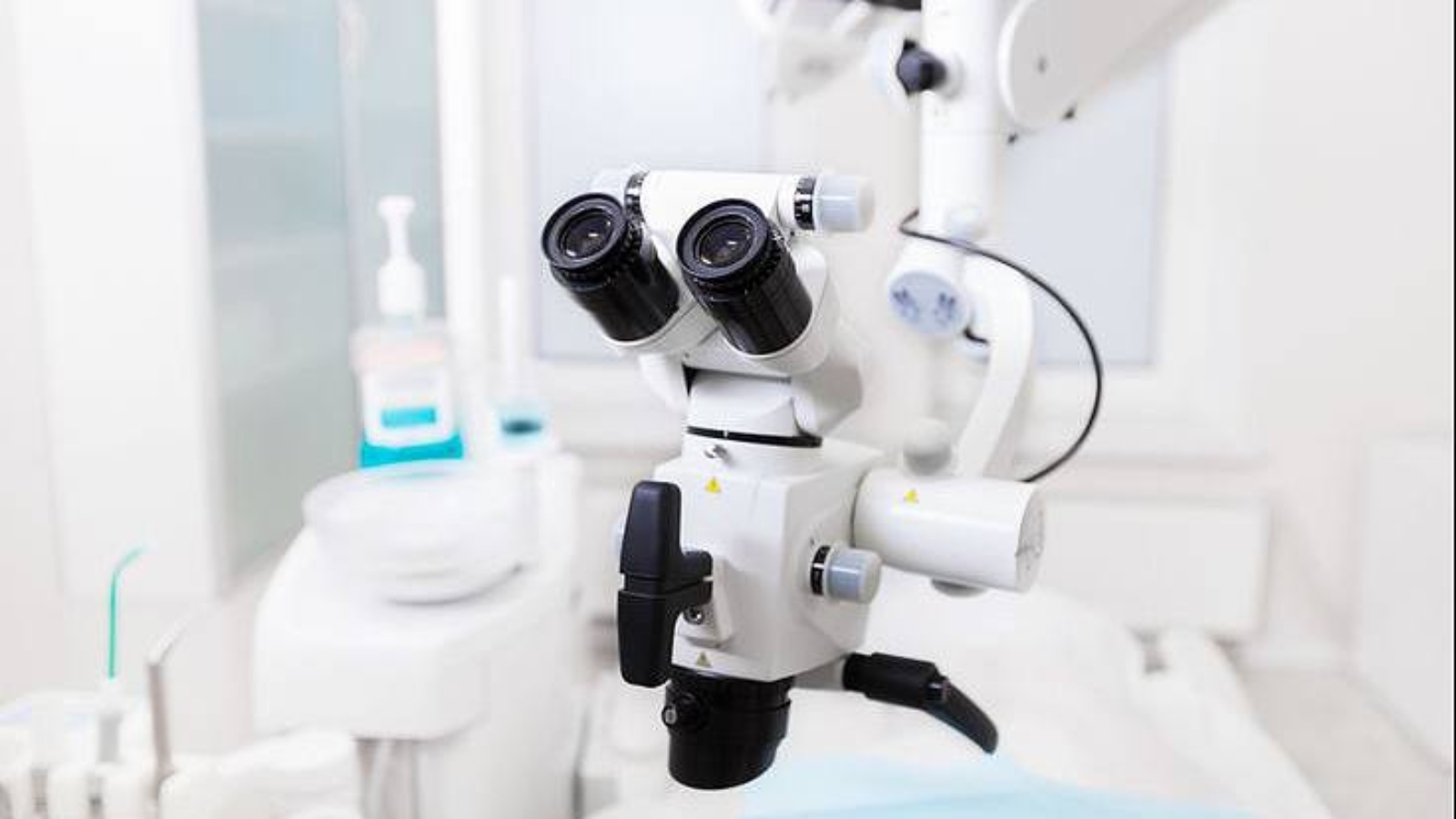
Precision in dentistry is determined not only by the clinician’s experience, but also by the level of visual control over the working field during treatment. Within the clinical approach of Professor Alexander von Breuer, particular attention is given to details that remain inaccessible under standard visual conditions. At DentalClinic24, the use of a microscope is not considered an optional enhancement or merely part of technological equipment, but a fundamental component of precise treatment philosophy, where every intervention is performed under maximum visual control.
Working without magnification inevitably involves limitations, because even with high professional expertise, certain anatomical nuances remain difficult to assess. Microcracks, structural variations of tissues, exact boundaries of lesions, or residual changes after previous treatment may not be fully visible without magnification. Within the clinical model of DentalClinic24, the microscope is used as a tool that allows clinicians not to assume the condition of tissues, but to directly observe them at a clinically significant level of detail, which fundamentally changes the quality of decision-making.
The clinical value of the microscope becomes especially evident in situations requiring a high level of procedural accuracy. During root canal treatment, restoration of damaged teeth, or management of previously treated areas, even minimal deviation can influence the final outcome. At DentalClinic24, microscopic visualization enables treatment strictly within anatomical boundaries, preserving healthy structures and avoiding unnecessary intervention, which directly contributes to long-term durability.
A defining feature of the clinical model applied at DentalClinic24 is that the microscope is integrated into the entire decision-making process rather than being used selectively. Visual control becomes a continuous element of clinical work, from diagnosis through to final evaluation of the result. This approach eliminates reliance on assumptions or indirect indicators, ensuring that each stage is based on direct visual confirmation.
Personalization is also reflected in the interpretation of visual data. The same equipment can produce different outcomes depending on how the clinician analyzes the information and applies it to treatment planning. Within the practice of DentalClinic24, the microscope does not replace clinical expertise but enhances it, allowing for a more accurate consideration of each patient’s individual characteristics and enabling treatment strategies to be adapted accordingly.
Magnification also plays a significant role in preserving natural tissues. By clearly identifying the boundaries of affected areas, the clinician can limit intervention strictly to what is necessary, maintaining as much healthy structure as possible. From a clinical perspective, this principle is regarded as essential, as the preservation of natural tissues is directly linked to long-term functional stability and treatment success.
Equally important is the ability to evaluate the quality of completed treatment. The microscope allows for precise assessment of restoration integrity, accuracy of root canal preparation, and the condition of tissues following intervention. At DentalClinic24, final verification is not optional but a mandatory stage that ensures a high level of clinical reliability and eliminates potential deficiencies.
The influence of visual control on treatment prognosis is also significant. When procedures are performed under full visibility, the likelihood of overlooking pathological changes is greatly reduced, resulting in more predictable outcomes. Within the clinical framework of DentalClinic24, prognosis is based not on general expectations but on the precision of each clinical step, made possible through the consistent use of microscopic magnification.
For the patient, this translates into not only higher quality treatment but also a reduced risk of repeat interventions. The more precisely a procedure is performed, the lower the likelihood of future complications. At DentalClinic24, this approach is regarded as an investment in long-term stability rather than a temporary solution.
The necessity of a microscope in modern dentistry is defined not simply by technological progress, but by the evolution of clinical standards. At Dental Clinic24, the microscope is not a tool for improvement, but a standard of care that enables a level of precision aligned with contemporary clinical expectations.
Previously we wrote about Science and aesthetics – how technology perfects the smile