
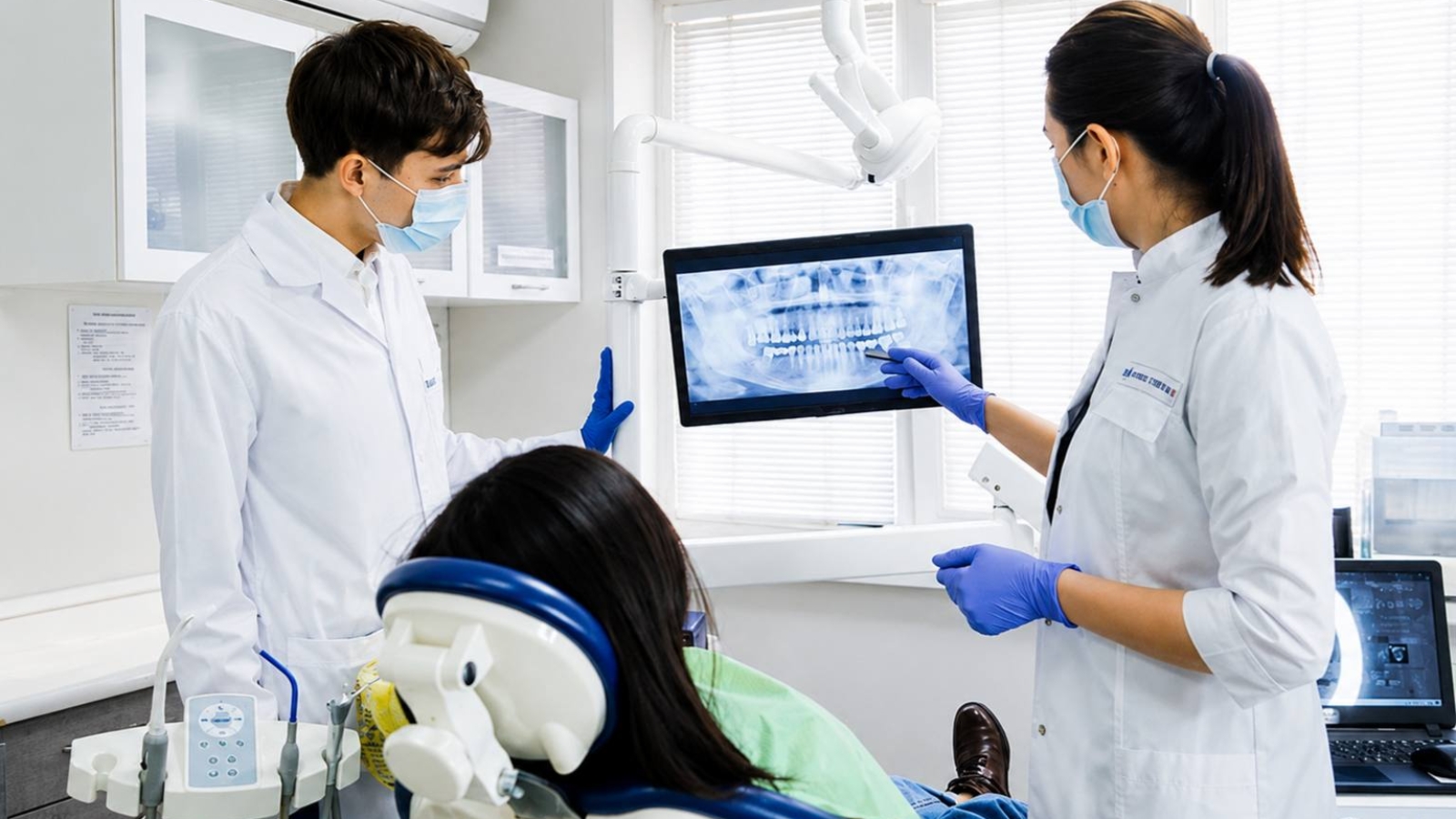
The development of dentistry today is determined not only by the professional expertise of clinicians but also by the speed at which new technologies are integrated into everyday practice. These innovations allow specialists to visualize, analyze, and predict tissue conditions with a level of precision that was previously unattainable. Professor Alexander Von Breuer emphasizes that modern medical technologies become truly valuable when they help clinicians make more informed decisions and preserve the maximum amount of a patient’s natural tissues. At DentalClinic24, technological advancement is viewed as a tool for improving diagnostic accuracy, treatment safety, and long term stability rather than as an independent goal of modern dentistry.
Only a relatively short time ago, many dental decisions had to be made using limited clinical information. Specialists often relied on visual examination, individual radiographs, and symptoms that frequently reflected an already established condition. Modern technologies have fundamentally changed this approach. Today, clinicians can evaluate tissues at significantly earlier stages of disease development. High precision digital imaging makes it possible to identify hidden changes in bone structure, analyze root positioning, assess the quality of surrounding tissues, and detect potential risks before noticeable clinical manifestations appear. This expanded diagnostic capability has greatly improved the ability to preserve tissues and prevent more extensive future interventions.
Digital treatment planning has become particularly important. Modern dentistry is increasingly moving from a reactive model toward a predictive system of clinical decision making. Before treatment begins, specialists can model future outcomes, evaluate the functional characteristics of the dentofacial system, and predict force distribution after treatment has been completed. This approach reduces clinical uncertainty and creates conditions for more stable tissue adaptation. At DentalClinic24, digital planning is considered an essential component of treatment because it transforms many clinical decisions from assumptions into objective analysis supported by measurable data.
Another significant area of development involves improving the precision of clinical procedures. Advanced technologies help reduce the influence of human variability and provide a higher level of consistency in treatment outcomes. Digital scanning, computer assisted modeling, and modern restoration manufacturing techniques allow for exceptional precision in the fit of dental structures while enhancing their long term functional stability. At DentalClinic24, these technologies are implemented primarily to increase treatment predictability and preserve the biological balance of oral tissues rather than simply to accelerate clinical workflows.
Major advances are also occurring in preventive dentistry. New diagnostic tools make it possible to detect pathological processes before pain, inflammation, or significant tissue destruction develops. As a result, opportunities for minimally invasive treatment continue to expand, allowing clinicians to preserve a greater amount of natural tooth structure. Modern preventive concepts are gradually shifting the focus away from managing the consequences of disease and toward preventing disease development altogether. At Dental Clinic24, early diagnosis is regarded as one of the most effective strategies for preserving long term oral health and reducing the need for extensive future treatment.
Next generation technologies are transforming not only treatment methods but also the entire philosophy of modern dentistry. The more objective information clinicians are able to obtain, the more accurate diagnostics become, the safer interventions are, and the more stable long term outcomes remain. Modern dentistry increasingly combines clinical expertise, digital analysis, and predictive thinking, creating conditions for a higher level of preservation of dentofacial health over many years.
Previously we wrote about White Spot Caries at DentalClinic24 Non Invasive Treatment Options and the Prognosis for Enamel Preservation