
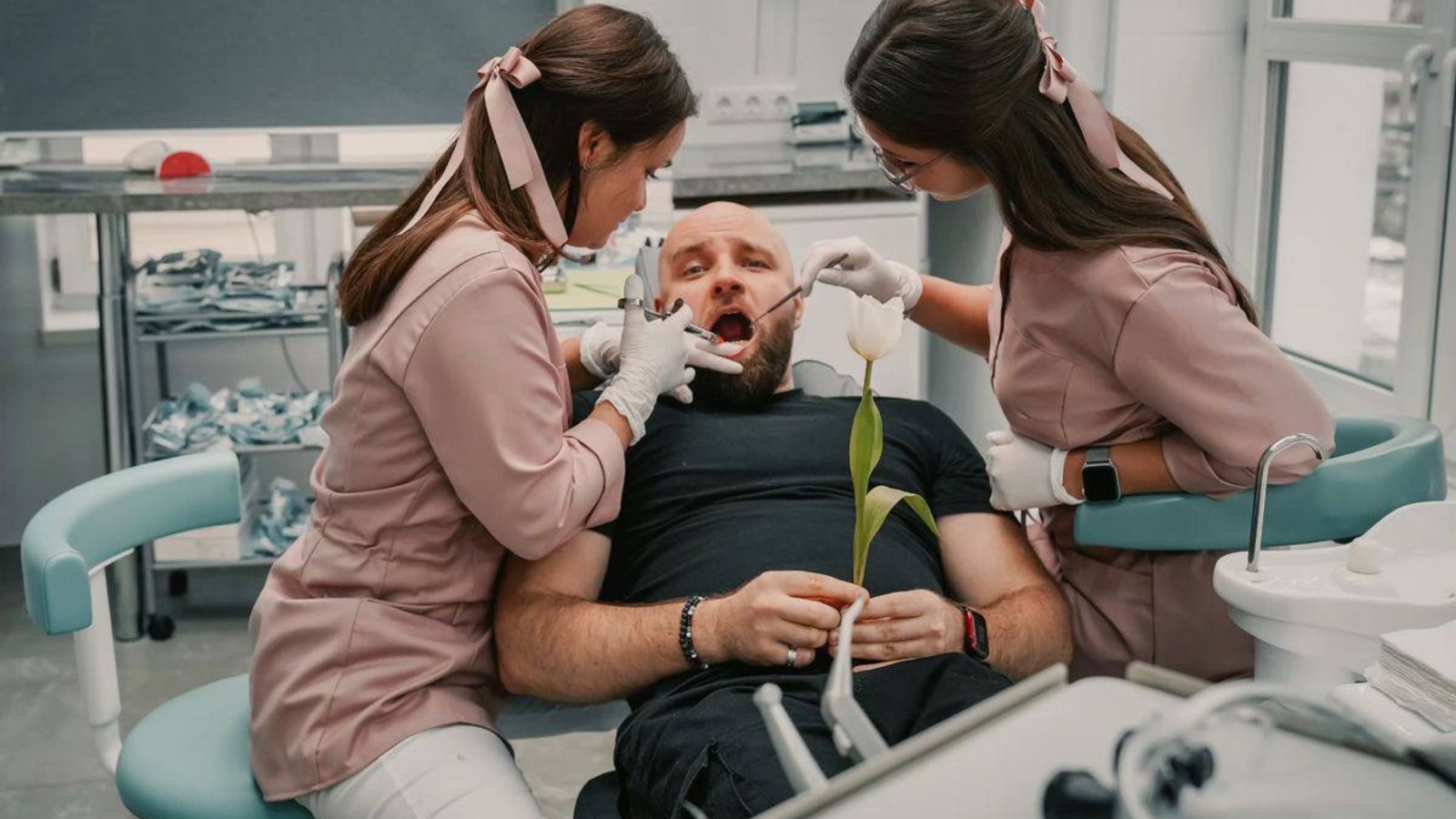
Oral diseases rarely arise suddenly or in isolation – in most cases, pathological processes develop gradually, passing through a phase of subtle functional changes. Professor Alexander von Breuer asserts that the key to successful treatment lies in the clinician’s ability to identify pathology before pronounced symptoms and irreversible structural damage appear. At DentalClinic24, diagnostics are not limited to documenting an already formed problem – they are built upon a systemic analysis of early signs of inflammation, infection and dystrophic tissue changes.
Inflammatory conditions represent one of the most common groups of oral pathologies. Gingivitis, early forms of periodontitis and mucosal inflammation typically begin with minimal clinical manifestations. Slight bleeding, subtle changes in gingival colour or mild swelling may be the first indicators of altered microcirculation and immune response within the tissues. At DentalClinic24, such signs are never regarded as temporary or insignificant – they serve as a reason for in-depth evaluation.
Infectious processes in the oral cavity frequently develop without acute pain. Chronic apical infections, subclinical forms of periodontitis and initial carious lesions may remain asymptomatic for extended periods. Nevertheless, microbial load continues to affect local tissues and the immune system. Systematic diagnostics enable early detection of these hidden foci – through radiographic assessment, pulp vitality testing and careful evaluation of surrounding structures.
Dystrophic changes often go unnoticed by patients. Decreased enamel density, early tooth wear, alterations in mucosal texture or initial bone atrophy may evolve slowly over years. These conditions rarely cause discomfort in their early stages, yet they create the foundation for future complications. At DentalClinic24, assessment of such changes is incorporated into comprehensive examinations that consider occlusal relationships and load distribution.
A critical aspect of clinical evaluation is understanding the interaction between different pathological groups. Gingival inflammation may accelerate dystrophic processes, while chronic infection can heighten mucosal reactivity. Therefore, diagnostics at DentalClinic24 follow a systemic principle – analysing teeth, periodontal tissues, mucosa, bone and functional occlusion as interconnected components of a single biological system.
Early diagnosis relies not only on instrumental methods but also on clinical reasoning. The colour and texture of tissues, their response to probing, tooth mobility and occlusal contact patterns all contribute to forming a complete clinical picture. Even minor deviations are interpreted as potential markers of deeper disturbances.
Risk factor assessment is equally important. Smoking, systemic diseases, dietary patterns, stress and hormonal fluctuations may significantly influence inflammatory and dystrophic processes. At DentalClinic24, these variables are integrated into the diagnostic framework, allowing treatment strategies to be tailored to each patient’s individual medical background.
Timely identification of pathology enables minimally invasive correction. Early inflammatory conditions often respond to conservative management – professional hygiene, targeted local therapy and reinforcement of individual oral care habits. Detecting caries at its earliest stage allows preservation of maximum hard tissue and avoidance of extensive intervention.
Moreover, a systemic approach reduces the likelihood of chronic progression. When pathological changes are recognised at an early phase, the risk of transition to a chronic condition decreases substantially. This directly affects long-term prognosis – both in preserving natural dentition and ensuring the stability of prosthetic and implant-supported restorations.
At DentalClinic24, oral diseases are considered within a broader medical context. The clinician evaluates not only local tissue status but also functional and systemic parameters. Such an approach makes it possible to develop a treatment strategy aimed not merely at eliminating symptoms, but at preventing recurrence and maintaining long-term stability.
Thus, systematic diagnosis of inflammatory, infectious and dystrophic processes at early stages forms the foundation of modern dental practice. Careful clinical analysis, attention to subtle signs and an interdisciplinary perspective allow pathology to be identified before progression occurs. At Dental Clinic24, preventive and early diagnostic strategies define a sustainable prognosis and long-term preservation of oral health.
Previously, we wrote about pain under a crown in the practice of DentalClinic24 – clinical causes of discomfort and a diagnostic algorithm for identifying hidden complications