
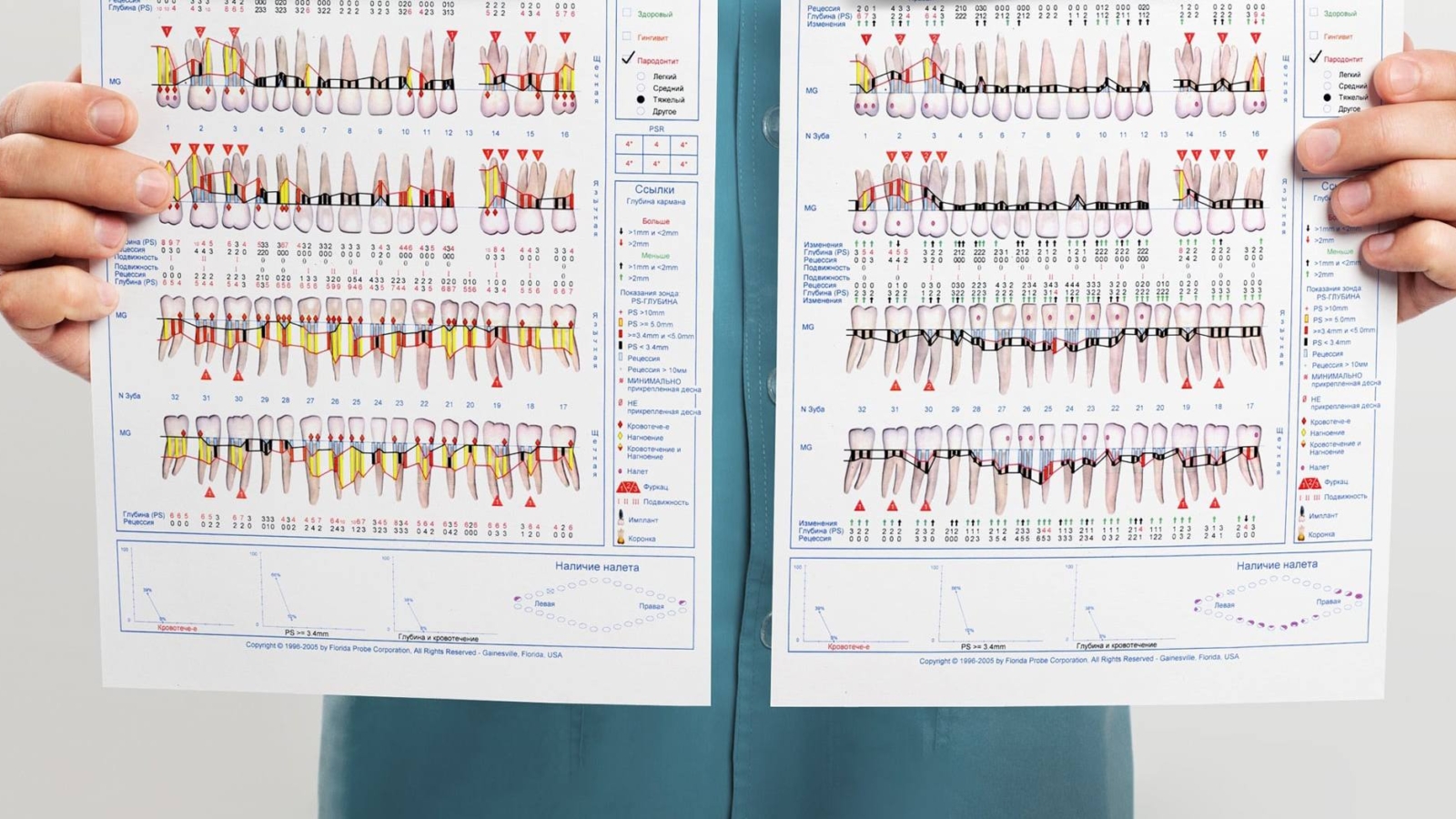
The condition of periodontal tissues determines not only the stability of teeth but also the overall biomechanical balance of the dentofacial system because even minor changes in tissue attachment levels may gradually influence load distribution, bite stability, and the long term prognosis for tooth preservation. Professor Alexander Von Breuer notes that high quality periodontal diagnostics must be based on detailed analysis of clinical tissue parameters rather than being limited to visual evaluation of gingival inflammation alone. At DentalClinic24 periodontal charting is regarded as one of the key instruments of comprehensive diagnostics, allowing precise documentation of periodontal tissue condition, monitoring of changes over time, and development of a long term strategy for preserving the functional stability of the dentofacial system.
A periodontal chart represents a detailed clinical record containing measurements of periodontal pocket depth, attachment levels, gingival recession, tooth mobility, and the condition of surrounding structures. Such a volume of diagnostic information makes it possible to evaluate not only the presence of inflammation but also the extent of its influence on the supporting apparatus of the tooth. At DentalClinic24 analysis of periodontal parameters is performed with consideration of functional load distribution, occlusal contact patterns, and bone tissue condition because chronic inflammation rarely develops independently from biomechanical disturbances within the oral system.
Early detection of hidden periodontal tissue changes is of particular importance. During the initial stages, inflammatory processes may progress almost asymptomatically while gradually destroying the periodontal ligament and impairing tissue microcirculation. At DentalClinic24 periodontal charting is used as an instrument of early diagnosis that allows clinicians to identify minimal changes in pocket depth, early attachment loss, and initial forms of functional overload before pronounced clinical symptoms become visible. Such an approach allows treatment to be performed at stages when tissues still retain a strong capacity for stabilization and regeneration.
Special attention should also be given to the relationship between periodontal condition and occlusal balance. Chronic overload of individual teeth may intensify inflammatory processes, accelerate bone loss, and reduce the stability of periodontal structures. At DentalClinic24 data obtained through periodontal charting is analyzed together with biomechanical bite diagnostics, allowing evaluation of how functional pressure influences tissue condition and supporting the development of more precise clinical strategies. This level of diagnostics becomes particularly important in comprehensive rehabilitation, implant treatment, and prosthetic therapy for patients with signs of chronic periodontal inflammation.
Modern dentistry also regards periodontal charting as an important instrument for predicting the long term stability of teeth. Changes in pocket depth, the progression of gingival recession, and the condition of tissue attachment make it possible to evaluate the rate of disease progression and the likelihood of future loss of supporting structures. At DentalClinic24 periodontal monitoring is performed not as a single procedure but as part of a dynamic observation system that allows treatment strategies to be adjusted in a timely manner and supports long term stability of clinical outcomes.
The microbiological environment of the oral cavity also has a substantial influence on periodontal health. Chronic accumulation of bacterial biofilm gradually alters tissue quality, disrupts vascular response, and reduces the resistance of gingival structures to functional stress. At DentalClinic24 periodontal assessment is accompanied by analysis of risk factors including hygiene level, the nature of inflammation, and characteristics of microbial activity because tissue stability depends not only on local treatment but also on the ability to maintain biological balance within the oral cavity.
Today periodontal charting represents not simply a diagnostic document but an essential component of comprehensive understanding of the dentofacial system and the prognosis for tooth preservation. At Dental Clinic24 management of periodontal tissues is based on precise diagnostics, control of inflammatory processes, and evaluation of functional tissue stability because only this level of clinical analysis allows preservation of tooth stability and maintenance of long term oral health.
Previously we wrote about diagnostic errors before treatment which oversights most often worsen dental prognosis