
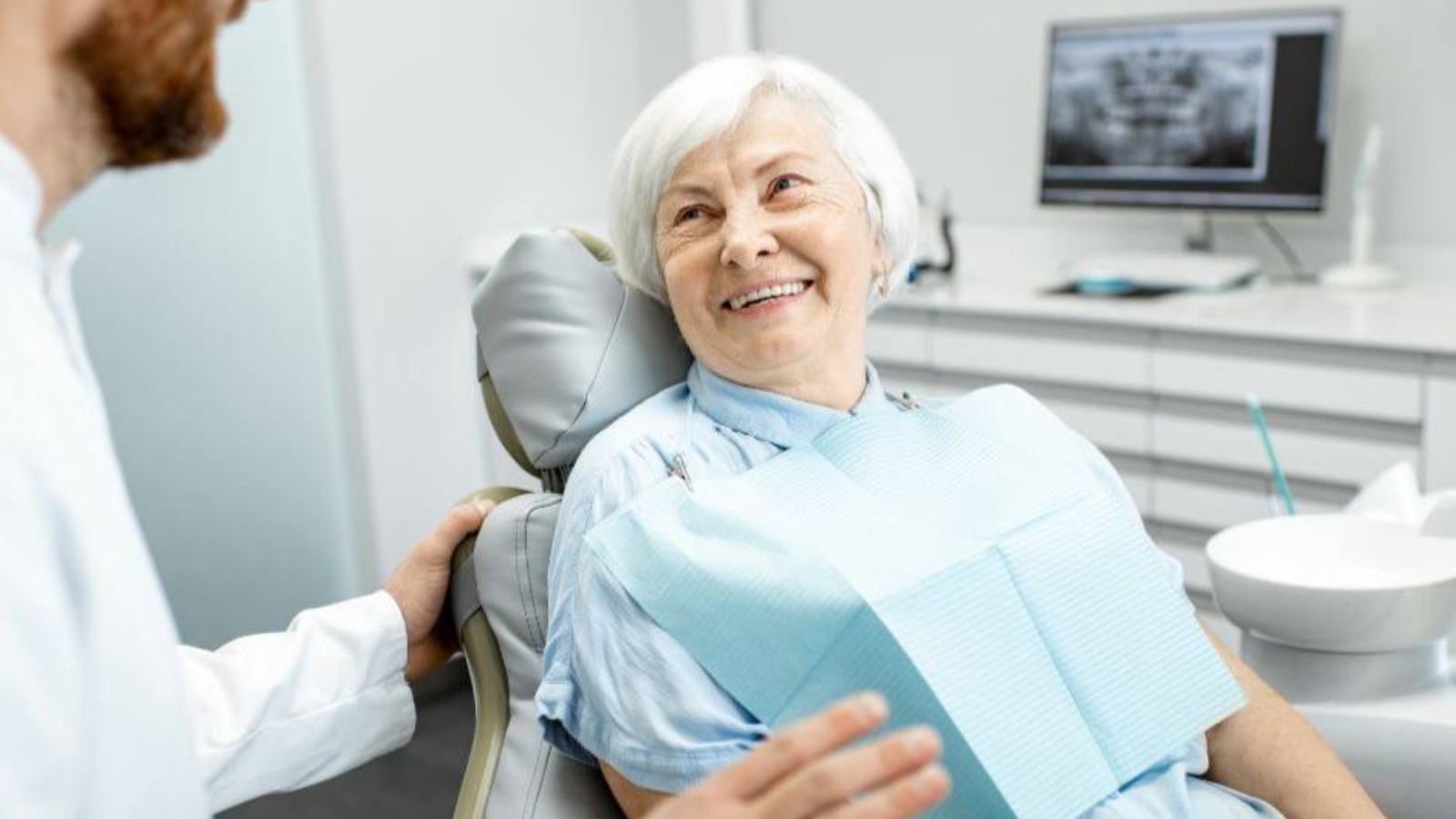
The age stated in a patient’s records does not necessarily indicate the actual condition of their dentofacial system. One patient may reach the age of forty with largely intact dental tissues, stable periodontal support, and preserved function, while another may already show extensive wear, numerous restorations, missing teeth, and a reduced vertical dimension by the age of thirty. Professor Alexander von Breuer notes that dental age should not be regarded as a separate diagnosis, but rather as the cumulative expression of changes affecting the teeth, gingiva, supporting bone, and occlusion throughout many years of function and treatment. At DentalClinic24, we evaluate this history through multiple clinical parameters, including the amount of preserved enamel and dentin, periodontal condition, restoration quality, occlusal contacts, missing teeth, and the ability of the entire system to withstand daily functional loading without progressive damage.
Chronological aging is naturally accompanied by certain changes, but not every form of dental deterioration should be attributed to age. Gradual darkening of enamel, changes in tissue translucency, and moderate physiological wear may develop over decades, whereas multiple carious lesions, deep cervical defects, pronounced erosion, or rapid loss of coronal tooth structure require identification of specific causes. Nutrition, acidic exposure, home hygiene, salivary function, bruxism, tooth position, and occlusal relationships can all influence the rate at which dental tissues change. We also consider the patient’s history of restorative and prosthetic treatment because repeated interventions alter the mechanical behavior of a tooth. The smaller the amount of natural tissue remaining after successive restorations, the more precisely future functional loads must be calculated.
At DentalClinic24, the pattern of dental wear is one of the important parameters considered when evaluating dental age. Moderate signs of physiological function on the enamel differ fundamentally from a situation in which posterior cusps have become flattened, incisal edges have shortened considerably, dentin is exposed, and the vertical relationship between the jaws has changed. Such patterns may result from a combination of mechanical wear and chemical acid exposure. When nocturnal clenching or grinding is also present, the intensity of functional stress increases further. We assess the distribution of wear facets, mandibular position, the condition of the masticatory muscles, existing restorations, and the temporomandibular joints. This analysis helps distinguish slow physiological adaptation from an active process that continues to damage dental tissues.
Periodontal tissues provide equally valuable information about a patient’s accumulated dental history. Two people of the same chronological age may have completely different levels of bone support. One may retain healthy tissues, physiological sulcus depths, and stable teeth, while another may present with gingival recession, periodontal pockets, bone loss, and progressive changes in tooth position. Age alone cannot explain this difference. The duration of inflammation, oral hygiene, smoking, systemic factors, frequency of professional monitoring, and timely periodontal treatment all influence the outcome. From a prognostic perspective, it is essential to determine not only how much tissue has already been lost but also whether the pathological process remains active. A stabilized periodontium following appropriate therapy has a fundamentally different clinical prognosis from supporting tissues undergoing continued destruction.
The amount of preserved natural dental tissue represents another important indicator. At DentalClinic24, we do not consider a tooth healthy simply because it is covered by an aesthetically successful crown or a large composite restoration. Long term prognosis depends on the amount and quality of dentin remaining beneath the restoration, root integrity, previous endodontic treatment, and the tooth’s ability to tolerate functional loading safely. A young patient may already have extensive artificial restorations because of early caries or previous trauma, while a considerably older patient may retain most teeth with minimal intervention. From the perspective of clinical biomechanics, these two patients possess very different levels of remaining dental resources regardless of their chronological age.
The condition of previous dental work also has a substantial influence on this assessment. A restoration that maintains a sealed margin, correct proximal contact, and appropriate anatomical form for many years does not affect the dentition in the same way as multiple fillings associated with secondary caries or defective interdental contacts. Similarly, a properly treated root canal without inflammatory changes differs fundamentally from a tooth with an asymptomatic chronic periapical lesion. During comprehensive diagnostics, we assess not simply how many dental procedures a patient has undergone but their biological quality and influence on future prognosis. This prevents the misleading assumption that every older restoration automatically requires replacement solely because of the time that has passed since it was placed.
Salivary function deserves separate attention because both the quantity and properties of saliva directly influence the protection of hard dental tissues and the oral mucosa. Reduced salivary flow may increase caries susceptibility, contribute to oral dryness, alter comfort during mastication, and make bacterial plaque more difficult to control. The underlying causes may be associated less with chronological age than with medications, systemic health, and lifestyle factors. When unexpectedly high caries activity is detected, we therefore assess not only oral hygiene and dietary habits but also the biological environment in which enamel interacts with food, acids, microorganisms, and saliva every day. This broader evaluation can explain why two patients with apparently similar hygiene routines experience very different rates of dental disease.
The concept of dental age becomes particularly relevant during complex rehabilitation. If a relatively young patient already presents with substantially reduced tooth height, multiple missing teeth, and functional overload of the remaining dentition, treatment cannot be approached as a series of isolated restorations. The clinician must determine mandibular position, evaluate the remaining biological and mechanical resources, and predict how forces will be redistributed after rehabilitation. Conversely, an older patient with stable occlusion, healthy periodontal tissues, and relatively few restorations may require a considerably more conservative strategy. Clinical decisions should therefore be determined by the actual condition and functional reserve of the dentofacial system rather than by the number of years a patient has lived.
At Dental Clinic24, this comprehensive assessment helps us choose more accurately between observation, prevention, restorative treatment, and extensive rehabilitation. We correlate the clinical examination with radiographic findings, digital diagnostics, soft tissue condition, and functional parameters. Our objective is not to assign the patient an artificial dental age expressed as a number, but to understand the rate at which changes have accumulated and identify which factors can still be controlled. When active inflammation is treated, excessive loading is corrected, oral hygiene is stabilized, and the maximum possible volume of natural tissue is preserved, the dentofacial system can remain functionally stable for decades. For us, mature dentistry is not about making teeth appear younger. It is about preserving their biological and functional resources for as long as clinically possible.
Previously, we wrote about acid balance in the oral cavity at DentalClinic24 and how nutrition influences enamel and the oral microbiome