
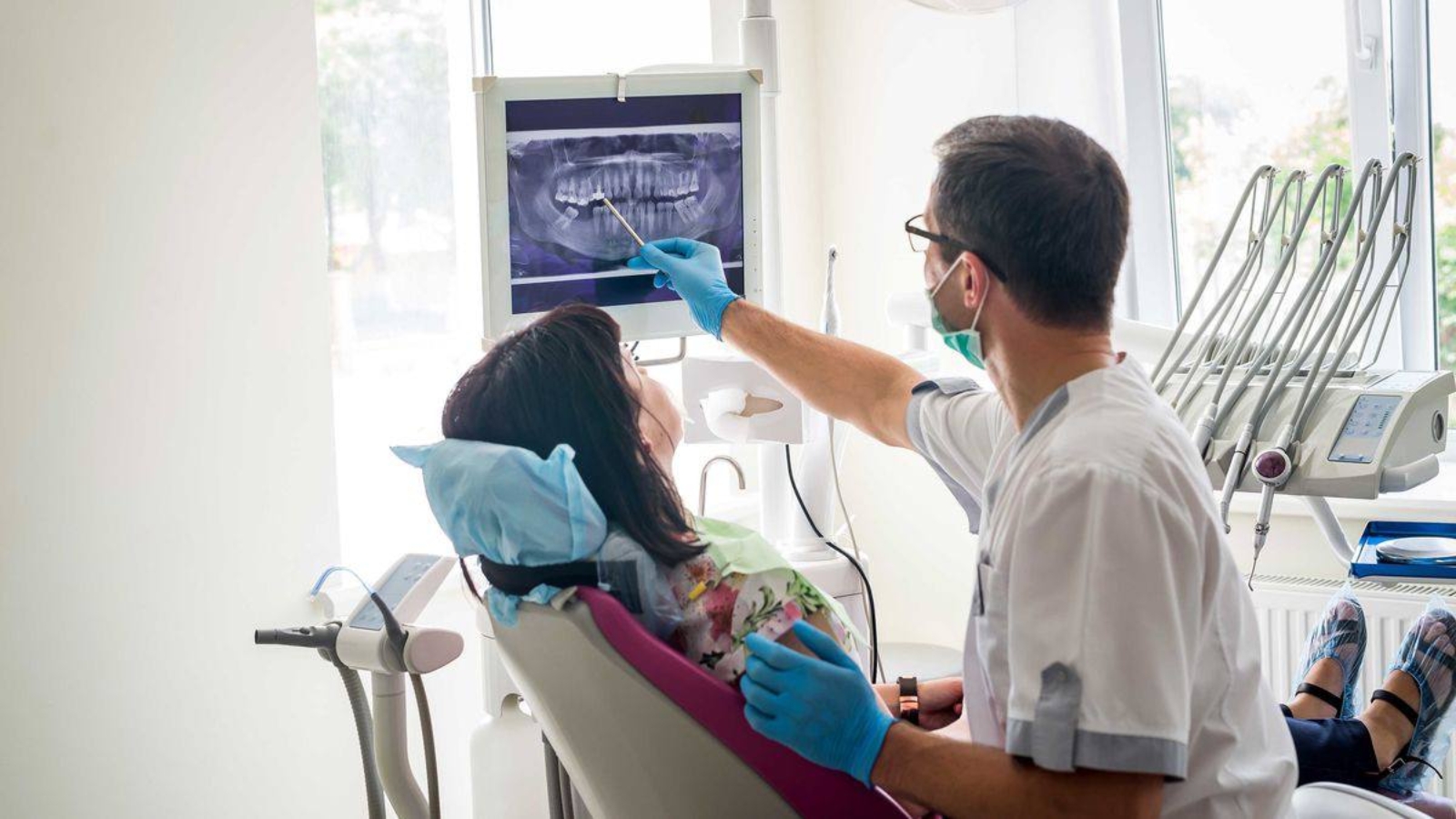
Modern dentistry is defined not by the number of procedures performed but by the quality of the clinical decisions made before treatment begins and throughout every stage of care. Professor Alexander Von Breuer notes that long term treatment success is established at the moment the diagnosis is made, the treatment strategy is selected, the biological condition of the tissues is assessed, and the future functional performance of the tooth is carefully evaluated. At DentalClinic24, we approach every case not as the correction of an isolated defect but as a structured sequence of clinical decisions that considers anatomy, biology, biomechanics, aesthetics, and each patient’s individual characteristics. Even a technically flawless restoration cannot provide lasting stability if the extent of tissue damage has been incorrectly assessed, occlusal factors have been overlooked, or restorative materials have been selected without considering the biological and functional demands placed upon the tooth.
The first fundamental decision concerns diagnosis. A patient’s symptoms rarely reveal the complete origin of the problem because pain, sensitivity, or discomfort during chewing may result from dental caries, microscopic fractures, pulpal inflammation, occlusal overload, disrupted proximal contacts, or diseases affecting the surrounding periodontal tissues. The clinician must integrate the findings of the clinical examination, radiographic evaluation, functional testing, periodontal assessment, and occlusal analysis into one coherent clinical picture. Cone beam computed tomography provides valuable three dimensional anatomical information, yet technology alone cannot replace professional clinical judgment. The true significance of radiographic findings depends not only on what appears on the scan but also on how those findings correlate with the patient’s symptoms, treatment history, and long term prognosis.
At DentalClinic24, particular attention is devoted to determining exactly how much dental tissue truly requires removal. The objective of caries treatment is not extensive preparation but the selective elimination of infected dentin while preserving healthy and potentially recoverable tooth structure. Excessive preparation weakens the tooth, reduces natural structural support, and increases the likelihood of future fractures. Conversely, inadequate removal of infected tissues may allow bacterial activity to continue beneath the restoration. The boundary between these approaches is determined by tissue quality, lesion depth, proximity to the dental pulp, and the ability to achieve durable marginal sealing. Every decision is based upon the actual biological condition of the tooth rather than standardized treatment formulas.
The next critical decision involves selecting the appropriate method of restoration. A small defect may be successfully restored with direct composite material, while extensive structural loss often requires a different restorative strategy capable of distributing occlusal forces more effectively. In such situations, clinicians evaluate whether ceramic inlays, onlays, or full coverage crowns represent the most predictable solution. The decision depends not only on cavity size but also on the thickness of remaining tooth walls, defect location, the presence of cracks, enamel quality, adjacent teeth, and occlusal loading patterns. Ceramic restorations frequently provide greater structural reinforcement for weakened cusps, whereas direct composite restorations allow maximum preservation of healthy tissues in more conservative situations. Choosing the correct treatment always requires balancing minimal invasiveness with long term mechanical reliability.
One of the most important clinical decisions concerns preservation of the dental pulp. When deep carious lesions are present, the clinician must determine whether pulpal vitality can realistically be maintained or whether irreversible inflammation has already developed and root canal treatment has become necessary. This represents one of the most delicate boundaries in restorative dentistry because premature removal of healthy pulp eliminates the tooth’s natural sensory and nutritional functions, while attempting to preserve irreversibly damaged tissue may ultimately result in pain, infection, and additional complications. At DentalClinic24, we evaluate symptoms, responses to thermal testing, lesion depth, microscopic tissue characteristics, and radiographic findings before making this decision. Clinical conclusions are always based on the combined interpretation of multiple diagnostic indicators rather than a single isolated finding.
Whenever root canal treatment becomes necessary, long term success depends heavily upon understanding the complex internal anatomy of the tooth. Root canals may be narrow, curved, branched, or partially calcified, and an untreated anatomical variation may become a persistent source of infection. Magnification through an operating microscope allows clinicians to identify additional canal entrances, monitor instrumentation, and preserve dentin within structurally vulnerable areas of the root. Equally important is deciding how extensively each canal should be prepared. Excessive enlargement may unnecessarily weaken the root, while insufficient preparation may compromise complete disinfection. High quality endodontic treatment is defined by precision rather than aggressive mechanical intervention.
At DentalClinic24, prosthetic treatment decisions extend far beyond the condition of an individual tooth. Every crown must restore anatomical form, occlusal contacts, and aesthetics while simultaneously integrating harmoniously into the overall function of the entire masticatory system. Excessive occlusal contact may create continuous overload, patient discomfort, ceramic fractures, and deterioration of periodontal support. Insufficient contact, on the other hand, reduces chewing efficiency and may contribute to undesirable tooth movement. During treatment planning, clinicians carefully evaluate mandibular movements, functional load distribution, muscular balance, and the interaction with adjacent restorations. Every prosthetic reconstruction is therefore considered as one component of a larger biological and functional system rather than an isolated restoration.
Another significant clinical decision involves determining whether a compromised tooth should be preserved or extracted. Preserving natural dentition remains the preferred objective whenever biological and functional conditions justify that approach. Nevertheless, vertical root fractures, extensive loss of periodontal support, root destruction beyond restorative possibilities, or repeated inflammatory episodes may severely limit long term prognosis. Conversely, teeth with considerable structural damage can sometimes be successfully maintained through advanced endodontic treatment, reinforcement, and appropriate prosthetic protection. The clinician must evaluate not only whether treatment can technically be performed but also its anticipated longevity, biological cost, and influence on future rehabilitation strategies.
Timing also represents an essential clinical decision. Not every procedure should be completed during a single appointment, even when doing so is technically possible. Biological tissues require sufficient time for healing, stabilization, and evaluation of their response to treatment. Following endodontic therapy, observation may be necessary before definitive prosthetic rehabilitation. After surgical procedures, clinicians must carefully assess soft tissue maturation and bone healing. During aesthetic rehabilitation, provisional restorations frequently allow both function and appearance to be evaluated before fabrication of definitive restorations. A staged treatment approach does not unnecessarily prolong therapy but instead provides greater control over every biological transition.
Digital technologies substantially improve the precision of clinical decision making without replacing professional judgment. Intraoral scanning, cone beam computed tomography, digital treatment planning, and guided surgical systems provide objective information, facilitate comparison of treatment options, and allow clinicians to recognize potential limitations before treatment begins. Nevertheless, the final treatment strategy depends upon accurate interpretation of that information, clinical experience, and the ability to integrate biological principles into every decision. We utilize digital technologies as instruments that strengthen clinical reasoning rather than substitutes for professional expertise. Their greatest value emerges when technology supports evidence based decision making while reducing the likelihood of avoidable clinical error.
At Dental Clinic24, we believe that excellent dentistry begins with asking the correct clinical questions rather than immediately pursuing predetermined answers. Should intervention be performed now, how much healthy tissue can realistically be preserved, will the tooth tolerate future occlusal forces, is cusp protection required, can pulpal vitality be maintained, is retreatment biologically justified, and how will today’s decision influence the patient’s oral health many years from now? The answers to these questions determine not only immediate clinical success but also the long term stability of every restoration. Professional dentistry is ultimately defined by the ability to select biologically justified treatment strategies, preserve natural tissues whenever possible, and prioritize predictable outcomes over unnecessarily extensive intervention.
Previously, we wrote about Filling or Inlay: A Comparative Analysis of Tooth Restoration Methods and Choosing the Optimal Treatment Strategy at DentalClinic24