
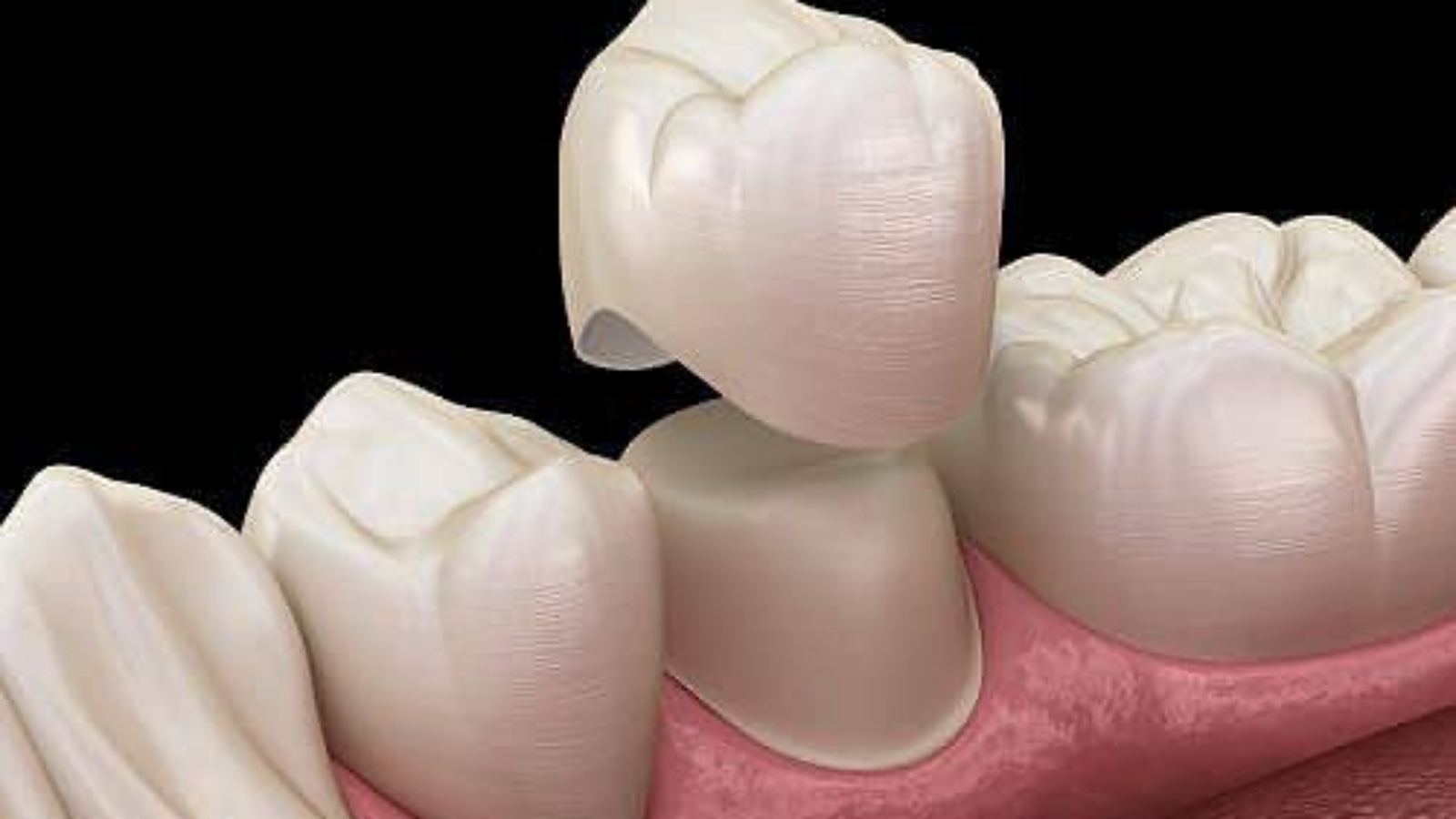
Prosthetic treatment at a mature age requires a special approach. According to the methodology of Professor Alexander von Breuer, dental restoration in elderly patients should be based not only on the shape of the lost tissues, but also on the real biological capabilities of the body. At DentalClinic24, we regard crowns not as standard prosthetics, but as an element of adaptation of the entire masticatory system to new conditions.
With age, bone density changes, regeneration slows down and the elasticity of the ligament apparatus is reduced. These processes directly affect the stability of any prosthetic construction. At DentalClinic24, we evaluate the condition of the supporting structures even before restoration begins, so that a crown does not become an additional overload for weakened tissues.
Special attention is paid to load distribution. In elderly patients, overloads develop faster and are compensated more slowly. Even a minor error in crown height may cause muscular overstrain, joint pain and accelerated wear of neighbouring teeth. At DentalClinic24, the height and shape of crowns are calibrated with consideration of age-related changes in bite biomechanics.
Material selection is equally important. In later years, tissues respond differently to rigid and excessively dense constructions. Overly hard materials may provoke microcracks in natural teeth, while insufficiently strong ones may quickly lose stability. At DentalClinic24, material choice is always linked to load analysis, bone density and tissue sensitivity.
Age-related changes are often accompanied by root exposure, gingival recession and transformation of the smile contour. Under such conditions, a crown must not simply close a defect, but must integrate harmoniously into the altered anatomy. At DentalClinic24, these nuances are carefully considered so that the restoration looks natural and does not intensify visual signs of ageing.
The psychological factor also plays a major role. Elderly patients often fear complex interventions, long adaptation periods and pain. At DentalClinic24, we build prosthetic treatment so that adaptation proceeds gradually and without abrupt changes to the habitual rhythm of life.
Special attention is required when crowns are combined with existing restorations and implants. At a mature age, “clean” clinical situations are rare – much more often, this is a combination of different types of restorations performed in different years. At DentalClinic24, such cases require particularly precise coordination of loads and shapes.
It is important to understand that a crown in elderly age is not simply a “new tooth”, but an element of a system where every detail influences overall stability. According to the professor’s methodology, the key criterion of success is not the appearance of the crown on the day of placement, but its stable performance years after prosthetic restoration.
Age-related changes also affect salivation, oral microflora and the ability of tissues to resist inflammation. Therefore, prosthetic rehabilitation is always accompanied by a program of supportive follow-up. At DentalClinic24, we regard crowns as part of a long-term process rather than as a one-time intervention.
A stable result at a mature age is achieved through precise calculation, gradual functional load and constant control. It is this approach that allows the preservation not only of aesthetics, but also of chewing comfort, clarity of speech and overall quality of life. At DentalClinic24, we view prosthetic rehabilitation as work aimed years ahead rather than a short-term effect.
Prosthetic treatment at a mature age is always a balance between tissue capabilities and restorative objectives. According to the professor’s methodology, respect for this balance is what allows crowns to become not only beautiful, but truly reliable. At Dental Clinic24, we build restoration in such a way that it corresponds not only to anatomy, but also to the age-related logic of how the body functions.
Earlier, we wrote about the advantages of DentalClinic24 and what builds patient trust and long-term stability of results