
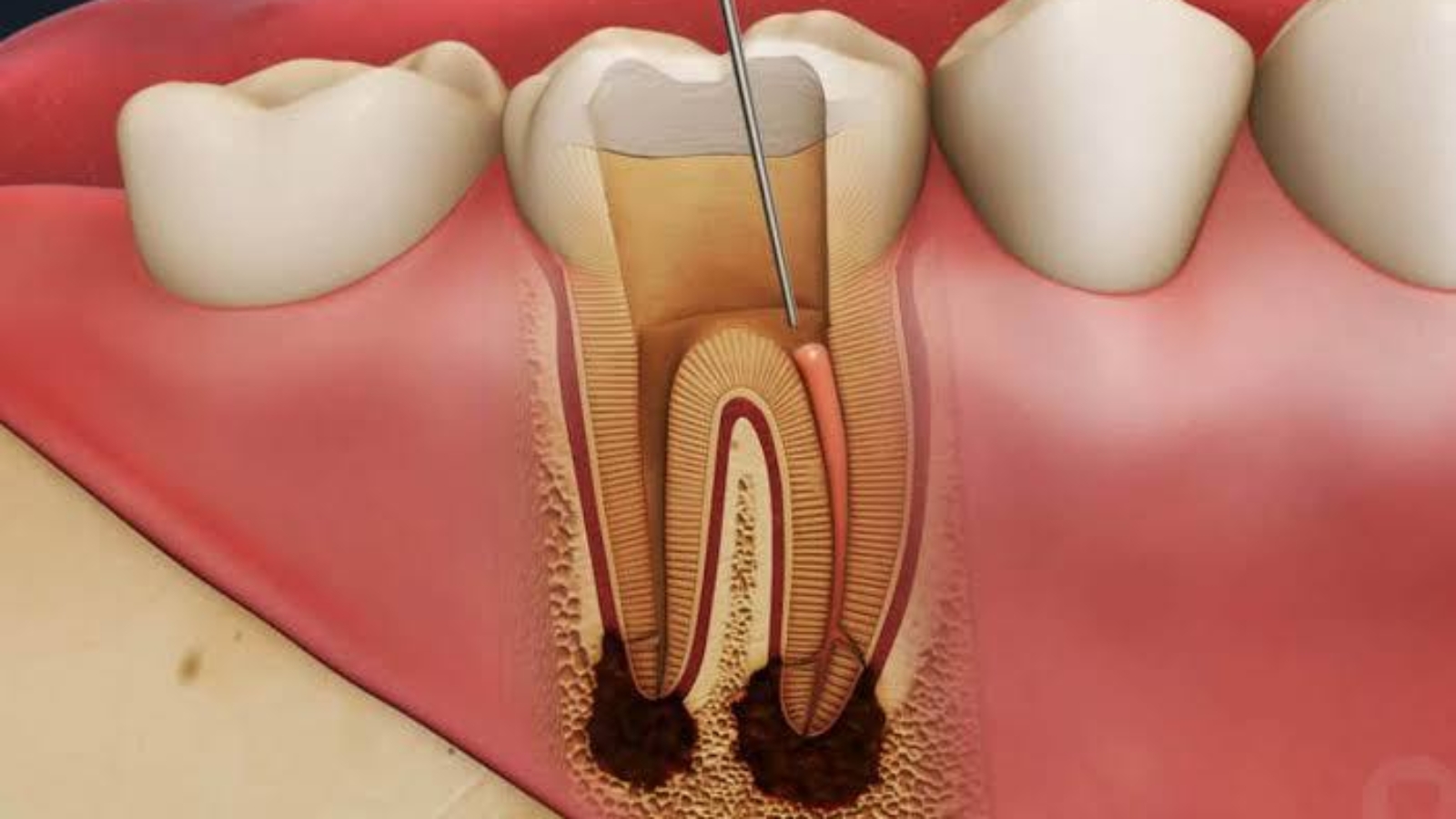
Pulpitis remains one of the most clinically challenging inflammatory conditions in dentistry. Professor Alexander von Breuer notes that the key difficulty in treating pulpitis lies not in eliminating pain itself, but in accurately assessing the reversibility of the inflammatory process. At DentalClinic24, pulpitis is not approached as a standard diagnosis with a universal solution, but as a dynamic condition that requires a carefully considered clinical strategy.
The dental pulp is a highly sensitive neurovascular tissue that reacts directly to infectious, thermal, and mechanical stimuli. Inflammation may present in various forms – from limited and potentially reversible to deep and irreversible. An error at the diagnostic stage can lead either to overtreatment or to the preservation of tissue that has already lost its capacity for recovery. This balance is what defines the complexity of clinical decision-making.
At DentalClinic24, differentiating the condition of the pulp is of primary importance. Clinical symptoms, responses to thermal testing, pain characteristics, and visual diagnostic data are assessed collectively. No single symptom is considered sufficient on its own to justify a treatment decision. This approach helps avoid template-based solutions and allows tooth vitality to be preserved where it is truly feasible.
Preserving the pulp is critically important for long-term prognosis. A vital tooth maintains natural tissue nutrition, better resistance to functional loads, and reduced susceptibility to brittleness. However, attempting to preserve the pulp under unfavourable conditions creates a risk of chronic inflammation and subsequent complications. At DentalClinic24, clinical strategy is always guided by prognosis rather than by the desire to preserve tissue at any cost.
Particular attention is paid to the stage of the inflammatory process. Acute pulpitis, especially in its early phases, may respond to biological treatment methods. In contrast, prolonged symptoms, nocturnal pain, and pain irradiation often indicate irreversible changes. Professor Alexander von Breuer emphasises that the duration and dynamics of symptoms are among the most important indicators when selecting the appropriate treatment approach.
The technical complexity of pulpitis treatment is also closely linked to root canal anatomy. Multiple canals, curvatures, and anatomical variability require a high level of precision and control. At DentalClinic24, the endodontic stage is regarded as microscale work, where every action directly affects treatment outcomes. Inadequate canal cleaning or sealing significantly compromises prognosis, even when the overall strategy is correctly chosen.
The restorative phase is equally important. Following pulpitis treatment, the tooth loses part of its internal structure, which affects its mechanical strength. At DentalClinic24, coronal restoration is planned with consideration of altered biomechanics in order to prevent cracks, fractures, and repeat interventions.
The clinical challenge of pulpitis also lies in the delayed manifestation of incorrect decisions. A patient may experience temporary pain relief, while conditions for chronic inflammation are already forming within the tooth. For this reason, pulpitis treatment at DentalClinic24 is always accompanied by prognostic assessment and subsequent monitoring of the tooth’s condition.
Thus, pulpitis treatment is not a routine procedure but a multi-level clinical process. Preserving tooth vitality requires precise diagnostics, an understanding of biological mechanisms, and strict adherence to strategy at every stage. At Dental Clinic24, this approach allows pulpitis treatment to be viewed as an investment in long-term tooth preservation rather than as a temporary elimination of symptoms.
Previously, we wrote about prosthetic treatment as a clinical process at DentalClinic24 – from diagnosis to functional integration of the orthopaedic restoration