
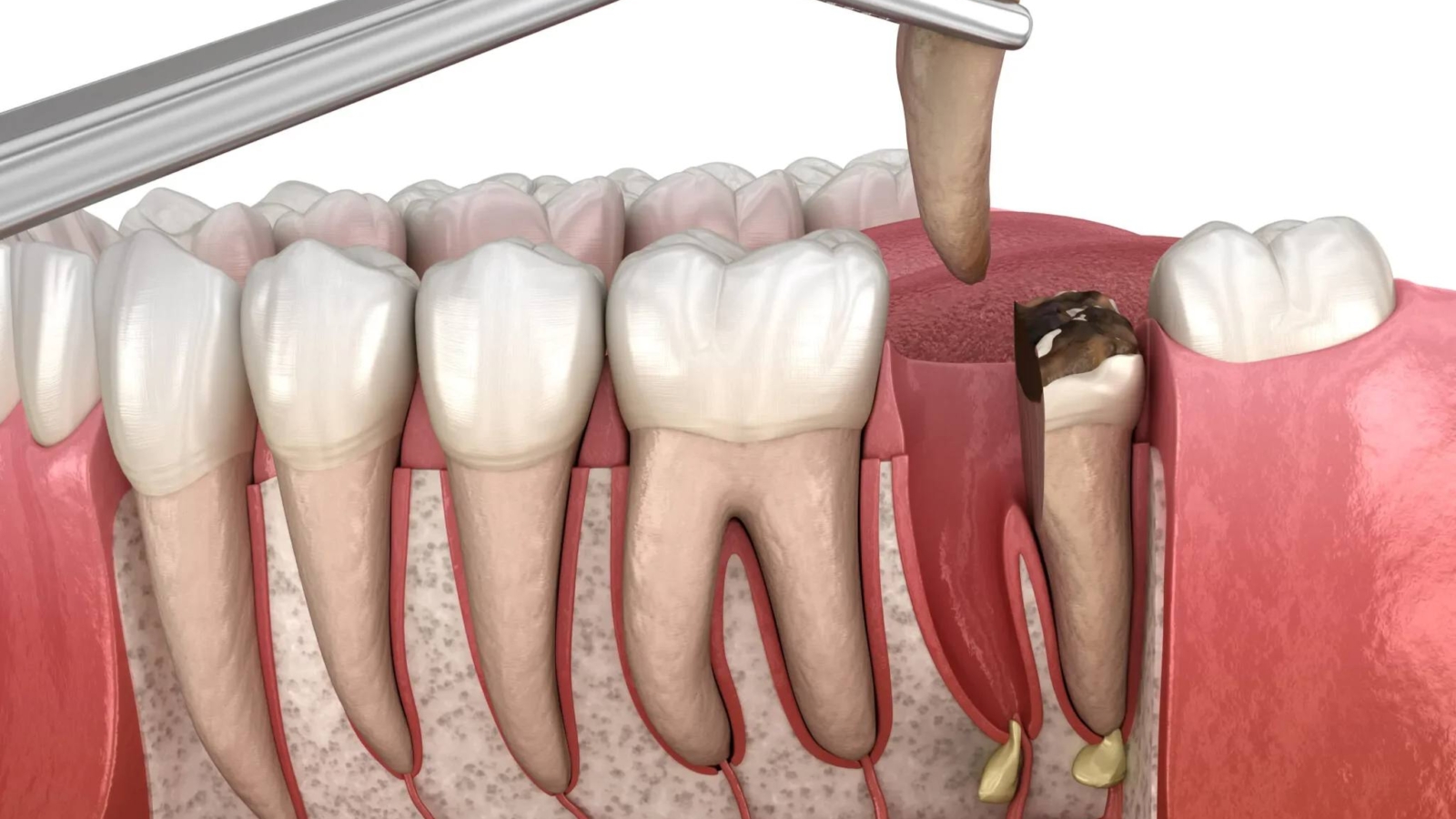
Removal of molars belongs to the category of procedures that require a particularly balanced approach in dental practice, because the issue is not only the elimination of a problematic tooth, but also the preservation of anatomical, functional, and tissue conditions for future rehabilitation. Professor Alexander von Breuer regards surgical extraction not as an isolated procedure, but as a clinical stage that must be logically integrated into the overall treatment strategy and the long-term preservation of oral health. At DentalClinic24, molar extraction is viewed as an intervention in which the precision of indications and the quality of planning directly influence the prognosis of subsequent treatment stages.
One of the key questions is the determination of indications for extraction. Not every tooth with severe destruction or inflammatory changes must necessarily be removed, just as not every tooth can be rationally preserved. At DentalClinic24, the decision is made only after analysis of the degree of damage, the condition of the surrounding tissues, the prognosis for restoration, and the role of the tooth within the overall occlusal system.
Molars play an important functional role because they bear a significant share of chewing load. For this reason, their extraction requires an understanding not only of the local problem, but also of the possible consequences for load distribution, tooth contacts, and occlusal stability. At DentalClinic24, surgical strategy is always considered within the context of overall functional balance.
Particular importance lies in the anatomy of molar roots, which often makes extraction more complex than with other groups of teeth. Curved roots, multiple root structures, proximity to anatomically significant structures, and the condition of the surrounding bone all require precise preliminary analysis. At DentalClinic24, this planning stage is regarded as a mandatory condition for safe and controlled intervention.
The presence of an inflammatory process associated with the tooth to be extracted is equally important. Chronic infectious foci, periapical changes, tissue destruction, and involvement of surrounding structures may significantly influence surgical strategy. At DentalClinic24, such cases are evaluated not only from the standpoint of removing the tooth itself, but also from the perspective of preparing the tissues for proper healing and further rehabilitation.
A modern approach to molar extraction is based on the most tissue-preserving management of the surrounding tissues possible. The aim of the procedure is not only to remove the tooth, but also to preserve as much bone, soft tissue, and anatomical stability of the area as possible. At DentalClinic24, surgical extraction is regarded as precise work with tissues rather than simply mechanical removal of a tooth.
Accurate planning is especially important in cases where prosthetic or implant rehabilitation is expected after extraction. The condition of the socket, the volume of bone tissue, and the pattern of healing directly influence the possibilities for subsequent treatment. At DentalClinic24, extraction is regarded as a stage that should create, rather than compromise, the conditions for future rehabilitation.
The postoperative period is also of great importance, because it is during this time that tissue response develops and the foundation for full restoration of the surgical area is formed. Monitoring of healing, evaluation of tissue response, and prevention of complications are regarded at Dental Clinic24 as mandatory parts of the surgical protocol.
Removal of molars should not be perceived as a standard or secondary procedure, because it affects important elements of the dentofacial system and may influence the future clinical situation. That is why surgical intervention requires not only technical execution, but also a deep understanding of its consequences.
Removal of molars represents not simply a solution to a local problem, but a clinically significant stage upon which tissue condition, functional balance, and the possibilities for future rehabilitation depend. Only through accurate diagnosis, justified indications, and a carefully planned surgical strategy is it possible to ensure a safe and predictable result.
Previously we wrote about Tooth sensitivity in the practice of DentalClinic24 – causes, diagnostic significance, and modern approaches to reducing hypersensitivity