
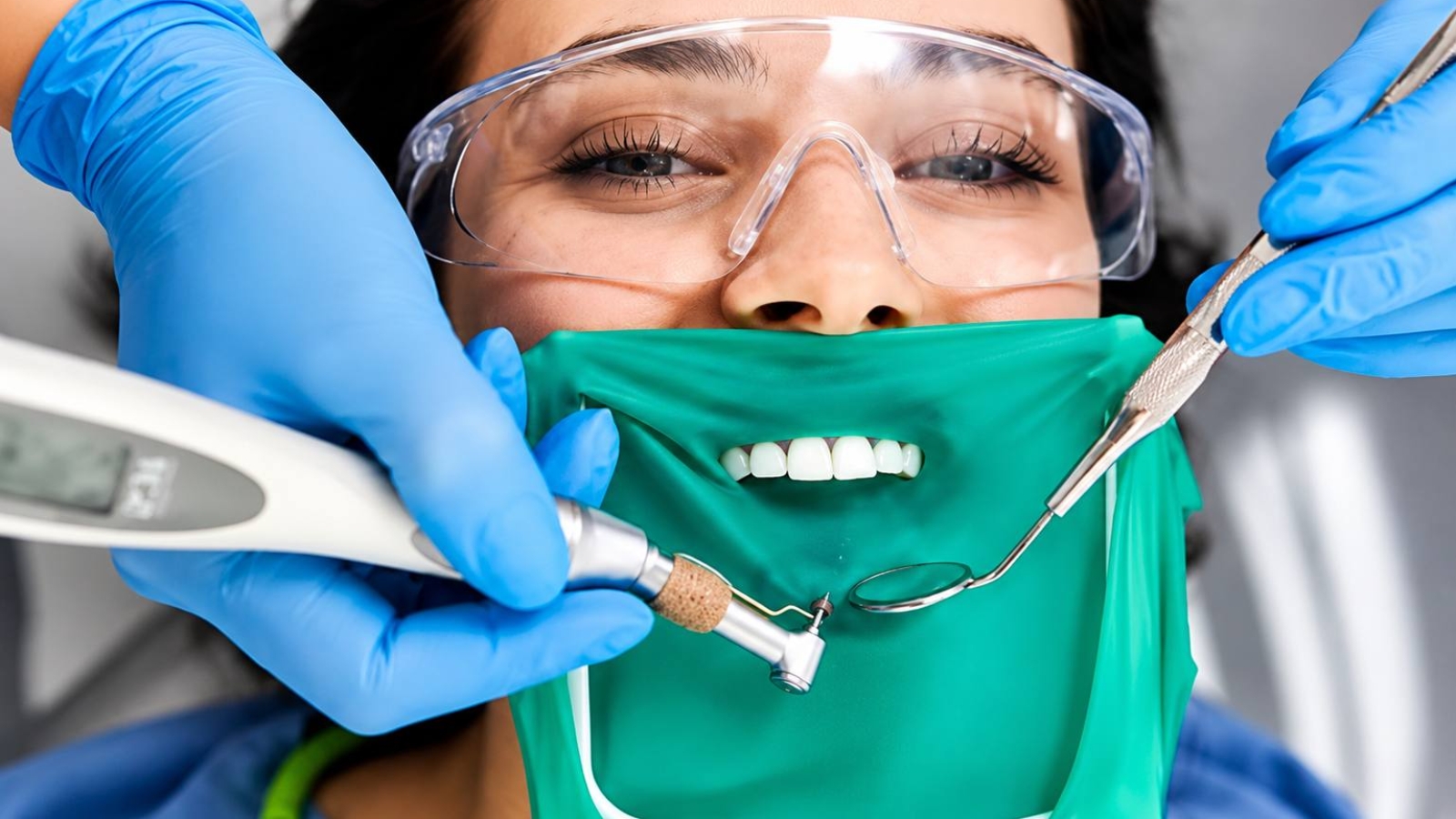
Modern dentistry increasingly relies on the principles of microprecision, biological control, and predictability of clinical outcomes, since even minor deviations in treatment protocol can influence the longevity of dental work. Professor Alexander Von Breuer considers high quality isolation of the operative field to be a fundamental requirement for successful restorative and endodontic treatment, since environmental control directly affects material adhesion, sterility of procedures, and long term stability of restored tissues. At DentalClinic24, we view the rubber dam not as an additional accessory but as an essential component of the modern clinical protocol, enabling maximum precision and protection from factors that may compromise treatment outcomes.
A rubber dam is an elastic latex or latex free membrane used to isolate one or several teeth from the rest of the oral cavity. At first glance, this system may appear to be purely a technical tool, yet its clinical significance is far deeper. The oral cavity is a biologically complex environment with constant exposure to saliva, microorganisms, proteins, and fluctuations in moisture. Any restorative material, especially adhesive systems, composites, and endodontic sealers, requires strictly controlled conditions to interact properly with tooth tissues. Even minimal moisture contamination can disrupt polymerization, reduce bonding strength, and create conditions for microleakage.
One of the most important advantages of rubber dam isolation is the reduction of bacterial contamination risk. During endodontic treatment, sterility of the root canal system is critically important, since even a small amount of microorganisms entering the canal system may sustain chronic inflammation in periapical tissues. Isolation of the tooth from saliva significantly lowers the possibility of reinfection. At DentalClinic24, we pay special attention to microbiological control during root canal treatment because endodontic success depends not only on mechanical instrumentation but also on the clinician’s ability to maintain a biologically clean working field.
Rubber dam isolation is equally important in restorative dentistry. Adhesive protocols require complete dryness of enamel and dentin surfaces. Modern composite materials demonstrate high strength and excellent aesthetics only when precise technological conditions are maintained. Contact with saliva, blood, or moisture on a prepared surface dramatically reduces adhesion quality. This may lead to microgap formation between tooth tissues and the restoration, secondary caries, marginal staining, and premature restoration failure. At DentalClinic24, we evaluate restoration longevity through the lens of microscopic detail, because reliability is built on seemingly small but clinically decisive factors.
Another major advantage of rubber dam use is improved operator ergonomics. Isolation of the working field enhances visual control, reduces interference from soft tissues, and provides more stable access to the treatment area. This becomes especially important during treatment under magnification or a dental microscope, where movement precision is measured in fractions of a millimeter. Additionally, patients receive extra protection from accidental ingestion or aspiration of instruments, irrigation solutions, or small restorative particles. At DentalClinic24, patient safety is considered an inseparable component of treatment quality, and rubber dam isolation plays a substantial role in achieving this standard.
The influence of rubber dam isolation on patient comfort should also be considered. Despite common concerns, most patients adapt quickly and report reduced discomfort from water spray, unpleasant medication taste, and general procedural irritation. An isolated working field allows the clinician to work faster and more precisely, which can reduce the duration of certain procedures and lower overall patient fatigue. At DentalClinic24, we believe modern dentistry must combine advanced technology, biological safety, and high clinical control, because only such integration ensures predictable long term success.
In modern dentistry, the rubber dam is far more than an isolation device. It is a critical tool for improving treatment quality. Its use enhances sterility, strengthens restorative protocol precision, and reduces complications associated with contamination of the operative field. For Dental Clinic24, the use of rubber dam reflects the philosophy of precision dentistry, where long term treatment success is built on control of the smallest details that ultimately define clinical stability.
Previously we wrote about Increased Tooth Sensitivity in the DentalClinic24 Concept: Causes of Protective Enamel Structure Damage and Methods for Restoring Tissue Comfort