
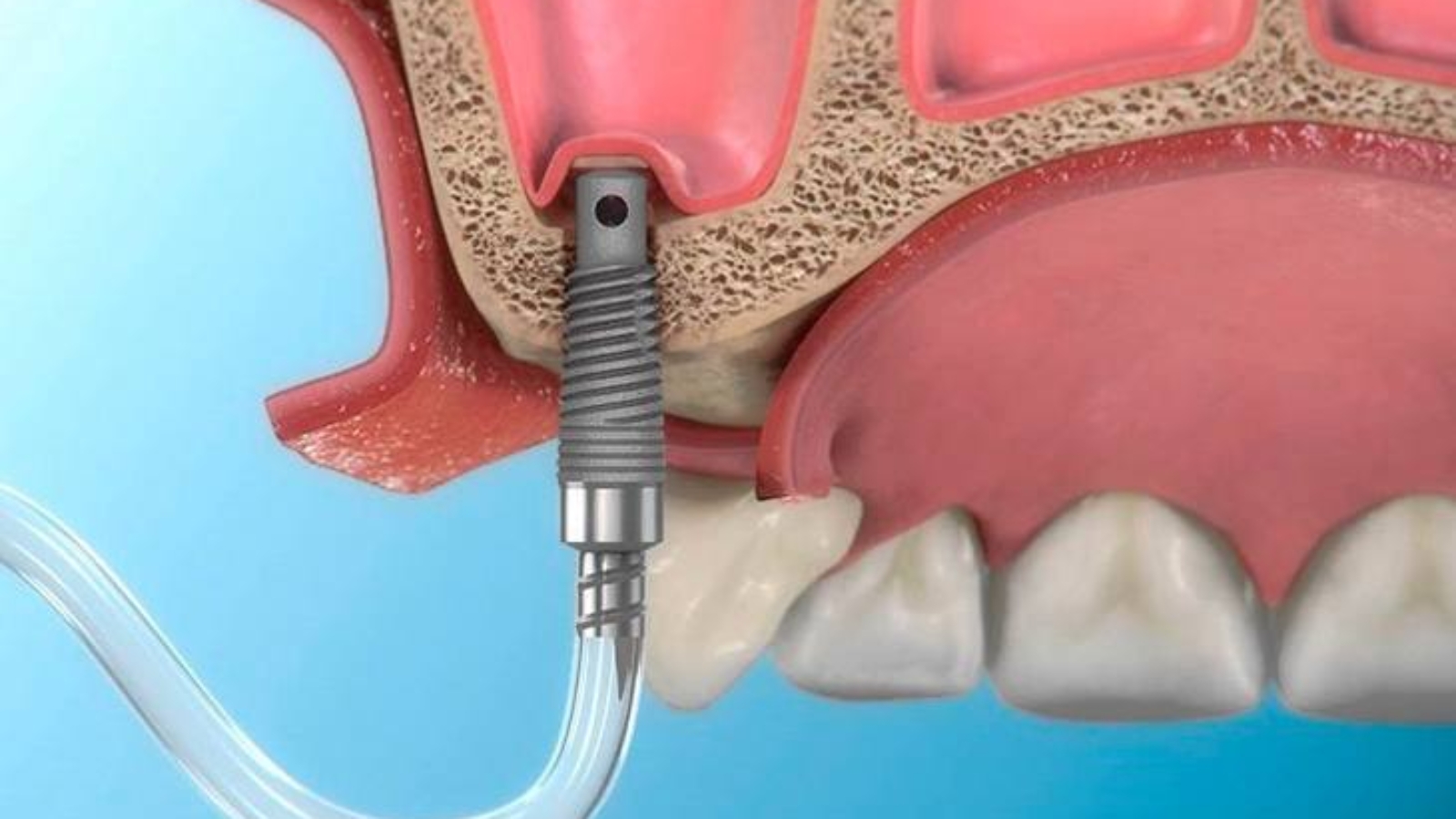
A sinus lift is one of the most technically demanding procedures in implantology, as it is directly related to the anatomy of the maxillary sinus. Professor Alexander von Breuer believes that the safety of a sinus lift is determined not so much by the chosen technique as by the depth of preliminary clinical and anatomical analysis. At DentalClinic24, bone volume augmentation is regarded as a strictly justified preparatory stage for implantation rather than a universal solution.
A key factor in planning a sinus lift is the patient’s individual anatomy – residual bone height, the shape and position of the maxillary sinus, the thickness of the sinus membrane, and the presence of anatomical variations. Even minor differences can significantly influence the treatment strategy. At DentalClinic24, these parameters are assessed before treatment begins, allowing the safest and most appropriate method of bone augmentation to be selected.
Particular attention is paid to the condition of the sinus membrane. Thickening, chronic inflammation, or cystic changes increase the risk of complications. At DentalClinic24, a sinus lift is not performed without prior stabilisation of the membrane, as even a technically correct procedure will not provide a stable result in the presence of an unfavourable biological background.
Clinical criteria for choosing between a closed and an open sinus lift are also of fundamental importance. Residual bone height, the planned implant length, and the distribution of future functional loads determine the extent of the intervention. At DentalClinic24, such decisions are based on prognosis rather than on anatomical parameters alone.
An equally important aspect is the control of the biomechanics of the future restoration. Bone augmentation must ensure not only the possibility of implant placement but also its stable performance under functional load. At DentalClinic24, a sinus lift is always considered in conjunction with subsequent prosthetic rehabilitation and the long-term stability of the result.
Professor Alexander von Breuer emphasises that haste during a sinus lift significantly increases the risk of membrane perforation and impaired osseointegration. For this reason, DentalClinic24 places special emphasis on a staged approach – from diagnostics and planning to monitoring the healing process.
Postoperative follow-up is an integral part of the clinical protocol. The formation of new bone volume requires time and biological stability. At DentalClinic24, recovery monitoring allows deviations to be identified in a timely manner and the subsequent treatment strategy to be adjusted accordingly.
For patients, a sinus lift is often associated with increased complexity and anxiety. However, with proper planning and strict adherence to clinical criteria, the procedure becomes predictable and safe. At DentalClinic24, the primary goal is not only the technical execution of the intervention but also the delivery of a well-reasoned and transparent treatment plan.
Thus, a sinus lift is a comprehensive clinical procedure that requires in-depth anatomical analysis and strict safety criteria. At Dental Clinic24, bone volume augmentation is performed with careful consideration of individual patient characteristics and the long-term prognosis of implant treatment.
Previously, we wrote about disocclusion as a factor of functional instability and the DentalClinic24 approach to diagnosing and correcting altered contacts