
Modern dentistry is impossible without absolute control of infection safety, since every clinical contact involves working in an environment containing biological fluids, aerosol particles, and potentially pathogenic microorganisms. Even the most technologically advanced treatment loses its clinical value if aseptic and sterility protocols are compromised. Professor Alexander Von Breuer sees this as the fundamental basis of high quality dental care, because patient safety begins long before the first clinical intervention. At DentalClinic24, sterilization and disinfection are viewed not as auxiliary technical procedures but as a strategic part of the clinical system that directly influences treatment prognosis and patient trust.
Infection control in dentistry is a multistage process aimed at the complete elimination of microorganisms from surfaces, instruments, and equipment. The specific nature of dental practice lies in the high intensity of contact between instruments and mucosal tissues, blood, dentin, bone tissue, and root canal contents. This means that even microscopic remnants of organic contamination can become a source of bacterial, viral, or fungal transmission. Modern instrument processing standards are built on a strict sequence of stages, where failure at even one point reduces the effectiveness of the entire safety system.
The first stage is preliminary disinfection immediately after completion of the clinical procedure. Its purpose is to reduce microbial load to a safe level before mechanical cleaning begins. At this stage, specialized solutions with proven effectiveness against a broad spectrum of pathogens, including highly resistant microorganisms, are used. It is important to understand that disinfection does not replace sterilization. It only prepares the instrument for deeper processing and minimizes risks to medical personnel during further handling.
Following disinfection, the mechanical cleaning stage begins. This is where blood residues, biofilm, protein structures, fragments of restorative materials, and other microparticles are removed, as these contaminants may interfere with sterilization. Ultrasonic cleaning is considered one of the most effective methods because high frequency vibrations make it possible to clean even the most difficult to access areas of complex dental instruments. At DentalClinic24, special attention is given to the quality of pre sterilization cleaning, since the presence of organic residues can significantly reduce the effectiveness of even the most advanced sterilization systems.
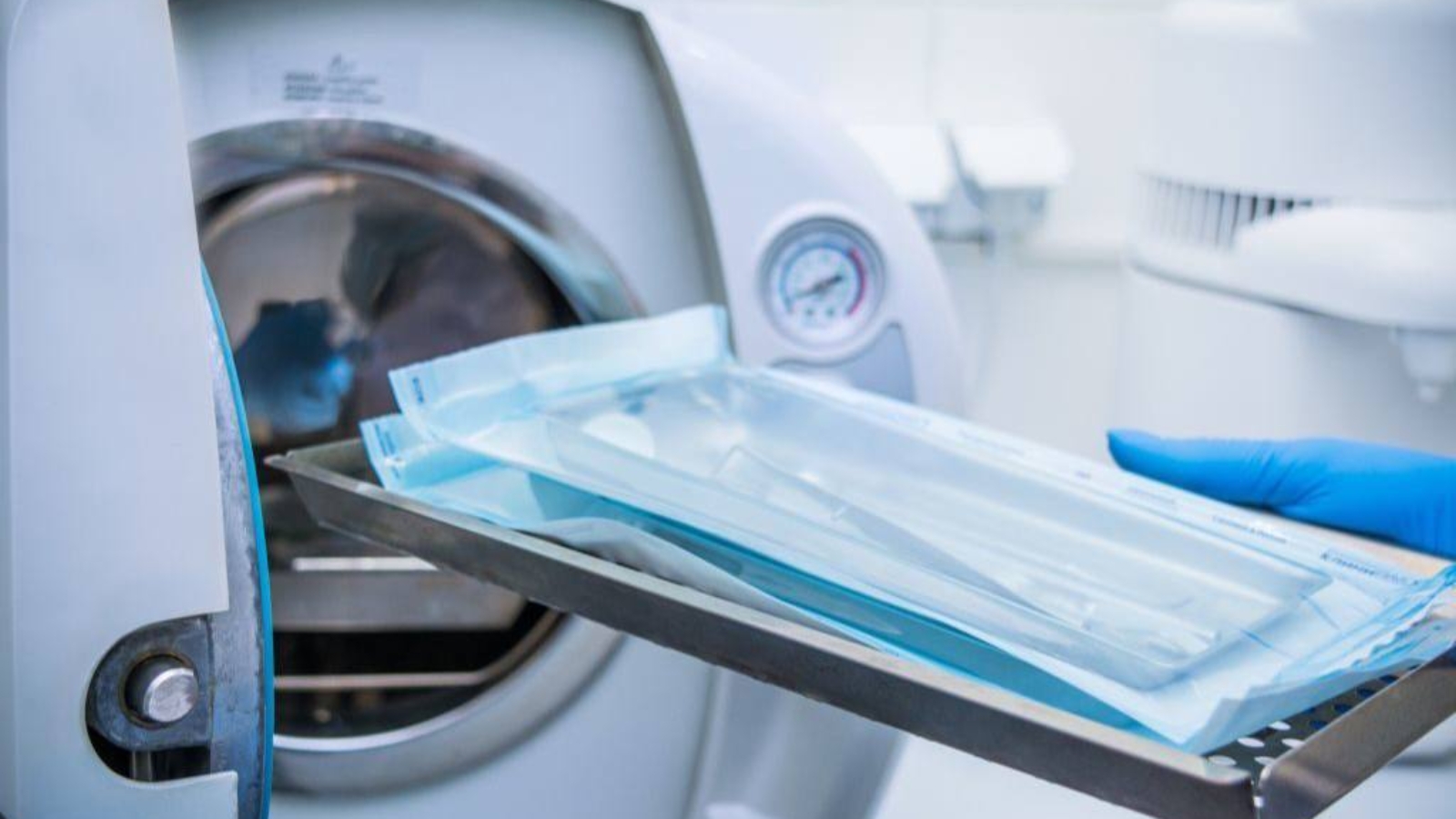
The next stage includes drying, inspection of instrument integrity, and packaging into sterilization pouches. Hermetic packaging plays a critically important role because it preserves sterility after the sterilization cycle is complete until the moment the instrument is used. Each pouch must provide a reliable barrier from the external environment and contain control indicators confirming successful completion of the sterilization cycle. This approach helps eliminate human error and increases the reliability of infection control.
The key stage remains sterilization, the purpose of which is the complete destruction of all forms of microorganisms, including bacterial spores. The most reliable method in modern dentistry is steam sterilization in an autoclave. High temperature, pressure, and precisely controlled processing time ensure deep penetration of the sterilizing agent even into complex multicomponent instruments. At DentalClinic24, the parameters of every sterilization cycle undergo continuous monitoring, because the stability of these indicators determines the actual safety of subsequent treatment.
Infection safety includes not only instrument processing but also control of all surfaces within the clinical environment. Dental units, lamps, equipment handles, suction systems, and working surfaces undergo mandatory disinfection between patient appointments. Particular attention is given to aerosol contamination generated during the use of turbines, ultrasonic scalers, and surgical handpieces. Fine particles can spread throughout the treatment room, which requires strict adherence to air purification and surface decontamination protocols.
Modern sterility standards are based not only on advanced equipment but also on the discipline of the clinical team. Even a perfectly equipped sterilization center cannot guarantee safety without strict adherence to processing protocols. At DentalClinic24, infection control is regarded as a continuous system in which every detail matters, from the moment an instrument contacts patient tissues to its repeated clinical use.
Today, sterilization and disinfection are no longer simply sanitary requirements but essential indicators of the quality of a dental clinic. For Dental Clinic24, a high standard of infection safety means creating an environment in which every patient is protected at every stage of treatment. It is the combination of technological precision, strict protocols, and clinical responsibility that defines the modern standard of safe dental care.
Previously we wrote about When Is Replacement of an Old Filling Required Clinical Criteria for Loss of Seal Integrity and the Risk of Hidden Tooth Destruction