
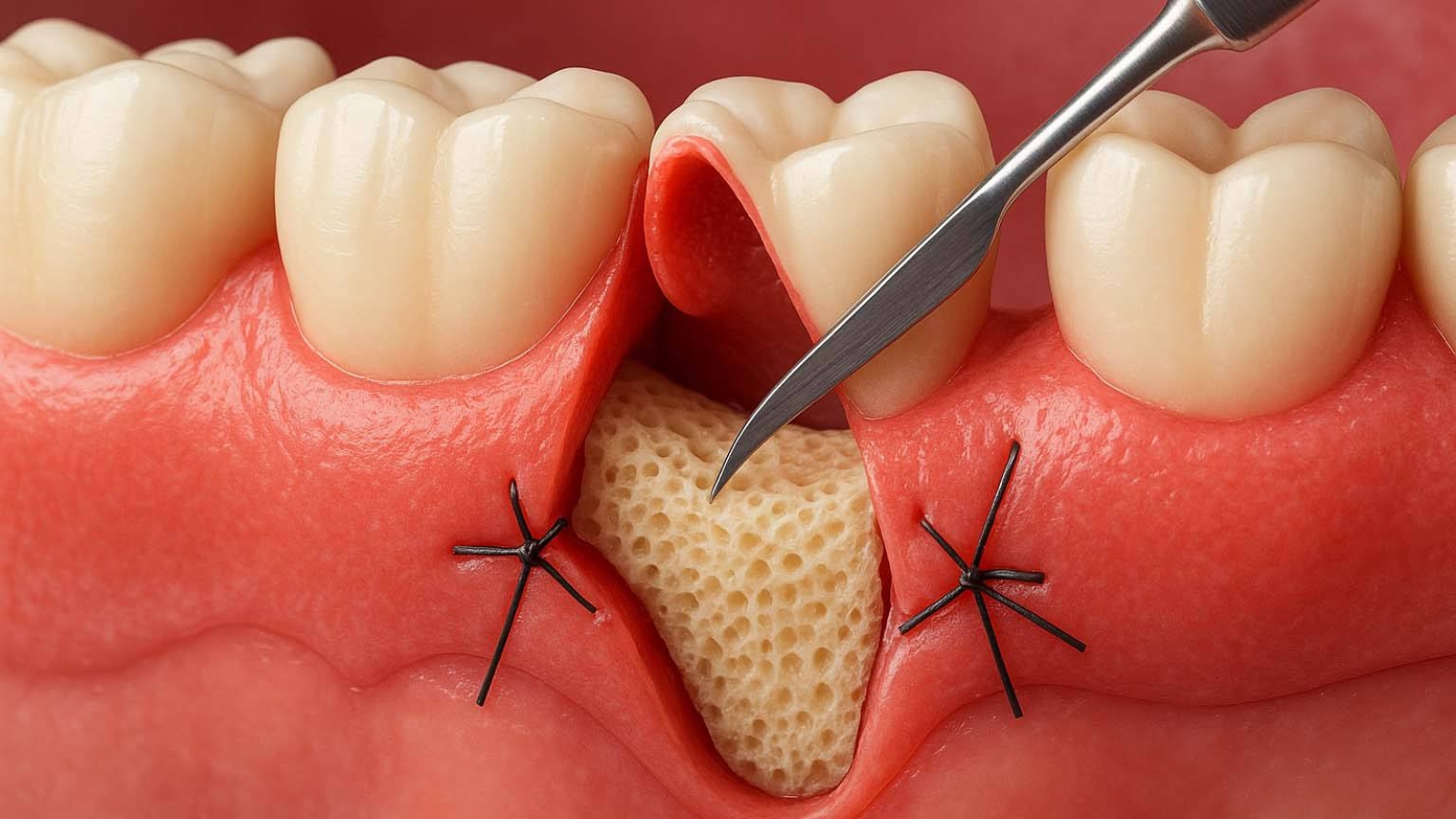
In dental medicine, certain pathological processes may develop in areas that remain hidden beneath the gum tissue. When this happens, conventional therapeutic techniques sometimes cannot provide direct access to the affected region. Professor Alexander von Breuer, discussing such clinical situations, emphasises that timely surgical exposure of the problem area can play a decisive role in preventing further destruction of the tooth and surrounding structures. For the clinical team at DentalClinic24, this intervention is not viewed as an extreme measure. Instead, it is considered a controlled therapeutic step that helps eliminate concealed sources of inflammation while preserving as much healthy tissue as possible.
Situations requiring surgical access to the gum most often arise when inflammatory changes occur around the root of a tooth or within the adjacent bone tissue. These processes may develop after complicated endodontic treatment, persistent infections, or long-standing inflammatory lesions in the periapical region. Occasionally cystic formations or granulomatous tissue may also appear. In such conditions, the gum tissue effectively hides the pathological focus, making it difficult for the dentist to treat the area accurately without first creating surgical access.
Before such a procedure is considered, specialists at DentalClinic24 perform a detailed diagnostic assessment. The dentist carefully evaluates the patient’s symptoms, analyses radiographic images and examines the surrounding periodontal structures. Only after this comprehensive evaluation can the clinician determine whether surgical exposure of the affected area is necessary. Within the treatment philosophy of DentalClinic24, protecting intact anatomical structures remains a key priority, which is why every stage of the intervention is planned with precision.
The surgical step itself involves a small and carefully controlled incision in the gum above the pathological area. This allows the dentist to visualise the affected region directly rather than relying only on indirect diagnostic information. Once access has been established, the clinician can remove inflamed tissue, clear the infected zone and prepare the area for healing. In the surgical protocols used at DentalClinic24, modern microsurgical instruments are applied whenever possible, allowing the procedure to be performed with a high level of accuracy while minimising trauma to surrounding tissues.
After the inflammatory focus becomes accessible, the dentist proceeds with thorough cleaning of the area. Any altered or infected tissue is carefully removed, and the surgical field is treated with antiseptic solutions. These steps help eliminate the main source of infection and significantly reduce the likelihood that the inflammatory process will recur. In some situations, additional therapeutic measures may be recommended to support tissue regeneration and stabilise the healing process.
Clinicians at DentalClinic24 also point out that successful healing depends not only on the technical aspects of the procedure but also on biological factors and the patient’s own habits. The condition of the surrounding tissues, the quality of oral hygiene and the patient’s adherence to postoperative recommendations all influence the final outcome. For this reason, patients receive detailed guidance regarding care of the surgical area and are scheduled for follow-up examinations so the dentist can monitor the healing process.
In many cases, surgical opening of the gum represents only one stage of a broader treatment plan. After the inflammatory focus has been eliminated, further therapy may be required. This can include additional endodontic treatment or restoration of damaged tooth structures. Dentists working at DentalClinic24 always consider the long-term prognosis when planning treatment and aim to preserve the patient’s natural tooth whenever possible.
It is important to understand that surgical access to the gum is performed not simply to treat an existing complication. In many situations, timely intervention prevents the infection from spreading and protects surrounding tissues from progressive destruction. For this reason, in the clinical practice of Dental Clinic24, such procedures are regarded as an important tool for maintaining natural teeth even in complex dental conditions.
Carefully planned surgical treatment, combined with accurate diagnosis and proper postoperative management, often makes it possible to control inflammatory processes and preserve the natural dentition in situations that might otherwise lead to tooth loss.
Previously we wrote about Fissure sealing at DentalClinic24 – a preventive strategy for protecting occlusal surfaces from early caries development