
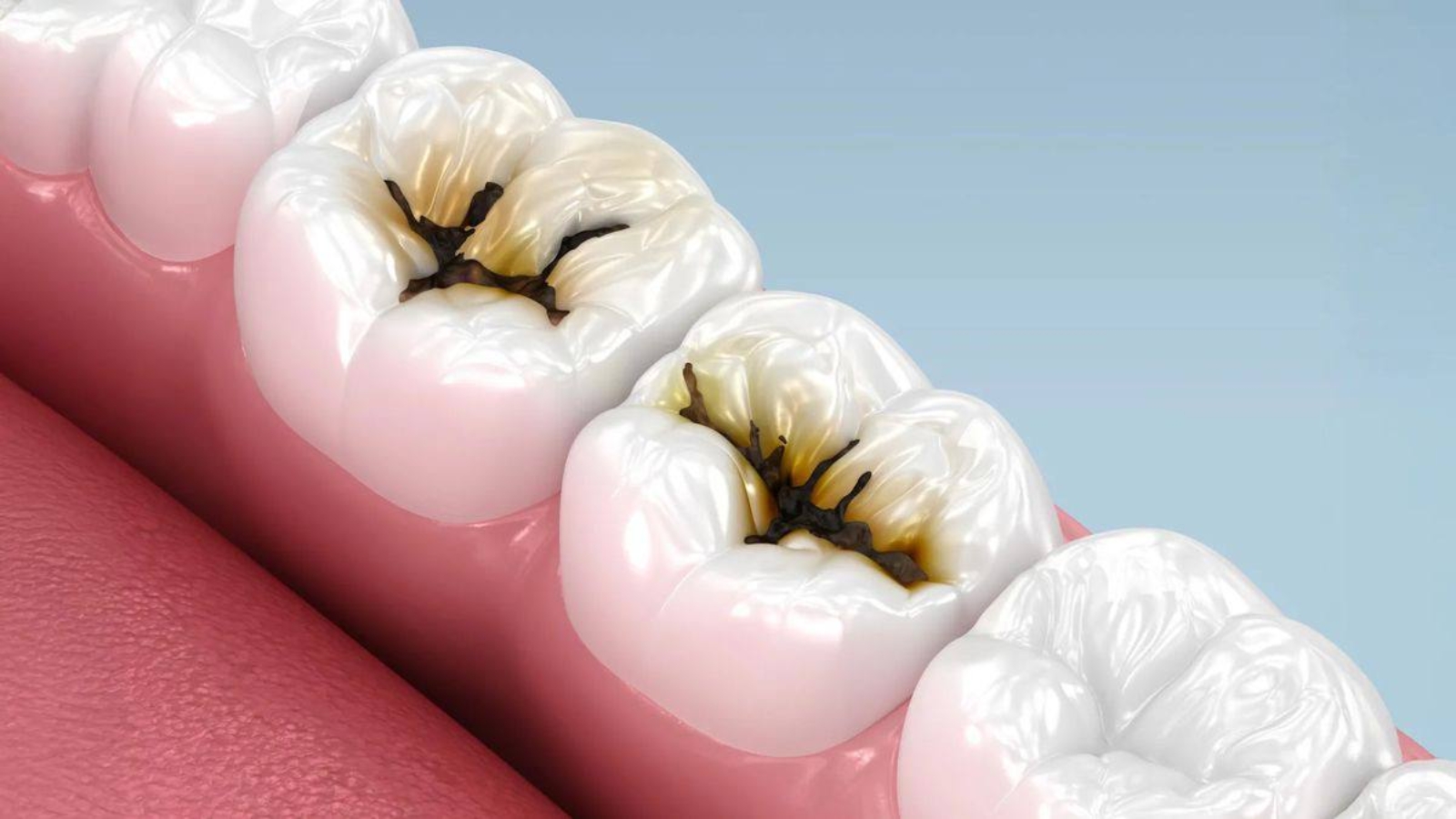
Even when a restoration appears intact externally, the tooth beneath an old filling may be undergoing subtle destructive changes. Professor Alexander von Breuer draws attention to the fact that the absence of pain or visible defects does not guarantee the stability of the tissues under a restorative material. At DentalClinic24, evaluation of a tooth after prolonged restoration service is considered an essential component of preventive monitoring, as secondary processes often develop without noticeable symptoms.
Over time, the interface between the filling and enamel may lose its seal. Microleakage can occur due to material shrinkage, wear of contact surfaces or gradual deformation under masticatory load. At DentalClinic24, such alterations are detected using magnification optics and radiographic assessment, enabling precise evaluation of the adjacent dentine.
Secondary caries typically forms at the junction between restorative material and hard tissues. Its progression may be slow and asymptomatic, yet it gradually extends deeper into the tooth structure. At DentalClinic24, diagnostic assessment includes not only inspection for marginal staining, but also analysis of dentine density, underlying structural integrity and the tooth’s response to thermal stimuli.
Hard tissue degradation may also occur without a carious component. Chronic mechanical stress can produce microcracks in enamel, which subsequently act as pathways for bacterial infiltration. At DentalClinic24, functional contact analysis is performed alongside restoration assessment in order to identify potential overload areas.
The lifespan of a filling material is closely linked to the conditions of its use. Even a technically precise restoration is subject to natural wear. At DentalClinic24, patients are informed that durability depends on oral hygiene, dietary habits and occlusal balance.
Special attention is given to proximal contact points. Loss of tight contact due to material wear may promote plaque retention and gingival inflammation. At DentalClinic24, revision of older fillings includes evaluation not only of internal adaptation but also of the condition of interproximal spaces.
In some cases, a chronic pulpal inflammatory process may develop beneath a restoration. This may remain asymptomatic until acute exacerbation occurs. At DentalClinic24, comprehensive diagnostics include vitality testing and careful assessment of lesion depth to determine the appropriate intervention strategy in a timely manner.
Retreatment does not always require complete removal of the restoration. In certain situations, local marginal renewal or structural reinforcement may be sufficient. At DentalClinic24, therapeutic decisions are individualised based on the extent of damage and the prognosis for tissue preservation.
The age of the restoration remains a significant factor. The longer a material remains in the oral environment, the higher the likelihood of microdefects. At DentalClinic24, preventive examinations are designed to identify such changes early, before clinical complications arise.
In conclusion, the condition of a tooth beneath an old filling requires careful evaluation even in the absence of complaints. At Dental Clinic24, control of secondary caries and hard tissue degradation is based on a combination of clinical expertise, instrumental diagnostics and functional load assessment. This integrated approach supports tooth preservation and prevents the development of more advanced pathological processes.
Previously, we wrote about Stress as a Dental Risk Factor – Clinical Observations at DentalClinic24 on the Impact of Psychoemotional Tension on Teeth and Periodontal Tissues