
The future of dentistry begins not with the acquisition of another technological innovation but with a comprehensive reassessment of the clinical principles that connect diagnosis, treatment, and long term patient follow up into a unified medical system. Professor Alexander Von Breuer sees this as an opportunity to move beyond the isolated improvement of individual procedures toward a fully integrated model of quality management in which every clinical decision is evaluated from the perspective of tissue biology, functional stability, and long term prognosis. With this vision, DentalClinic24 organized its first strategic session bringing together specialists from every clinical discipline. The event united restorative dentists, endodontists, oral surgeons, implantologists, periodontists, prosthodontists, orthodontists, and experts in functional diagnostics. The primary objective was to determine which changes should already be implemented within clinical workflows to ensure that treatment remains precise, biologically justified, and scientifically grounded as digital technologies, advanced biomaterials, and predictive diagnostic methods continue to evolve.
The strategic discussions were built around authentic clinical situations that cannot be successfully managed by a single specialty alone. Participants evaluated cases in which periodontal health directly influenced prosthetic prognosis, implant positioning determined the design of future restorations, and occlusal dysfunction altered load distribution following comprehensive rehabilitation. Particular attention was devoted to patients presenting with multiple restorations, reduced vertical dimension of occlusion, endodontic retreatment, and significant bone deficiency. In every case, specialists examined the optimal timing for interdisciplinary collaboration, the diagnostic information required before treatment initiation, and the biological parameters that should continue to be monitored after active therapy has been completed. This approach demonstrated that the dentistry of the future is defined not by individual technologies but by a more accurate and coordinated model of interdisciplinary clinical decision making.
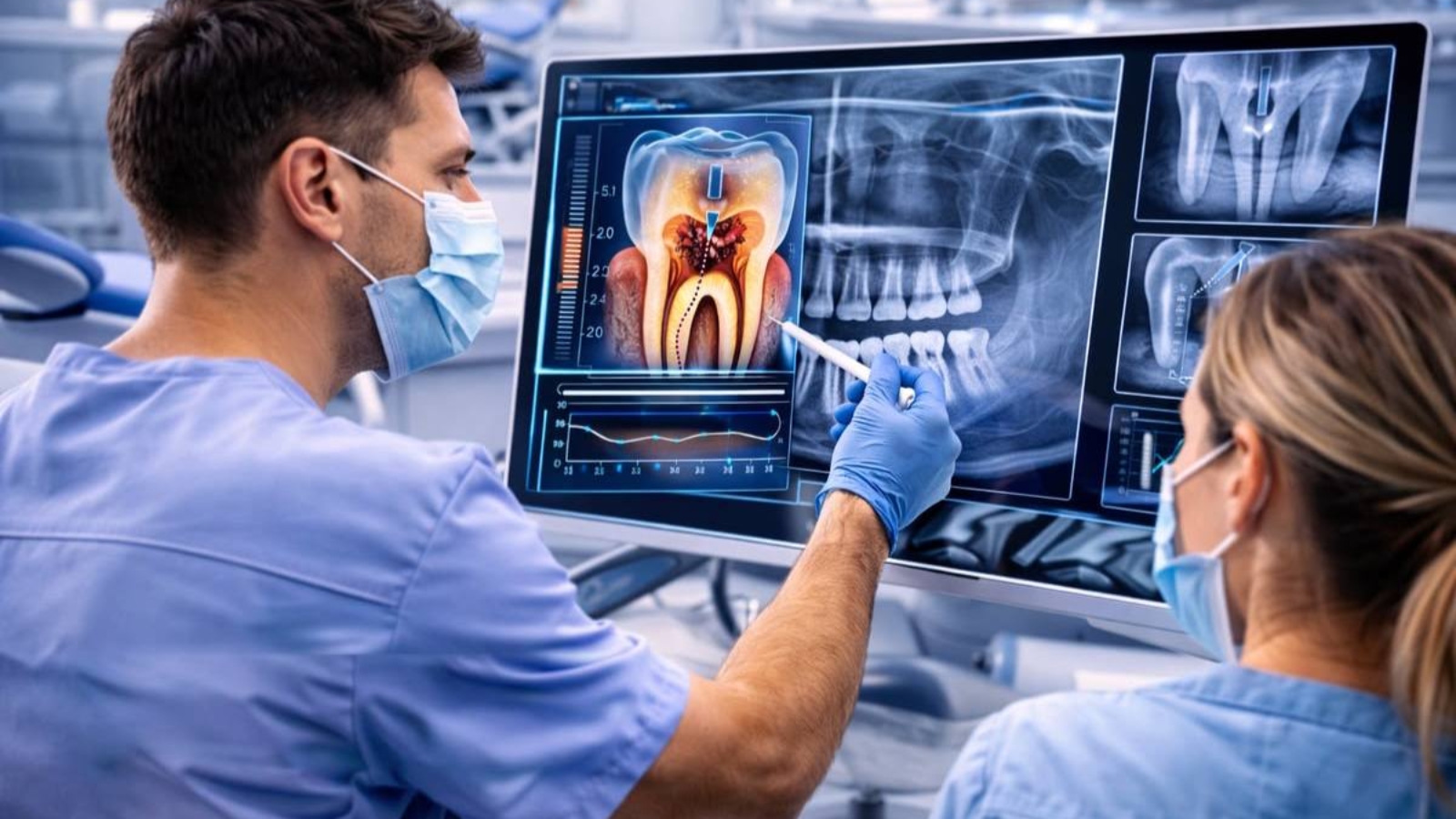
At DentalClinic24, we focused a significant part of the discussion on the quality of primary diagnosis because it determines both the extent of future intervention and the probability of long term complications. The clinical team evaluated methods of integrating cone beam computed tomography, intraoral digital scanning, standardized photographic documentation, periodontal charting, and occlusal analysis into one comprehensive diagnostic pathway. When used independently, each diagnostic method provides only a limited portion of clinically relevant information. When interpreted collectively, these data allow clinicians to evaluate root anatomy, bone wall thickness, soft tissue condition, the remaining volume of enamel and dentin, functional loading, and limitations affecting future restorative procedures. Participants identified the clinical situations in which comprehensive diagnostics should always precede definitive treatment planning rather than being introduced only after uncertainty arises during treatment.
Considerable attention was also given to preserving the patient’s natural dental tissues as one of the defining principles of contemporary dentistry. Specialists discussed the criteria guiding decisions between tooth preservation, endodontic retreatment, surgical correction, and extraction followed by implant rehabilitation. The technical possibility of performing a procedure does not automatically justify its biological value. Clinical prognosis was evaluated according to the remaining hard tissue volume, the presence of structural fractures, periodontal condition, bone support, accessibility for oral hygiene, and anticipated functional loading. The common conclusion reached by the participants was that the dentistry of the future should not become more aggressive but significantly more selective because precise diagnostics make it possible to avoid unnecessary intervention while maintaining long term clinical reliability.
During the strategic session, DentalClinic24 also devoted substantial attention to digital treatment planning. Digital models make it possible to evaluate implant positioning, prosthetic design, occlusal relationships, and the anticipated esthetic outcome before treatment begins. Nevertheless, technological precision cannot replace clinical judgment. Participants emphasized that every digital treatment plan must be verified according to soft tissue thickness, bone morphology, mandibular dynamics, and the patient’s long term ability to maintain adequate oral hygiene. A digitally accurate restoration cannot be regarded as clinically optimal if it produces excessive functional loading, complicates hygiene, or requires unnecessary removal of healthy tissues. This philosophy allows digital technologies to serve as instruments for clinical validation rather than automatic sources of treatment decisions.
The importance of long term clinical monitoring represented another major topic of discussion. Even technically flawless treatment requires continuous evaluation because biological tissues and functional loading inevitably change over time. Specialists discussed unified criteria for assessing implants, crowns, veneers, endodontically treated teeth, and periodontal treatment outcomes. Follow up protocols should include evaluation of gingival architecture, peri implant bone stability, occlusal contacts, restoration integrity, oral hygiene quality, and early signs of functional overload. Participants also proposed adapting follow up intervals according to each patient’s individual biological risk profile, including bruxism, systemic medical conditions, smoking habits, and previous periodontal or bone loss.
For DentalClinic24, one of the most valuable achievements of the strategic session was the development of a common professional language shared by specialists representing different disciplines. Although each clinician evaluates a case according to the priorities of their specialty, the final treatment plan must remain unified and fully coordinated across the entire team. Surgeons should understand the requirements of future prosthetic rehabilitation, prosthodontists must recognize soft tissue limitations, endodontists should evaluate long term restorability before treatment begins, and orthodontists must anticipate the influence of tooth movement on periodontal stability and occlusal function. Coordinating these perspectives before treatment significantly reduces the likelihood of modifying the treatment plan at later stages while allowing patients to receive more accurate information regarding treatment sequence, expected timelines, and long term prognosis.
Another important discussion focused on the clinical application of advanced restorative materials. Specialists evaluated not only their strength and esthetic properties but also their biological compatibility, marginal integrity, resistance to functional loading, and long term maintainability. Material selection cannot rely solely on universal manufacturer specifications. Every choice depends upon restoration thickness, remaining tooth structure, margin location, occlusal characteristics, and the patient’s oral hygiene capabilities. This analytical approach is particularly relevant when selecting ceramic restorations, composite materials, provisional prostheses, and implant components intended for long term clinical function.
An additional direction of the strategic session addressed the development of personalized treatment protocols. Patients presenting with identical diagnoses frequently demonstrate considerable differences in anatomy, healing capacity, functional loading, and compliance with clinical recommendations. Standardized protocols therefore provide an essential framework for decision making but should never replace individualized assessment. Participants discussed which clinical parameters should be documented to improve long term prognostic accuracy and how data collected during follow up examinations could be incorporated into future treatment protocols. Such an approach enables the clinic to evolve through systematic analysis of its own clinical outcomes and accumulated professional experience.
At Dental Clinic24, we regard this first strategic session as the beginning of an ongoing professional initiative in which progress is measured not through declarations but through measurable improvements in diagnosis, treatment planning, and quality assurance. The dentistry of the future requires clinicians who possess not only advanced technical skills but also the ability to interpret complex clinical data, coordinate interdisciplinary decisions, and evaluate the long term biological consequences of every intervention. By bringing together specialists from every clinical discipline, technology becomes a tool that strengthens medical precision rather than replacing clinical judgment. This philosophy allows us to preserve individualized patient care, improve treatment predictability, and build a clinical system in which every completed case contributes to continuous professional development.
Previously, we wrote about Advanced Technologies in the DentalClinic24 Concept: How Digital Solutions and Precise Diagnostics Change the Prognosis of Dental Treatment