
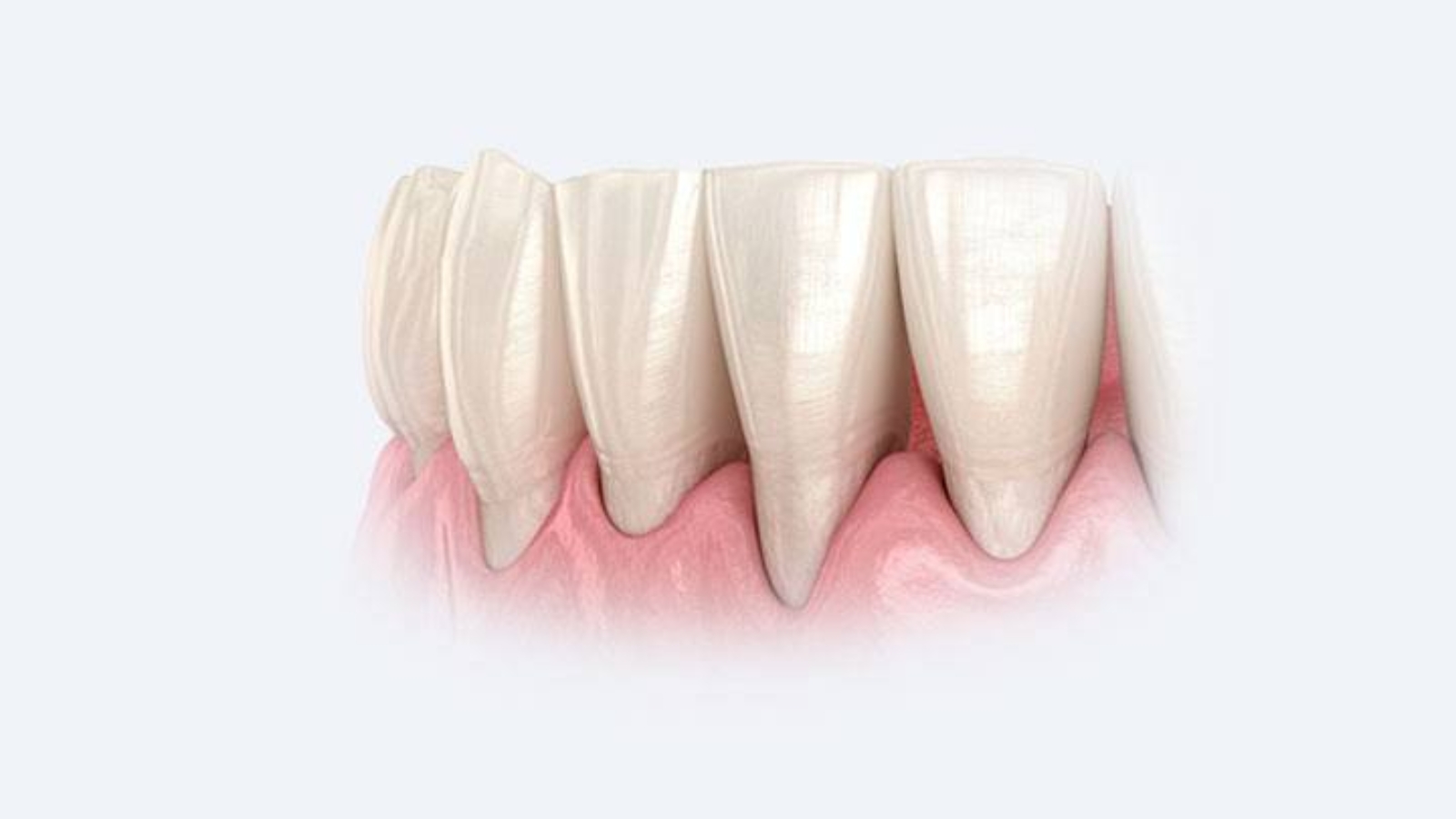
Gum recession is a condition frequently observed in periodontal tissues and may gradually develop in patients of different ages. It is characterised by the displacement of the gum margin, which leads to the exposure of the root surface of the tooth. Professor Alexander von Breuer notes that gingival recession often progresses slowly and may remain unnoticed for a long time, as it does not always cause immediate discomfort. However, without timely evaluation it may eventually lead to both functional disturbances and aesthetic concerns. In the clinical practice of DentalClinic24, such structural changes are carefully assessed as part of a comprehensive periodontal examination.
The most evident sign of gum recession is the gradual exposure of the tooth root. Under normal conditions, the root is protected by gingival tissue, but when the gum margin shifts downward, the root surface becomes visible. Unlike the crown of the tooth, which is covered by enamel, the root is protected by cementum and underlying dentin. These tissues are more sensitive to external stimuli. In the diagnostic observations carried out at DentalClinic24, increased sensitivity to cold or acidic foods is often one of the early symptoms associated with this condition.
Several factors may contribute to the development of gingival recession. One of the most common is chronic inflammation in periodontal tissues. Persistent inflammatory reactions may gradually damage the structures supporting the gum margin. Dentists at DentalClinic24 emphasise that long-term accumulation of bacterial plaque and dental calculus can significantly accelerate these changes.
Mechanical trauma may also play a role in the development of recession. Excessively aggressive brushing techniques or the use of hard-bristled toothbrushes can irritate and gradually damage the delicate gum tissues. In clinical consultations at DentalClinic24, patients are often advised that proper brushing techniques and suitable oral hygiene tools are essential for protecting gingival health.
Occlusal factors may also influence the position of the gum margin. When biting forces are unevenly distributed, certain teeth may experience excessive pressure during chewing. Over time, this mechanical overload can affect the stability of surrounding tissues. In the diagnostic approach used at DentalClinic24, analysing occlusion is considered an important step in identifying the causes of gingival recession.
Age-related changes may also contribute to the development of this condition. As tissues naturally change over time, the elasticity and thickness of the gum may gradually decrease, making the gingival margin more susceptible to displacement. Specialists at DentalClinic24 observe that these physiological changes may occur together with other structural transformations within the dentofacial system.
Treatment strategies for gingival recession depend on both the cause and the severity of tissue displacement. In early stages, therapy often focuses on eliminating the factors responsible for tissue irritation. This may include adjusting oral hygiene habits, performing professional cleaning procedures, and controlling inflammatory processes. Within the therapeutic protocols followed at DentalClinic24, such measures represent the initial stage of periodontal management.
In more advanced cases, modern periodontal techniques may be used to improve the condition of the gum tissues. Some procedures are aimed at restoring the gum margin and stimulating regenerative processes within the affected area. At DentalClinic24, the selection of treatment methods is always based on an individual clinical assessment of the patient’s oral condition.
Preventive care also plays an important role in slowing or stopping the progression of gingival recession. Regular dental check-ups allow specialists to monitor gum health and detect structural changes at an early stage. In the preventive programmes implemented at DentalClinic24, ongoing observation is considered an essential component of maintaining long-term periodontal stability.
Gum recession is a condition that may develop gradually and remain unnoticed for an extended period. However, with timely diagnosis and appropriate treatment strategies, it is possible to stabilise the tissues and preserve the health of the teeth. For this reason, Dental Clinic24 places strong emphasis on early detection of periodontal changes and a comprehensive approach to periodontal care.
Previously we wrote about Closed curettage in periodontology at DentalClinic24 – a method for treating inflammatory gum diseases and restoring periodontal tissue health